Key takeaways
- Tuscan cooking relies heavily on cucina povera: stale bread, offal, extra virgin olive oil, and white beans form the foundation of classic menus.
- Bistecca alla Fiorentina is priced by weight (per hectogram / 100g) and served strictly rare; asking for well-done is considered a cardinal sin.
- First courses like ribollita and pappa al pomodoro use leftover bread as a thickener rather than broth or cream.
- Using MenuDish to scan a Italian menu helps you instantly match unfamiliar Tuscan dish names to real photos before ordering.
Tuscan Cucina Povera: Why Stale Bread and Offal Dominate Florence
Unlike the butter-heavy sauces of Milan or the seafood-driven tables of Amalfi, Florence built its kitchen traditions on survival. Historically, salt was heavily taxed in Tuscany, leading to the creation of unsalted bread (pane sciocco). Because unsalted bread goes stale within twenty-four hours, local cooks invented dozens of ways to stretch stale loaves into satisfying meals.
When sitting down at a classic Florentine trattoria or buca (a cellar restaurant), expect simple ingredients cooked long and low. Meat dishes lean heavily into charcoal grilling and long braises, often utilizing hearty cuts and traditional butcher offal that served working-class neighborhoods for centuries.
The Primi: Bread Soups and Hand-Rolled Pici
When reading the Primi Piatti section of a Florentine menu, you will notice fewer delicate filled pastas and far more thick soups and rustic noodles.
Ribollita translates to 'reboiled.' It is a thick, velvety stew made from stale bread, Tuscan kale (cavolo nero), cannellini beans, onions, carrots, and a heavy drizzle of fresh olive oil. If served properly, a spoon should easily stand upright in the bowl.
Pappa al Pomodoro is another bread soup, made by simmering stale bread with sweet tomatoes, garlic, basil, and olive oil until it reaches a porridge-like consistency. It is served warm or at room temperature, never scalding hot.
For pasta lovers, look for Pici al Ragù di Cinghiale. Pici are hand-rolled, thick spaghetti noodles native to southern Tuscany, often tossed in a rich, slow-cooked wild boar ragù seasoned with juniper berries and red wine.
Understanding Bistecca alla Fiorentina: Weight, Cuts, and Doneness
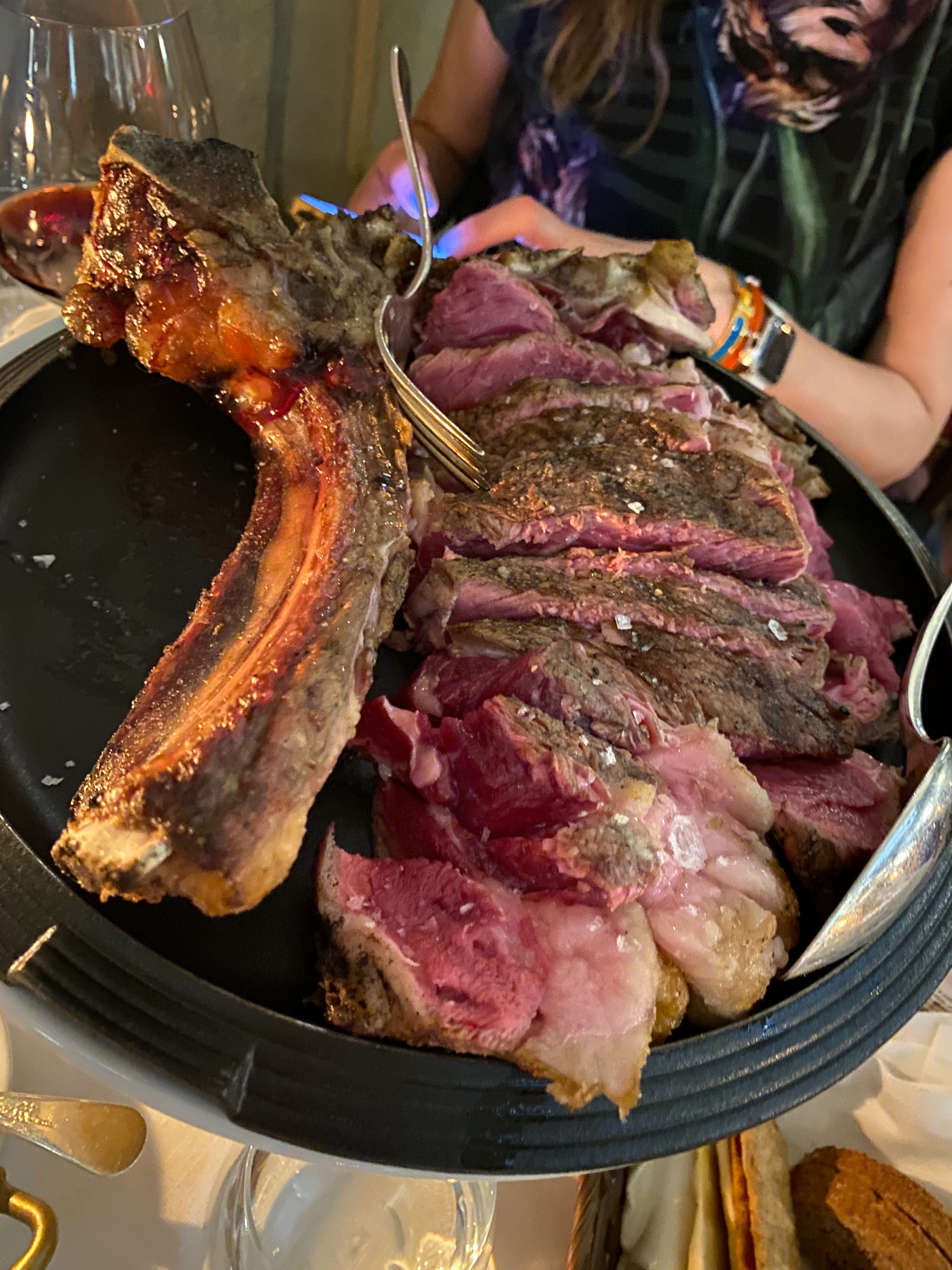
The undisputed star of the Florentine Secondi course is Bistecca alla Fiorentina. Ordering one requires understanding three specific menu rules to avoid surprises when the bill arrives.
First, the price listed on the menu (e.g., €6.00 – €8.00) is almost always per 100 grams (written as /etto or /100g), not per steak. A traditional T-bone cut from Chianina or Maremmana cattle includes both the tenderloin and strip loin, cut thick—at least three fingers wide. A single steak rarely weighs less than 1.2 to 1.5 kilograms (2.6 to 3.3 lbs), meaning it is meant to be shared between two or three people.
Second, doneness is non-negotiable. Authentic bistecca is seared over red-hot charcoal for about five minutes per side and served rare (al sangue), with a warm, deep red center. Requesting it medium-well or well-done will likely be met with a polite refusal from the chef.
Beyond the Steak: Peposo, Trippa, and Lampredotto
If you prefer a smaller main course or want to explore historic neighborhood staples, look further down the Secondi list.
Peposo alla Fornacina is a peppery beef shank stew created by clay kiln workers in Impruneta. The meat is braised for hours in Chianti wine and crushed whole black peppercorns until tender enough to collapse under a fork, without a drop of tomato in sight.
Trippa alla Fiorentina features sliced beef tripe simmered with tomatoes, aromatic vegetables, and topped with generous grated Parmigiano-Reggiano.
Lampredotto is Florence's most famous street food—the fourth stomach of the cow, slow-boiled in a savory broth with herbs, shredded into a crusty roll dipped in cooking broth, and drizzled with spicy red oil or bright green salsa verde. While usually bought from street carts (lampredottai), traditional trattorias occasionally serve it plated as a starter.
Cover Charges, Wine Windows, and Menu Red Flags
A quick glance at the fine print on a menu usually reveals a line item for coperto—a cover charge typically ranging from €2 to €4 per person. This covers bread, linens, and table setting, and is standard across Italy. Tipping extra is not strictly expected, though leaving small change for good service is appreciated.
When selecting wine, skip bottled international varieties and ask for the house red (vino della casa), usually a crisp, easy-drinking Chianti served in a ceramic carafe (fiasco). In historic spots, you might even get served through a restored buchetta del vino (wine window).
To avoid tourist traps, steer clear of places with laminated menus featuring brightly colored stock photos or hosts shouting at passersby near the Duomo. If you are ever unsure what an obscure dish like granpezzo or carlotta actually looks like, scanning the physical menu with MenuDish brings up real matched photography of traditional local plates alongside translated ingredient lists.
Don't cook it — find it.
See every dish on any menu before you order. Scan, see the photo, check allergens & nutrition.