Key takeaways
- Pocha menus center entirely around 'anju'—dishes explicitly paired with alcohol like soju and beer.
- Portions are large and family-style; tables usually order two to three shared plates over an evening.
- Fishcake soup (eomuk-tang) often comes with free broth refills and balances the burn of cold soju shots.
- Spicy whelks (golbaengi muchim) and crispy scallion pancakes (pajeon) deliver the signature contrast of textures pochas are famous for.
The golden rule of the pocha: Food exists to match alcohol
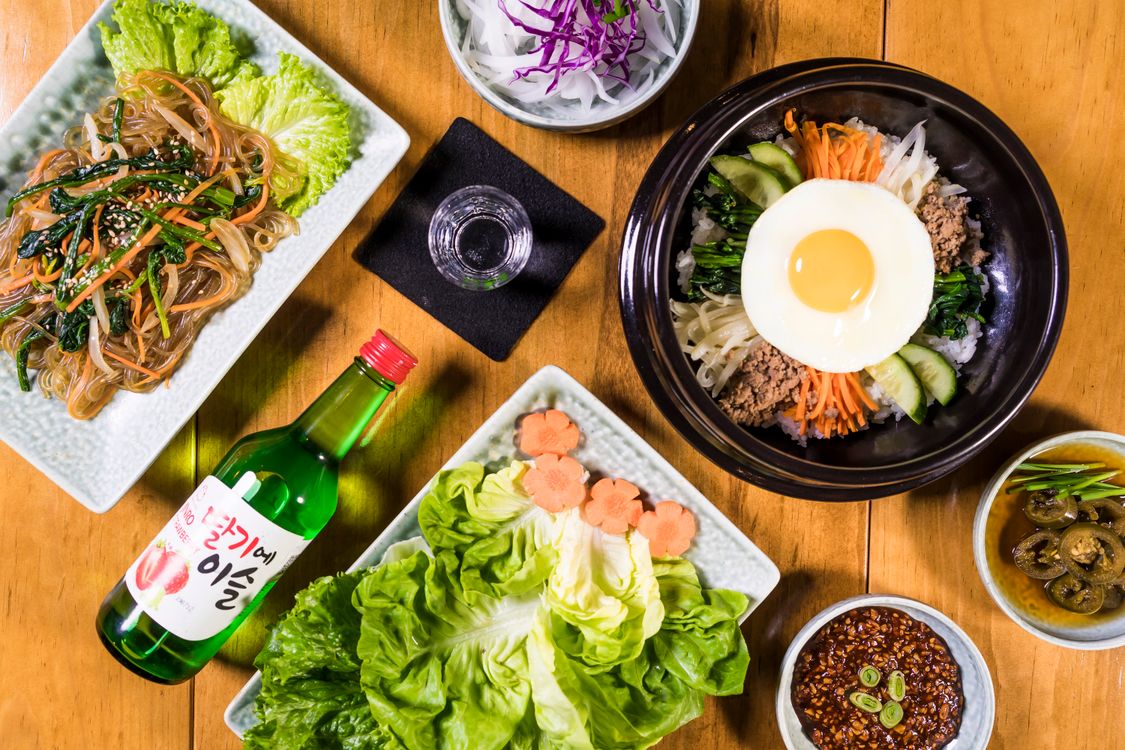
In Korea, drinking alcohol without eating food is almost unthinkable. That food is called anju. Pocha menus are engineered around drinking pace: salty, spicy, fried, or boiling hot dishes designed to complement crisp soju or cold draft beer (maekju).
Unlike a standard sit-down restaurant where everyone orders individual mains, pocha dishes arrive family-style in generous portions meant for sharing among two to four people. Ordering a single small dish for a group is considered poor etiquette; expect to pick out at least two savory plates as your night unfolds.
Why 'spicy and chewy' dominates the menu board
Look at the red-accented section of the board and you will see dishes built on texture contrast. Golbaengi muchim pairs sliced canned whelks (sea snails) with scallions, cucumbers, and thin wheat noodles tossed in a sharp, vinegar-laced chili dressing. It tastes sweet, tangy, and aggressively spicy—a flavor combination that makes a cold lager taste twice as refreshing.
If you spot dak-gbal, you are looking at chicken feet braised or grilled in a concentrated chili paste. They come bone-in or boneless (mopyo dak-gbal), offering a gel-like texture and intense heat that usually prompts an order of steamed egg custard (gyeran-jim) to cool down your mouth.
Broths, tin pots, and endless refills
As soon as high-proof soju hits the table, soup becomes essential. Eomuk-tang (fishcake soup) is the universal staple. Skewered sheets of folded fishcake simmer in a clear broth brewed from kelp, radish, and dried anchovies. Many tents will gladly refill the tin pot with hot broth free of charge while you keep drinking.
For bigger appetites, budae-jjigae (army stew) stacks kimchi, spam, sliced hot dogs, baked beans, and instant ramen noodles into a shallow pan heated right on your table. If you encounter an unfamiliar stew name written in quick Korean script, scanning the printed menu with MenuDish pulls up matched dish photos alongside allergen details, so you can see whether that bubbling red pot contains tripe or mild tofu before it arrives.
Savory pancakes and stir-fries to coat your stomach
Greasy, crispy plates act as a buffer during a long night out. Pajeon (scallion pancake) and haemul pajeon (seafood scallion pancake) are pan-fried until the edges turn crisp and dark brown, then served with a soy-vinegar dipping bowl.
Another classic is ojingeo bokkeum—spicy stir-fried squid with thick cut onions and cabbage. The squid cooks quickly over high flame, creating a subtle smokiness that cuts through the sweet-and-spicy red sauce.
Soju codes, maekju, and self-service water
Ordering drinks in a pocha is quick and casual. Calling out 'Soju han-byeong, maekju han-byeong-yo!' gets you one bottle of standard green-bottle soju and one bottle of Korean lager—the classic combo for mixing somaek (soju-beer cocktails). Pour drinks for your dining companions using two hands as a nod to local etiquette, and keep an eye out for the self-service water station (mool-un self) near the ice chest.
When dealing with regional variations or handwritten chalkboards, checking dish names in MenuDish gives you a clean visual preview matched from food photo databases, keeping you from accidentally ordering raw sea squirts when you meant to grab grilled chicken skewers.
Don't cook it — find it.
See every dish on any menu before you order. Scan, see the photo, check allergens & nutrition.