Key takeaways
- Bouillons served fast, cheap meals to 19th-century workers and still offer traditional French comfort dishes at fraction of normal bistro prices.
- Starters like oeuf mayonnaise and hareng pommes à l'huile are non-negotiable classics that reveal the skill of the kitchen.
- Main dishes focus on long-simmered braises like boeuf bourguignon and classic sausage with butter-heavy mashed potatoes.
- Service is fast and informal; waiters mark your paper table cover to track dishes and calculate the bill at the end.
What makes a bouillon different from a bistro?
In 1855, a butcher named Pierre-Louis Duval started selling cheap bowls of broth and boiled beef to workers at the Les Halles meat markets. He called his eatery a bouillon—literally, 'broth.' The concept caught fire, growing into massive dining rooms decked out in brass and Art Nouveau glass where anyone could afford a hot, multi-course meal.
Unlike modern French bistros, which might modernize recipes or charge twenty-five Euros for a steak, a bouillon sticks strictly to working-class heritage. The menu rarely changes, table spacing is non-existent, and the kitchen pumps out hundreds of covers an hour. You go for swift service, noisy historic dining rooms, and classic recipes cooked without pretension.
Starters you cannot skip: Oeuf mayo and herring
French menu starters (entrées) on a bouillon bill are cheap enough that skipping one feels like a mistake. Look for these four staples at the top of the paper sheet:
Oeuf Mayonnaise: Hard-boiled eggs cut in half, draped in thick homemade mayo, and served over a few leaves of lettuce. It sounds simple, but Paris takes this so seriously there is an official association dedicated to evaluating the precise thickness and acidity of the sauce.
Hareng Pommes à l'Huile: Salted herring fillets served over warm slices of boiled potato soaked in oil and vinegar. It is salty, rich, and intensely savory.
Poireaux Vinaigrette: Tender poached leeks served cold under a sharp mustard-and-vinegar dressing. If you want a vegetable starter, this is your best option.
Escargots de Bourgogne: Land snails baked in their shells with chopped garlic, parsley, and butter. Use the small fork provided to pull the meat out, then use crusty bread to scoop up every drop of garlic butter left in the ceramic plate.
Main courses: Braises, sausages, and offal
When you scan the plats section, you will see meat-heavy traditional comfort foods. The dishes rely on slow simmering and inexpensive cuts of meat cooked until tender.
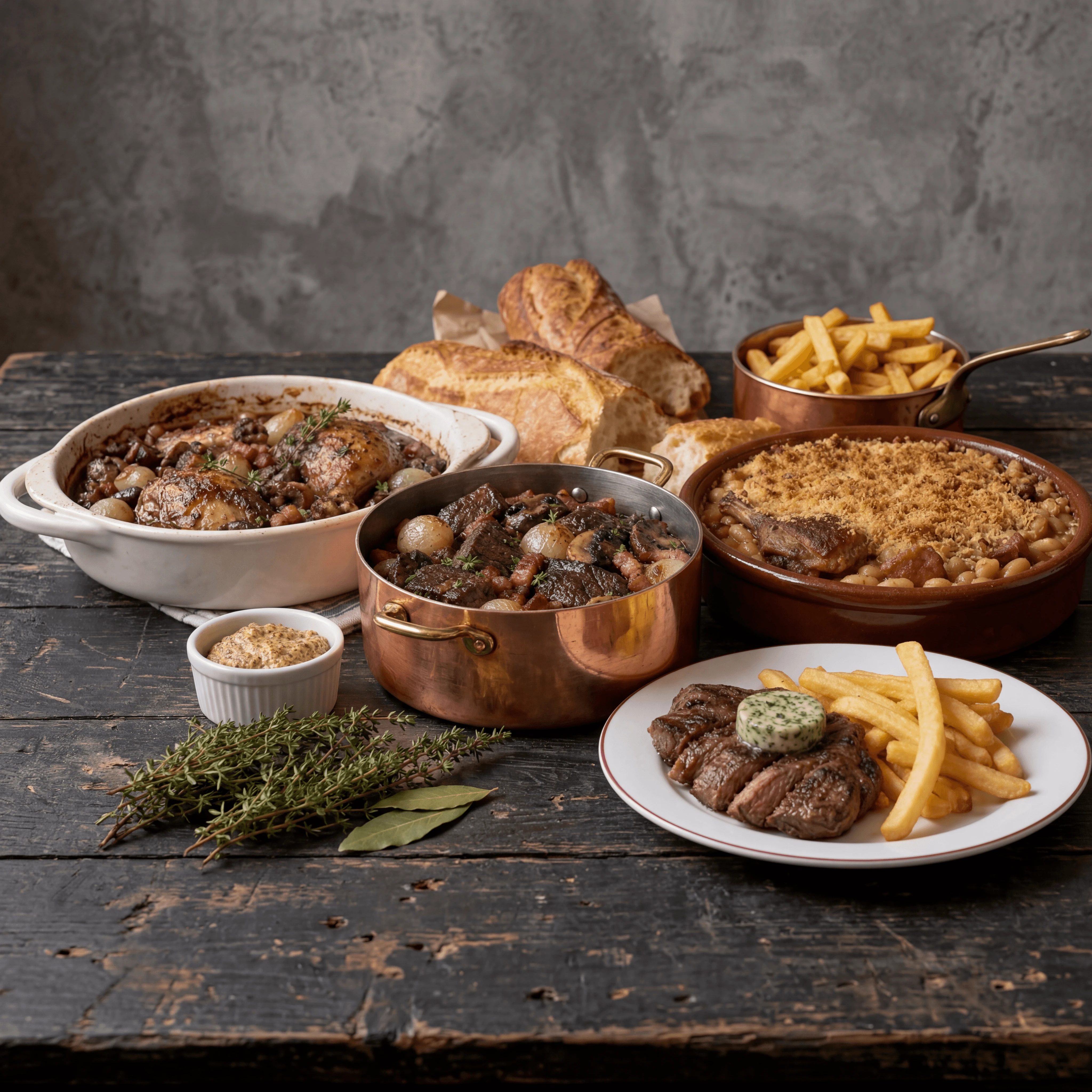
Saucisse-Purée: A thick, grilled pork sausage served on a mound of smooth, yellow, butter-saturated potato purée, bathed in rich pork gravy. It is basic, filling, and almost impossible to ruin.
Boeuf Bourguignon: Beef chuck seared and cooked low for hours in red wine with bacon lardons, pearl onions, and button mushrooms, usually spooned over buttered egg noodles.
Tête de Veau: Calf's head poached until the collagen gelatinizes, sliced thin, and served warm with a tart sauce gribiche (made from hard-boiled egg yolks, capers, and herbs). The texture is slick and tender, though it can surprise first-time eaters.
Blanquette de Veau: A creamy, pale stew made of poached veal chunks, carrots, and mushrooms in a white velvet sauce finished with cream and lemon juice.
Desserts, pitchers, and understanding the order slip
Ordering wine at a bouillon is easy. Skip the bottle list and order a pichet (pitcher) or carafe of house red (rouge) or white (blanc), usually available in 25cl, 50cl, or full 1-liter sizes. It is light, simple table wine meant to cut through rich sauces.
When dessert comes, the classics hold strong. Chou à la Crème (a giant puff pastry filled with vanilla cream and drenched in warm chocolate sauce) and Riz au Lait (creamy rice pudding topped with salted caramel sauce) dominate almost every table.
If you feel stuck deciphering cramped handwriting on dense physical menus, firing up MenuDish lets you scan the French text and view matched photos of each dish along with allergen warnings, so you never accidentally order tripe when you wanted steak.
Table rules: Shared seats, paper covers, and paying up
Eating at a bouillon requires a small shift in expectations. If you are a party of two, expect to be seated at a four-person table next to two strangers. Say a quick 'bonjour' or 'bonsoir' to your neighbors, then focus on your own meal.
Do not expect drawn-out service. Courses arrive fast, often within five minutes of ordering. Bread comes in a small wire basket; leave it directly on the paper tablecloth, which doubles as your plate pad and napkin drop.
When you finish, the waiter simply adds up the red numbers written on your paper tablecloth, writes down the sum, and hands you the receipt. Pay at the table or take the slip directly to the small wooden cashier booth by the door.
Don't cook it — find it.
See every dish on any menu before you order. Scan, see the photo, check allergens & nutrition.