Key takeaways
- Chelo refers to plain saffron-topped basmati rice, whereas Polo dishes feature herbs, lentils, or tart berries cooked directly into the grains.
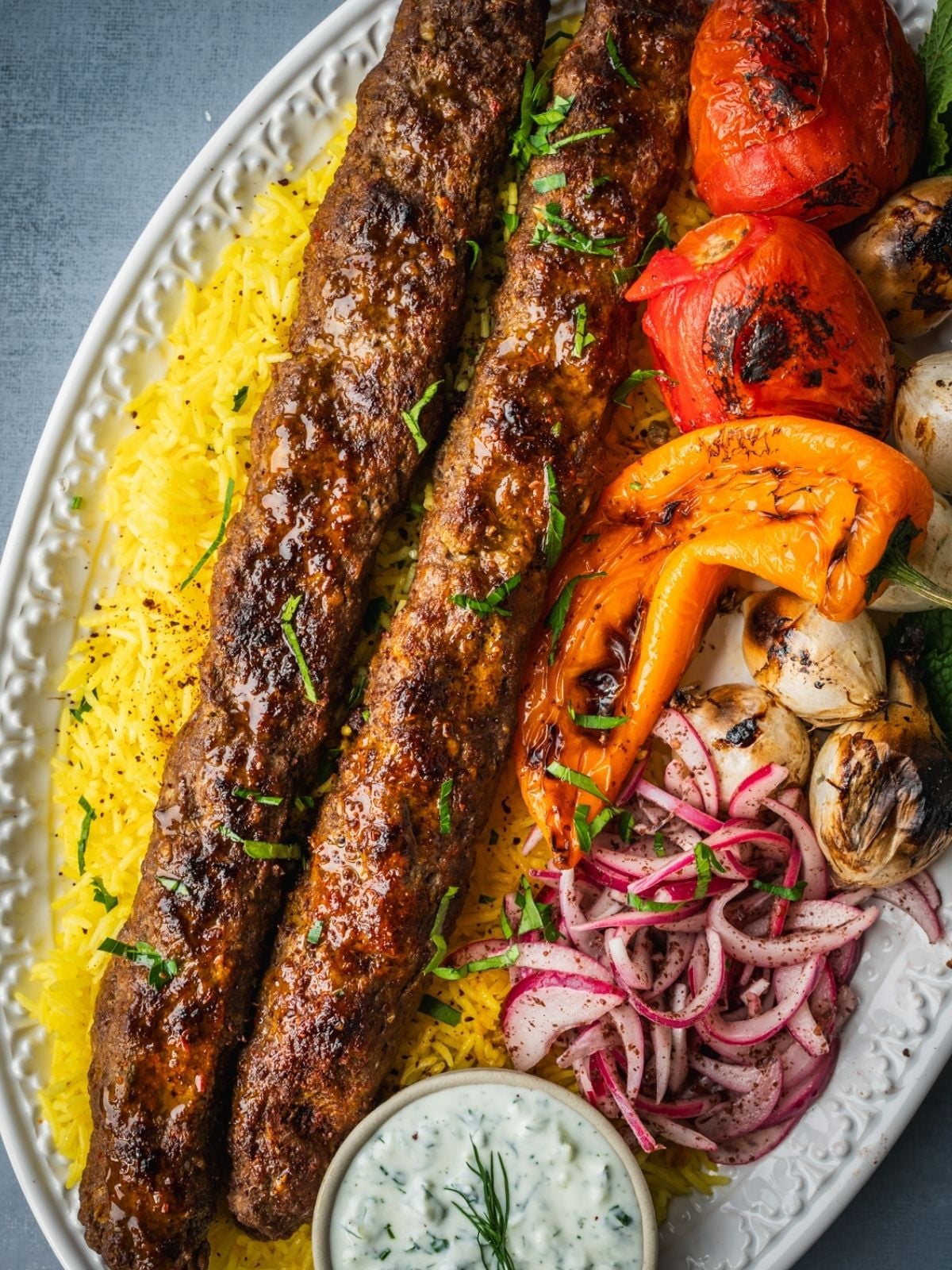
- Koobideh is seasoned ground meat wrapped around a broad flat skewer; Barg consists of tenderized strips of sirloin or lamb filet.
- Tahdig is the golden, crunchy layer of fried rice from the bottom of the pot, often served plain or smothered in stew.
- Persian cuisine leans into sour, herbal, and nutty profiles using ingredients like pomegranate molasses, sumac, and dried black limes rather than fiery heat.
The kebab breakdown: Koobideh, Barg, and Joojeh
Most Persian menus devote their primary section to grilled meats served alongside broad grilled tomatoes and buttered rice. The foundational entry is Kebab Koobideh, made from minced beef or lamb mixed with grated onion, salt, and saffron. Pressed onto flat, sword-like skewers and cooked over open charcoal coals, good Koobideh remains springy and juicy rather than dry or rubbery.
If you prefer intact cuts of meat, look for Kebab Barg. Barg translates to leaf, referring to how thin the tenderloin of beef or lamb is butterflied and flattened before marinating in saffron, onion juice, and olive oil. If you want both on one plate, order Kebab Soltani—literally named fit for a sultan—which delivers one skewer of Koobideh and one skewer of Barg side by side.
Poultry lovers will encounter Joojeh Kebab, chicken pieces soaked overnight in lemon juice, yogurt, onion, and saffron. The lemon gives the exterior a subtle bite, while the saffron turns the skin a bright orange-yellow.
Rice is not a side dish: Polo, Chelo, and the coveted Tahdig
In Iranian cooking, long-grain basmati rice is treated as the center of the meal rather than a afterthought. On a menu, plain steamed rice dusted with ground saffron and crowned with a pat of butter is listed as Chelo. This is the neutral canvas designed to balance seasoned kebabs and rich stews.
When rice is steamed together with meats, vegetables, herbs, or fruit, it becomes Polo. One classic option is Zereshk Polo, where fluffy rice is layered with ruby-red barberries sautéed in butter and sugar, giving every bite a sour pop. Another staple is Sabzi Polo, speckled green with dill, cilantro, parsley, and garlic, traditionally paired with fried fish.
Then there is Tahdig, which translates literally to bottom of the pot. It is the buttery, golden crust formed at the base of the cooking vessel during long steaming. Because a single pot yields only a thin ring of this crunchy delight, Persian diners often ask servers if Tahdig is available as an appetizer, sometimes topped with a ladle of warm stew.
Khoresh: Why the best savory depth lives in stew bowls
If you stick strictly to the grill section, you miss out on the rich sauce work of Persian cooking. Stews, categorized as Khoresh, simmer for hours to allow deep herbal and tart notes to develop.
The national favorite is Khoresh Ghormeh Sabzi. Dark green and intensely aromatic, it contains sautéed parsley, leeks, coriander, and dried fenugreek cooked down with red kidney beans, tender beef or lamb, and pierced dried limes (limoo amani) that release a smoky sourness into the broth.
Another classic is Khoresh Fesenjan, an earth-toned stew made from finely ground walnuts simmered into a thick sauce with sweet-tart pomegranate molasses. It renders chicken drumsticks soft enough to cut with a spoon. For a brighter option, Khoresh Gheymeh combines yellow split peas, diced beef, dried lime, and warm cinnamon notes, usually garnished right before serving with a handful of thin crispy potato matchsticks.
Sabzi Khordan and appetizers: How table herbs work
When you sit down, many classic establishments bring out Sabzi Khordan, a platter loaded with fresh mint, basil, tarragon, raw radishes, green onions, hard feta cheese, and warm flatbread (sangak or lavash). You tear off a piece of bread, spread a bit of feta, add raw herbs, and fold it into a fragrant bite to refresh your palate between heavy courses.
For cooked starters, look for Kashk-e Bademjan, a roasted eggplant dip cooked with garlic, mint, sautéed onions, and kashk (a tangy fermented whey sauce that adds a distinctly savory funk). If you prefer cooler yogurt-based dips, Mast-o Khiar blends creamy thick yogurt with shredded cucumber, dried mint, and crushed walnuts.
Building a balanced order without over-ordering
Persian portions tend to be generous. A reliable strategy for two people is sharing one kebab platter, one stew bowl, and one cold starter like Mast-o Khiar to cut through the rich butter and grilled fats. Make sure to sprinkle dusty red ground sumac from the table shakers over your meat for a sharp, berry-like acidity.
If you hit a menu without photos or descriptions and struggle to visualize how dark a green herb stew looks compared to a golden saffron poultry plate, using an app like MenuDish helps you scan the text and match unfamiliar dish titles with actual food photography before placing your order.
Don't cook it — find it.
See every dish on any menu before you order. Scan, see the photo, check allergens & nutrition.