Key takeaways
- Rome's four classic pastas share a common foundation of Pecorino Romano cheese and coarse black pepper, built upon systematically with guanciale, egg yolk, or tomato.
- 'Quinto quarto' denotes Rome's historical offal dishes, turning oxtail, tripe, and calf intestines into slow-cooked neighborhood delicacies.
- Artichokes strictly follow seasonal harvest windows and arrive in two regional styles: braised Carciofi alla Romana or double-fried Carciofi alla Giudia.
- Scanning paper or chalkboard menus with MenuDish instantly matches local dialect terms to clear photos, ingredients, and allergen details.
The big four: how Roman pastas actually differ
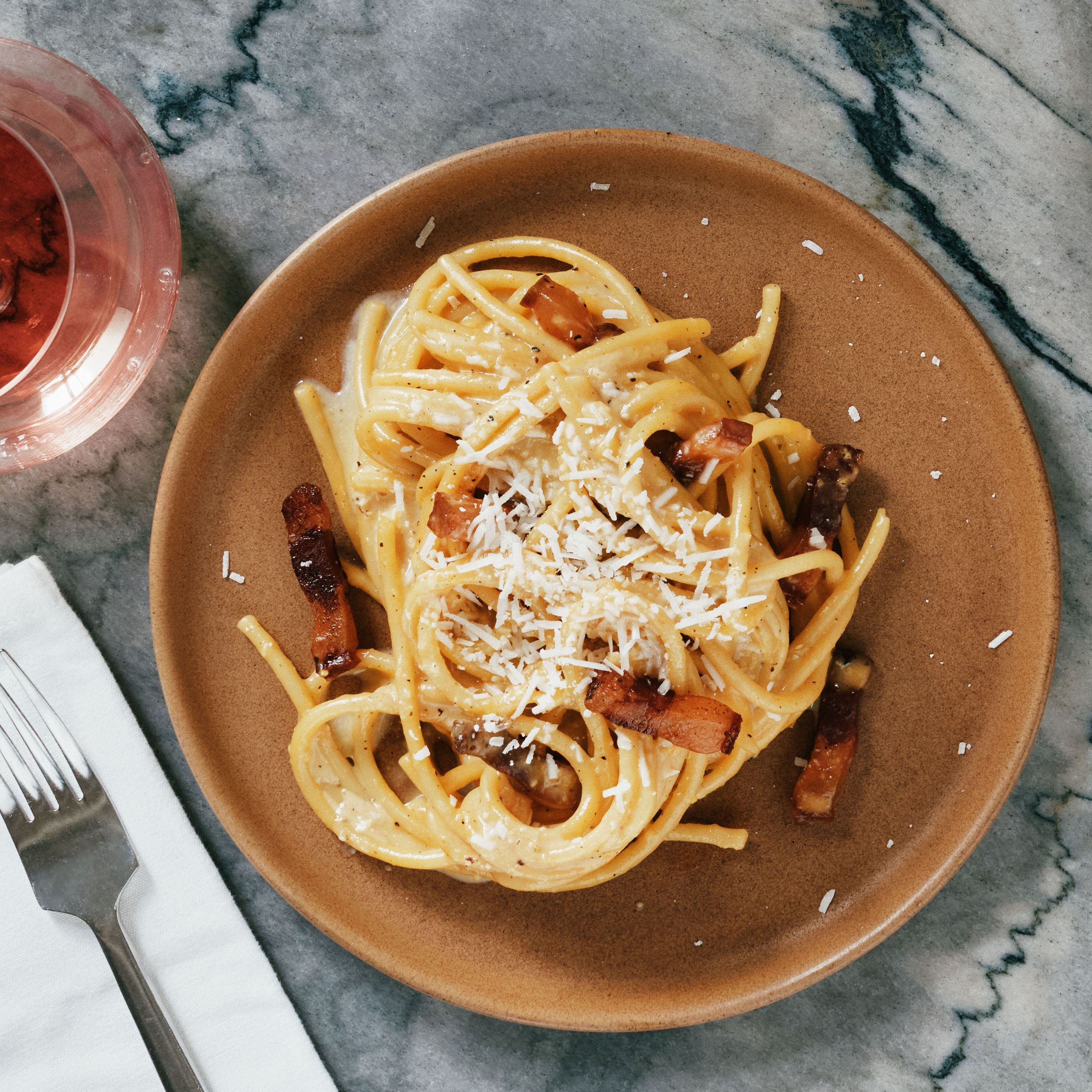
Every traditional trattoria menu in Rome anchors its primi section around four classic pasta dishes. Rather than completely separate recipes, they form a single culinary family tree built on sharp Pecorino Romano cheese and coarsely crushed black pepper.
Cacio e pepe forms the foundation: hot starchy pasta water, rendered cheese, and toasted black pepper whipped into a sleek emulsion. Add crisp strips of cured pork jowl (guanciale), and the dish becomes alla gricia. Whisk egg yolks directly into that hot cheese and guanciale mixture off the flame, and you have authentic carbonara. Strip away the egg yolk and simmer the guanciale with crushed tomatoes and a pinch of chili pepper, and you arrive at amatriciana. Understanding this sequence makes browsing the pasta section straightforward.
Quinto quarto: understanding Rome's offal classics
When wealthy residents bought prime cuts of meat in 19th-century Rome, slaughterhouse workers in the southern district of Testaccio were paid partly in the fifth quarter—the remaining offal, tails, and trotters. Today, quinto quarto represents some of Rome's most prized comfort food.
If you see coda alla vaccinara listed under secondi, expect oxtail braised for hours with celery, tomatoes, and raisins until the rich meat slips off the bone. Trippa alla romana pairs tender honeycomb tripe with tomato sauce and fresh wild mint (mentuccia), topped with shredded Pecorino cheese. Adventurous pasta diners should look for rigatoni con la pajata, where milk-fed calf intestines are cooked in tomato sauce; the unweaned milk inside thickens into a rich, savory cream inside each pasta tube during simmering.
Artichokes and contorni: timing your side dishes
Side dishes (contorni) in Roman trattorias change with the weather. Ordering carciofi (artichokes) outside their natural harvest period from late autumn through mid-spring often means receiving imported, frozen stock rather than native Romanesco artichokes.
In season, artichokes arrive cooked in two distinct ways. Carciofi alla romana are stuffed with minced garlic, mint, and olive oil, then braised head-down in a pan until completely tender. Carciofi alla giudia hail from Rome's historic Jewish Ghetto: whole globe artichokes trimmed, flattened into rosette shapes, and deep-fried twice until the outer leaves turn shatteringly crisp while the heart stays tender. In cold months, watch for puntarelle alla romana, a fresh salad of curly chicory shoots tossed in a cold, punchy dressing of crushed garlic, salt, vinegar, and minced cured anchovies.
Menu red flags and ordering smooth service
Authentic Roman trattorias rely on short daily menus written on single sheets of paper or wall chalkboards. If a restaurant displays bright laminated pictures of pizzas alongside carbonara at noon, consider moving on; traditional neighborhood spots rarely fire up wood-burning pizza ovens until dinner.
When faced with handwritten daily specials featuring regional slang like abbacchio (suckling lamb) or saltimbocca (pan-fried veal with prosciutto and sage), using MenuDish allows you to scan the physical menu and view matched photos of real dishes alongside allergen and nutrition data. Roman meals progress unhurriedly: start by ordering mineral water and house wine, select a pasta and main, and request the bill (il conto) only when you are completely finished dining.
Don't cook it — find it.
See every dish on any menu before you order. Scan, see the photo, check allergens & nutrition.