Key takeaways
- Look for small packets of tissue paper left on plastic chairs—it means 'chope' (reserved seat), so don't sit there.
- Hawker stalls specialize in just one or two dishes, so look for short menus and long lines of locals.
- Drink stalls use a specific dialect shorthand: Kopi is coffee with condensed milk, O means no milk, and Kosong means no sugar.
- Carrot cake isn't a baked dessert; it's pan-fried steamed radish cake, served either white (savory) or black (sweet dark soy).
Reserving your seat before you order
In a Singapore hawker centre, table hunting happens before you step into a queue. If you see a packet of pocket tissues, a folding umbrella, or even a staff lanyard lying on an empty plastic table, move along. This local custom is known as choping. Reserving a table this way guarantees you a place to sit once your food is piping hot and dripping with sambal.
Once you locate an un-choped spot, drop your own small item on the table to hold it. Ordering is cash or local digital pay, and almost every stall operates on a self-service model where you carry your own tray back to the table.
Decoding the drink stall dialect
The drink stall usually sits near the center of the hawker hall, and its signboard looks like algebra if you do not know Hokkien and Malay drink jargon. The default coffee (kopi) or tea (teh) comes pre-sweetened with condensed milk. If you want to tweak your drink, you append specific modifiers to the base word.
Adding O drops the condensed milk, leaving black tea or coffee brewed with sugar. Adding C swaps condensed milk for unsweetened evaporated milk plus sugar. If you want no sugar at all, specify Kosong (Malay for zero). For less sugar, ask for Siew Dai, and if you prefer extra strength, ask for Gao (thick brew). A cold glass of iced black coffee with no sugar is simply a Kopi O Kosong Peng.
Spotting key dish names on stall signboards
Because stall owners spend decades perfecting single dishes, menus are brief. Knowing a few core dish names keeps you from standing in the wrong line:
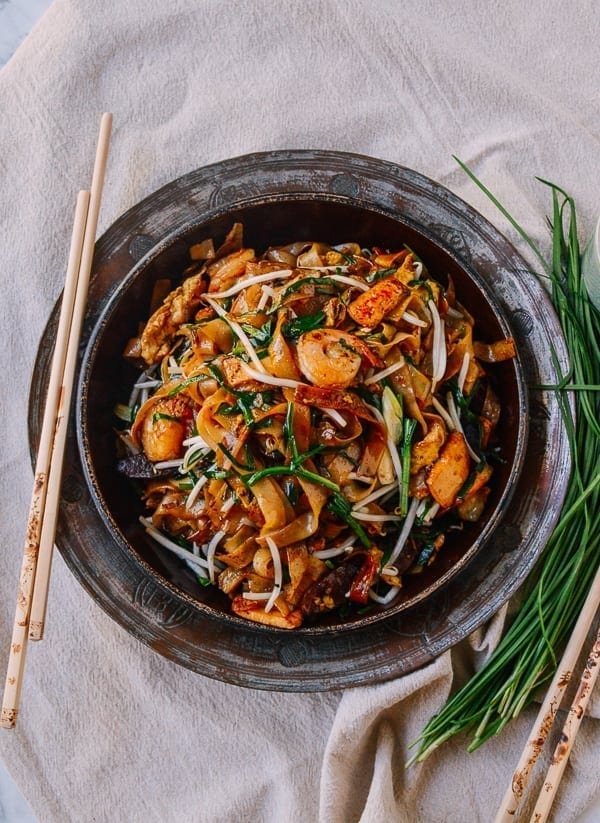
Char Kway Teow: Broad flat rice noodles flash-fried in a red-hot wok with lard, dark soy sauce, lap cheong (Chinese sausage), cockles, and bean sprouts. It carries a distinctive smoky scent known as wok hei.
Hokkien Mee: A mix of yellow egg noodles and rice vermicelli simmered together in a rich prawn and pork bone stock, served with fresh lime and sambal chili on the side.
Bak Chor Mee: Springy egg noodles tossed in black vinegar, chili paste, and lard, topped with minced pork, pork slices, and crispy lard croutons.
Fried Carrot Cake (Chai Tow Kway): Despite the name, no orange carrots are involved. It is made from steamed white radish and rice flour cakes diced into cubes and fried with eggs and preserved radish (chai poh). Choose white for savory garlic and crisp egg, or black for sweet dark soy sauce.
Handling unfamiliar stalls and photo-less signs
Some older hawkers list dishes only in Chinese characters or brief English names like 'Bak Kut Teh' or 'Kangkong'. When signboards lack photos or details, scanning the signboard with MenuDish displays matched photos of real dishes alongside translated descriptions, ingredient details, and allergen flags so you know what you are getting before joining the line.
Small details that save your meal
Check if a stall displays a hygiene grade decal on the glass front—A or B ratings indicate clean standards verified by health inspectors. Keep small bills or coins handy, as elderly hawkers often struggle to break large banknotes. Finally, carry your finished tray to the designated tray-return racks when done, as leaving mess behind on tables can result in fines in Singapore.
Don't cook it — find it.
See every dish on any menu before you order. Scan, see the photo, check allergens & nutrition.