Key takeaways
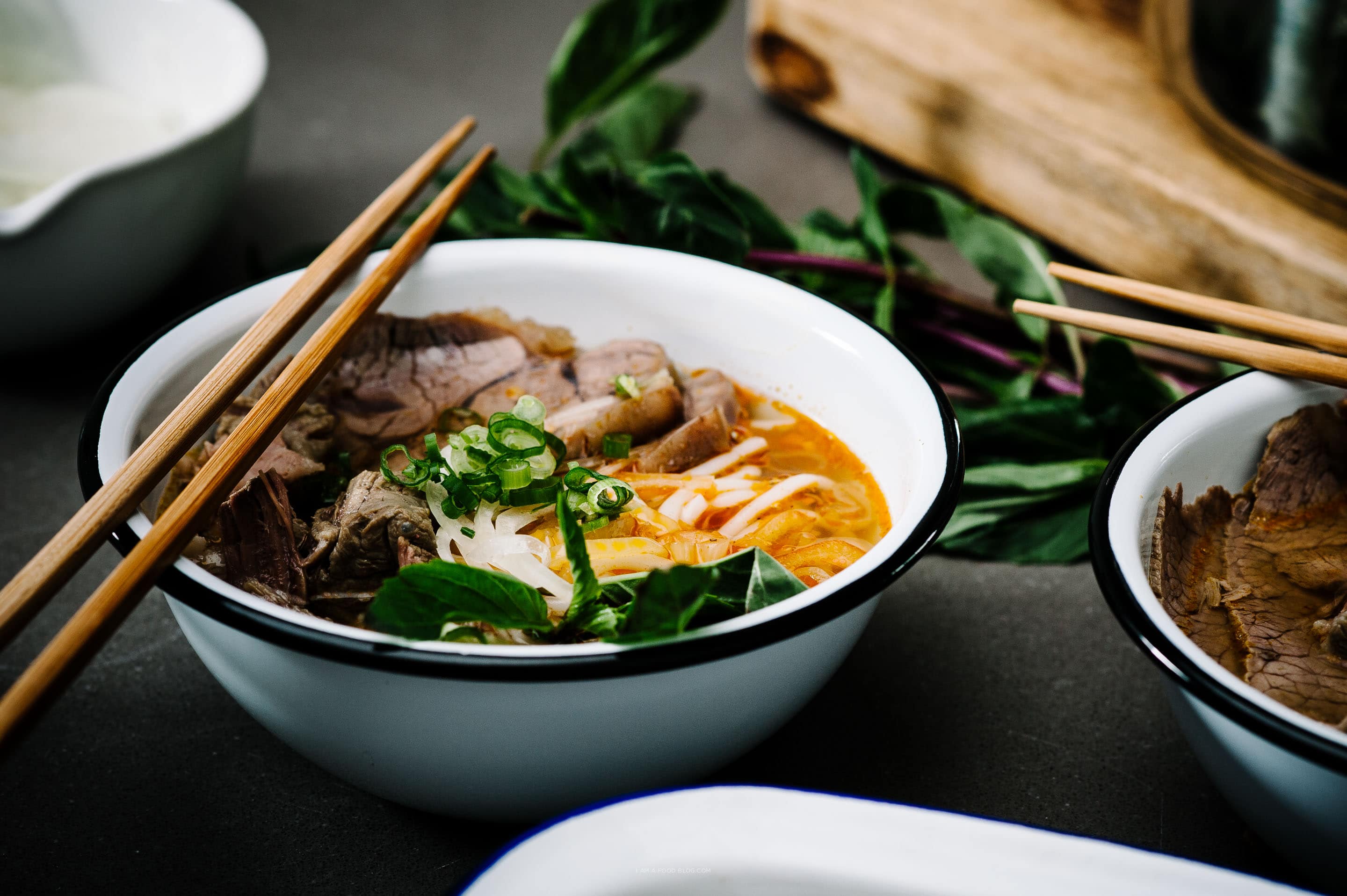
- Bún Bò Huế comes from the former imperial capital of Huế and features a complex broth seasoned with lemongrass, chili, and fermented shrimp paste.
- Unlike Pho's flat ribbon noodles, Bún Bò Huế uses thick, cylindrical rice noodles similar in shape to thick spaghetti.
- Traditional bowls come piled high with tender beef shank, pork trotters, crab sausage, and cubes of cooked blood curd.
- A plate of fresh banana blossoms, water spinach, and herbs is served alongside to balance the spicy, rich broth.
From imperial kitchens to street corner stalls
Huế sits along the central coast of Vietnam and served as the imperial capital during the Nguyễn dynasty. The palace kitchens were famous for demanding elaborate meals that hit multiple sensory points at once—spicy, sweet, salty, sour, and intensely aromatic. Bún Bò Huế grew out of this royal cooking tradition before spilling out into street stalls across the country.
While simple beef noodle soups exist everywhere in Vietnam, appending the word Huế to the dish signals a specific profile. You are getting sharp citrus aroma from crushed lemongrass, deep background savory notes from mắm ruốc (fermented shrimp paste), and a glittering red rim of toasted chili oil floating on top.
What gives the broth its red hue and distinct savoriness?
The foundation of the soup starts with pork trotters and beef bones simmered over low heat for hours. Smashed stalks of fresh lemongrass simmer in the pot, infusing a bright, woody citrus note straight into the gelatinous broth.
Two specific ingredients define the soup's iconic taste:
Mắm Ruốc: This fermented shrimp paste smells strong in the jar, but dissolves into pure, savory depth when whisked into the hot broth. It provides an addictive backbone without leaving behind a fishy taste.
Annatto and Chili Oil: Annatto seeds are toasted in oil to extract a vivid ruby hue, which is then stirred together with crushed chilies and garlic. Poured over the finished bowl, it forms a bright red layer that clings to every noodle.
Thick noodles, pork trotters, and blood curd
When you sit down at a noodle shop in Central Vietnam, the first thing you notice is the noodle texture. These thick, round rice noodles (bún) are springy and substantial, designed to absorb heat without dissolving into liquid.
A fully loaded bowl typically includes an ambitious mix of proteins:
Bắp bò: Slices of beef shank with ribbons of chewy tendon.
Giò heo: Cross-cut pork trotter cooked until the skin and connective tissue become soft and rich.
Chả huế: Steamed pork or crab sausage patties wrapped in banana leaves, peppered with garlic and black pepper.
Huyết: Dark cubes of simmered pig's blood curd. They have a mild flavor and a soft, gelatinous texture similar to firm tofu.
How to assemble your table herbs
When your bowl lands on the table, the meal is only half-prepared. Next to the bowl, the cook will place a high plate of raw greens: thin strands of shredded banana blossom, split water spinach stems, purple mint, lime wedges, and sliced raw bird's eye chilies.
Drop the banana blossom and raw water spinach into the steaming liquid right away so they soften into the broth while keeping a subtle crispness. Squeeze half a lime over the bowl to cut through the rich pork collagen, and stir in fresh herbs continuously as you eat.
How to order with confidence
Deciphering a local Vietnamese menu can be tricky when dishes simply translate to "spicy beef noodle soup." Some kitchens serve authentic bowls loaded with trotters and blood curd, while others offer simplified versions targeting casual visitors.
Opening the MenuDish app to scan the menu helps you view matched photos from photo databases alongside ingredient lists and allergen tags. You can quickly double-check whether a bowl includes pork joint bones or extra chili before placing your order, letting you enjoy every bite without unexpected surprises.
Don't cook it — find it.
See every dish on any menu before you order. Scan, see the photo, check allergens & nutrition.
Allergens: Shellfish (Shrimp paste), Fish sauce. The MenuDish app flags these automatically for every dish it scans.