Key takeaways
- Cold pintxos rest on the counter for immediate picking, but hot pintxos (calientes) are cooked fresh to order from wall blackboards.
- Order drinks like Txakoli or a zurito (small beer) first before filling your plate.
- Pay at the end of your visit; keeping track of toothpicks depends on the specific bar's system.
- Hop between bars for one or two specialty bites rather than making a full meal at a single spot.
Cold Spikes on the Bar vs. Hot Kitchen Specials
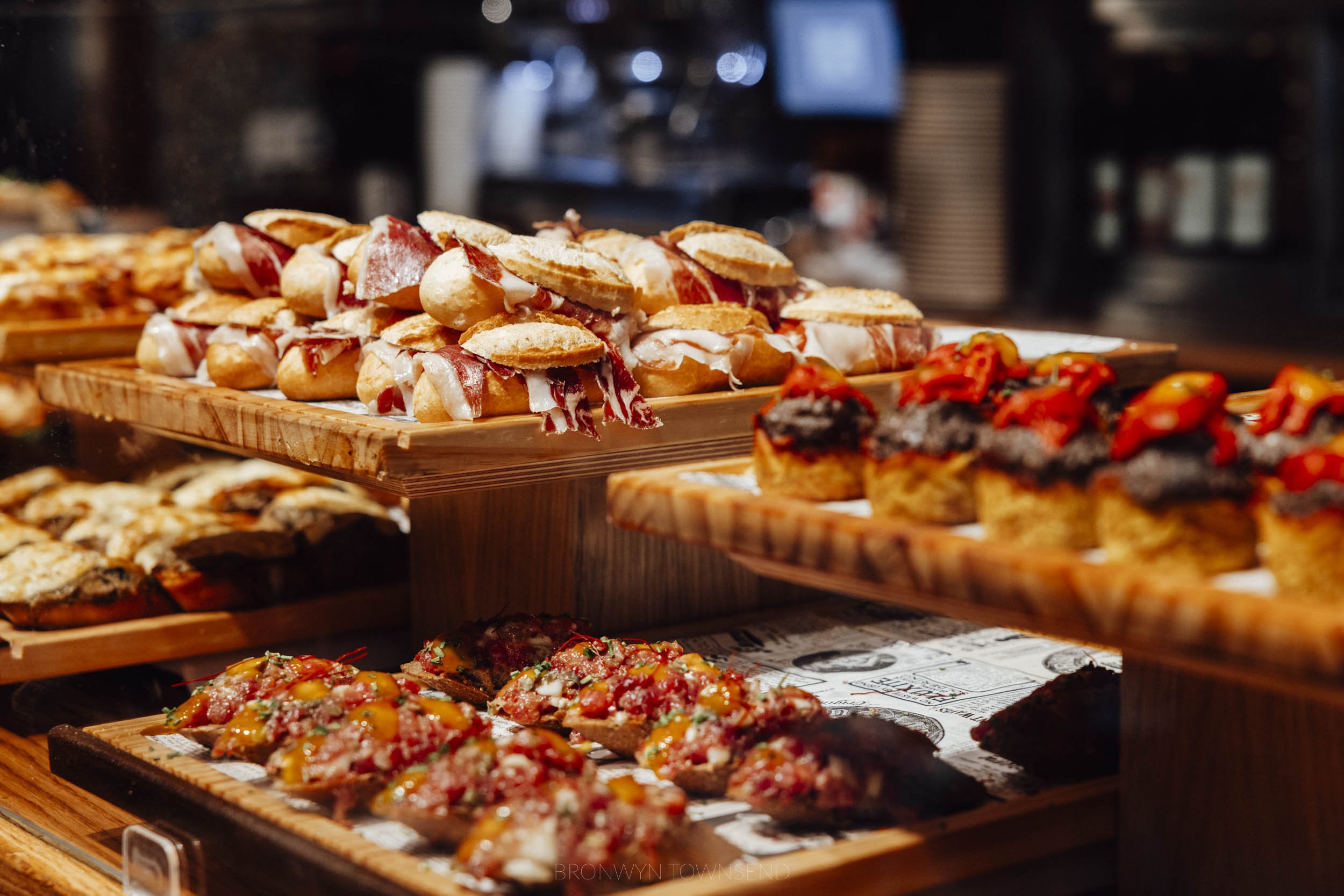
When you walk into a traditional Basque pintxos bar, the eye immediately hits the counter. Skewered bites stacked on slices of crusty baguette span the length of the marble top. These are your cold pintxos (pintxos fríos). In some modern bars, you'll grab a plate, pick what you want, and hold on to the wooden skewers. In older, traditional places, you ask the bartender to hand them over to you.
The biggest mistake first-timers make is filling up entirely on what they can see. The real stars of Basque cooking are the hot pintxos (pintxos calientes). These are cooked to order behind the kitchen door and listed on chalkboards behind the bar or scrawled on paper receipts taped to the wall. If you don't look up at the boards, you miss soft grilled octopus, salted cod croquettes, and seared beef tenderloin.
The Gilda, Solomillo, and Unwritten Counter Classics
Every bar has a specialty, but a few staples appear everywhere. The undisputed king of the counter is the Gilda. Named after Rita Hayworth's spicy, salt-of-the-earth movie character in 1946, it's a simple toothpick holding a pickled guindilla pepper, a green Manzanilla olive, and a salty cured anchovy. It packs an acidic kick meant to wake up your palate before richer bites.
When looking at the hot menu, keep an eye out for Solomillo con Foie (a small medallion of beef tenderloin topped with seared duck liver and sea salt) or Bacalao al Pil-Pil (salt cod emulsified with garlic and olive oil until it forms a creamy sauce). If you come across dialect heavy chalkboards with cryptic short names, opening MenuDish lets you scan the handwritten board to see matched photos of what the finished dish looks like before trying to shout your order over the din.
Txakoli, Zurito, and Drinks That Cut Through the Fat
You don't sit down with a full bottle of wine during a pintxo crawl. Drinks are served short and cold to match the quick pace of the bar. The signature drink is Txakoli (pronounced cha-ko-lee), a bone-dry, slightly effervescent white wine with high acidity. Bartenders pour it from high above their heads into a flat-bottomed tumbler, a dramatic drop that aerates the wine and softens its sour edge.
If wine isn't your preference, order a zurito—a small draught beer under six ounces designed to keep your drink cold from the first sip to the last. For red wine lovers, ask for a crianza from nearby Rioja Alavesa, served slightly cooler than standard room temperature.
Paying Up: Toothpicks, Tabs, and the Art of the Hop
The etiquette around paying confuses nearly every visitor. In informal neighborhood bars, bartenders keep an mental tally of what you order based on honor system trust. You eat two pintxos, drink a zurito, and tell the bartender what you had when you are ready to walk out. In busier tourist hubs, servers write down your tab on a paper pad resting on the glass case in front of you.
Resist the urge to stay put for a three-course dining experience. The authentic Basque way—known locally as the txikiteo—is to have one drink and one or two pintxos at a single spot before moving down the street to the next doorway. Follow the crowds, check the floor for crumpled paper napkins (a traditional sign of a busy, popular bar), and keep moving.
Don't cook it — find it.
See every dish on any menu before you order. Scan, see the photo, check allergens & nutrition.