Key takeaways
- Moqueca is a slow-simmered Brazilian seafood stew cooked in a handcrafted black clay pot that retains heat long after leaving the stove.
- The two major styles are Moqueca Baiana (rich with coconut milk and deep red dendê palm oil) and Moqueca Capixaba (lighter, made with olive oil and annatto seed color).
- Firm white fish like robalo (snook) or badejo (grouper) is layered with bell peppers, tomatoes, onions, and cilantro.
- It almost always comes with pirão, a gravy-like porridge made by mixing the bubbling fish broth with cassava flour.
Bahia versus Espírito Santo: The Two Great Styles
Mention moqueca to a Brazilian and you will likely trigger a passionate geographic debate. The stew belongs to two coastal states, Bahia and Espírito Santo, and each cooks it with a completely different personality.
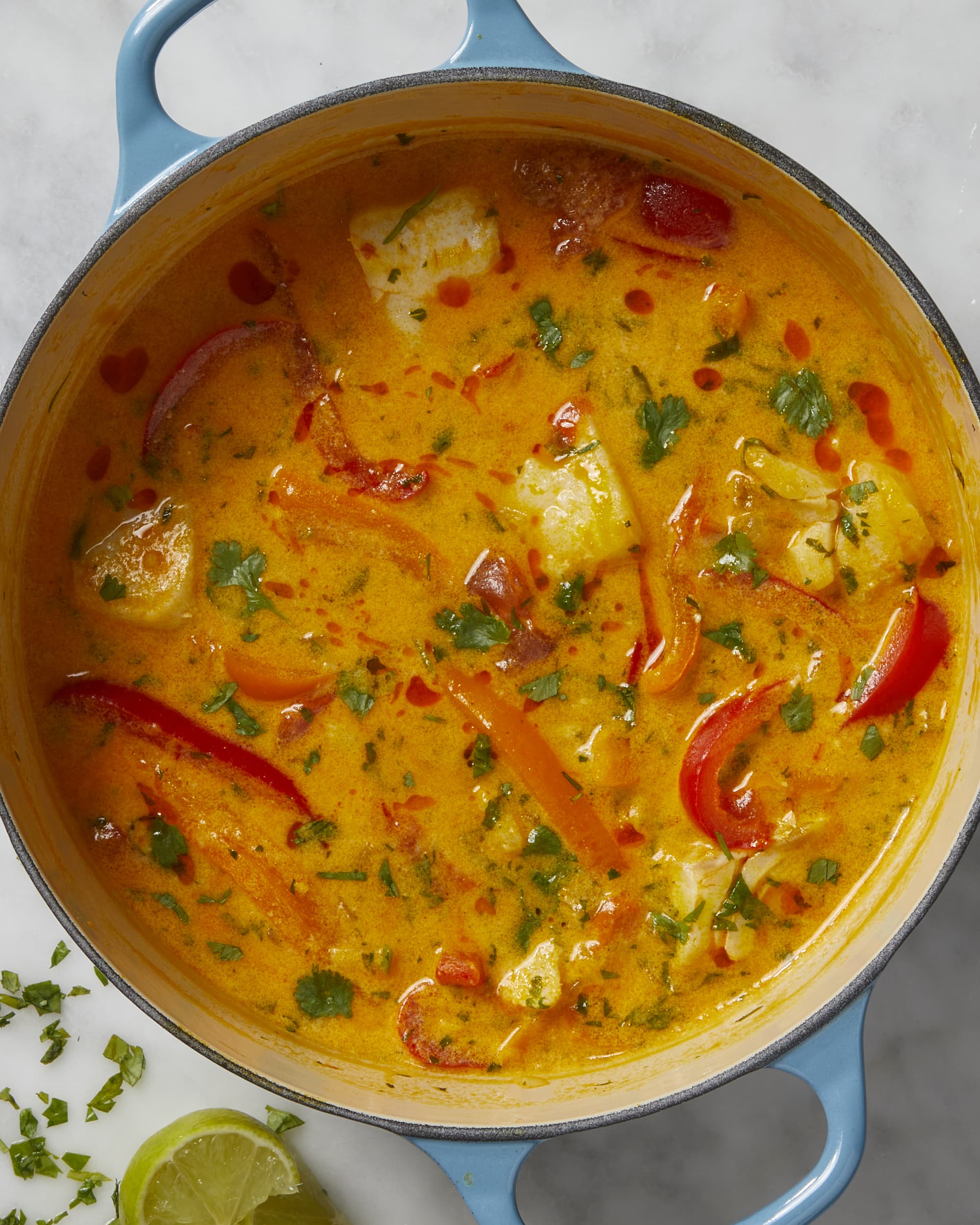
In the northeastern state of Bahia, Moqueca Baiana carries strong Afro-Brazilian roots. Chefs layer fresh seafood with heavy coconut milk and a generous pour of dendê—an unrefined, dark amber palm oil harvested from West African oil palms brought to Brazil centuries ago. Dendê gives Baiana broth a vibrant orange color, a silken weight on the tongue, and an unmistakable earthy, nutty kick.
Travel south to Espírito Santo, and the locals will tell you that their version—Moqueca Capixaba—is the only real one. Capixabas skip the coconut milk and dendê entirely. Instead, they simmer fish in extra virgin olive oil colored with urucum (annatto seeds), producing a lighter, brighter broth that lets the natural sweetness of fresh ocean fish take center stage.
What Actually Goes Into the Stew
A good moqueca relies on thick steaks of firm, white ocean fish that hold their shape while bubbling. Flaky flounder or cod would disintegrate into paste within five minutes. You will usually find robalo (snook), badejo (grouper), or cacao (small shark), often paired with plump jumbo prawns or soft rings of squid.
The cook marinates the raw fish in crushed garlic, salt, lime juice, and chopped chili before arranging it in layers inside a shallow clay pot. Sliced red and yellow bell peppers, tomatoes, white onions, and handfuls of fresh cilantro get piled over the top. No water or artificial broth is added; the vegetables break down, releasing their juices to create a concentrated broth naturally as the clay holds heat.
How to Eat It: Pirão, Farofa, and White Rice
Moqueca is never eaten alone. Ordering a pot means your table will quickly fill with small ceramic side bowls designed to complement the soup.
The most crucial side dish is pirão. The kitchen ladles fresh, scalding broth from the moqueca clay pot directly into fine cassava flour (farinha de mandioca), stirring rapidly until it swells into a thick, glossy, savory porridge. Spooning a dollop of hot pirão onto white rice alongside a piece of fish gives you the ultimate contrast in texture.
You will also get a small bowl of toasted farofa (butter-fried cassava flour) to sprinkle over the broth for crunch, plus a side bottle of red pimenta malagueta oil if you want extra heat.
Spotting Good Moqueca on a Menu
When scanning a Brazilian menu, moqueca is almost always listed under the shared entrees section because a standard panela is cooked to feed two or three people comfortably. Look out for options titled Moqueca Mista (fish and shrimp combined) or Moqueca de Camarão (shrimp only).
If you are standing outside a restaurant in Rio or São Paulo unsure which style a place cooks, point your camera at the text. Using MenuDish lets you read translated ingredients, check if the dish contains dendê oil or coconut milk, and see matched photos of the clay pot before sitting down. That way, you know whether you are getting the velvety, tropical Baiana style or the light, herbal Capixaba version before your server takes the order.
Don't cook it — find it.
See every dish on any menu before you order. Scan, see the photo, check allergens & nutrition.
Allergens: Fish, Shellfish, Tree nuts (when coconut milk is used). The MenuDish app flags these automatically for every dish it scans.