Key takeaways
- Massaman curry blends dry South Asian whole spices like cardamom and cloves with fresh Thai aromatics like lemongrass and galangal.
- The broth is creamy, mildly spiced, and balanced with tangy tamarind paste, coconut cream, and palm sugar.
- Beef and chicken are the traditional proteins, braised alongside chunked potatoes, whole shallots, and toasted peanuts.
- It ranks among the mildest Thai curries, making it an ideal choice if you prefer rich warmth over intense heat.
Why Massaman tastes unlike any other Thai curry
Most traditional Thai curries rely on fresh paste pounded from green chilies, herbs, and shrimp paste. Massaman breaks that pattern completely. The base starts with dry whole spices—coriander seed, cumin, cardamom, cinnamon, cloves, and star anise—toasted in a dry skillet until they release their oils before being ground into a paste.
That toasted spice paste gets combined with classic Southeast Asian foundation ingredients like lemongrass, galangal, dried red chilies, garlic, and shallots. The result is a sauce with immense depth. It sits comfortably between a Indian-style meat stew and a creamy coconut curry, thick enough to coat the back of a spoon and fragrant with woodsy warmth.
Persian traders and the 17th-century Thai court
The name Massaman is widely believed to derive from an archaic Thai word for 'Muslim' (Mussulman). During the 17th century, Persian merchants arrived at the royal court of Ayutthaya, bringing dry spices, whole nuts, and cooking methods from the Middle East and South Asia.
Thai cooks adapted these foreign spices to local ingredients, swiping out heavy ghee or yogurt for coconut milk, fish sauce, and tamarind pulp. King Rama II even penned a famous early 19th-century poem praising his court cook's Massaman curry, cementing its status as a beloved national treasure.
Potatoes, peanuts, and slow-braised protein
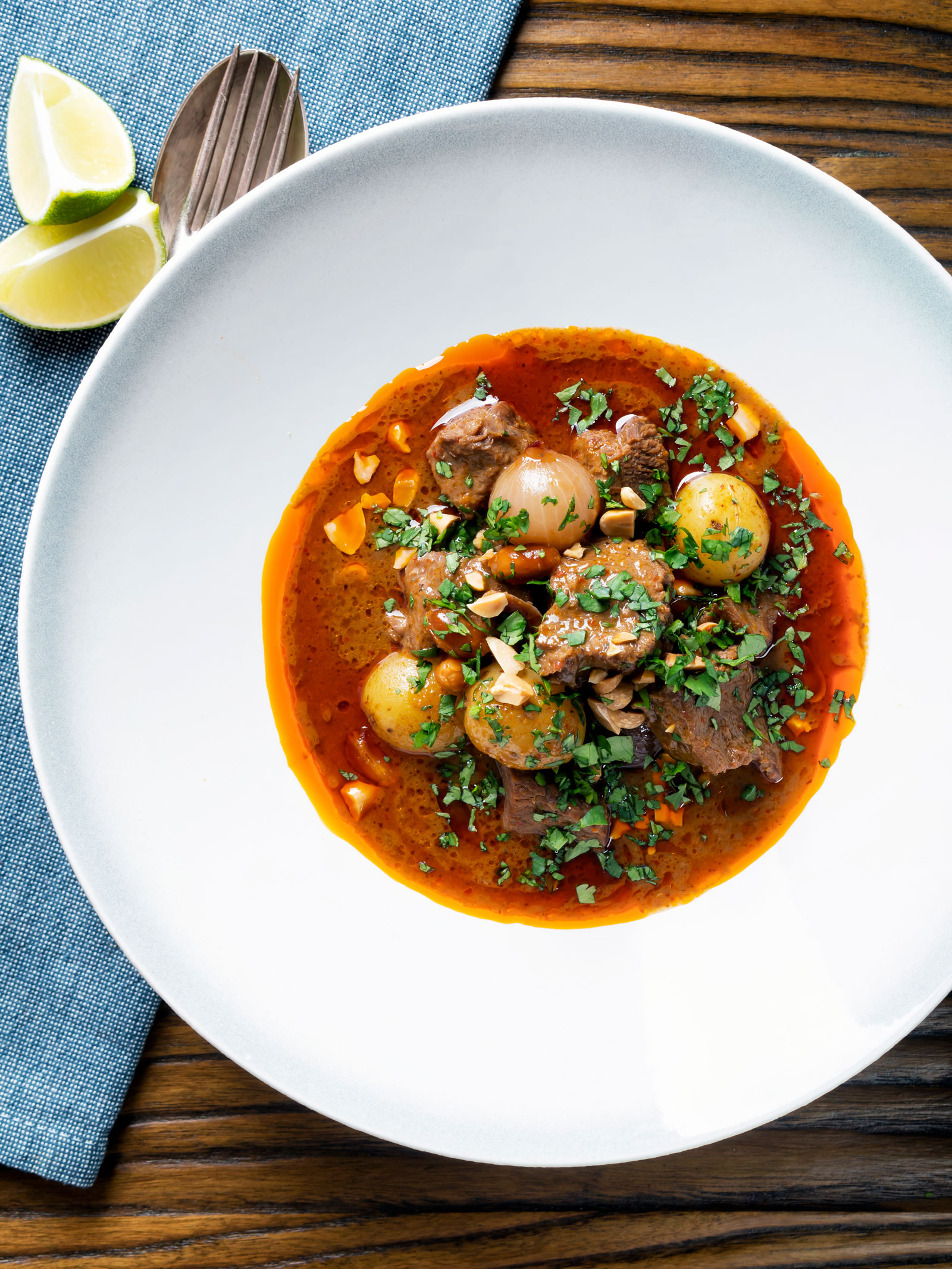
A proper bowl of Massaman curry is immediately recognizable by its distinct garnish and ingredients. You will almost always find tender chunks of potato that have simmered long enough to soak up the spiced coconut fat, alongside whole golden-brown shallots and a scattered handful of toasted peanuts.
Because of its Islamic heritage, pork is traditionally absent from Massaman recipes. Beef chuck, short rib, or bone-in chicken thighs are the gold standard because they hold up to long, slow braising. When you stumble upon an unfamiliar setup at a street food market or neighborhood restaurant, using MenuDish to match handwritten menu names to real photos lets you instantly spot whether a kitchen serves their Massaman with beef, duck, or tofu before you order.
Rich, nutty, and sweet: how spicy is it really?
If sharp chili burn usually deters you from ordering Thai food, Massaman is one of your safest bets. Dried red chilies give the sauce its rich reddish-brown hue, but the heat remains very gentle compared to a fiery jungle curry or classic green curry.
The flavor profile relies heavily on balance. Tamarind paste provides a subtle fruity sourness that cuts through the rich coconut cream, while palm sugar adds a mellow caramel sweetness. Fish sauce gives the broth an essential salty, savory backbone that ties the whole dish together.
How to order and enjoy Massaman like a local
Massaman is best enjoyed over a steaming mound of fragrant jasmine rice, which absorbs the glossy oil and thick sauce. Some Southern Thai stalls serve it alongside flaky, buttery roti flatbread, perfect for dipping into the remaining bottom of the bowl.
When ordering, stick with beef or chicken leg quarters for the tenderest meat. If you like extra texture, ask the kitchen for extra toasted peanuts on top. Pair it with a fresh, crunchy side dish—like a simple cucumber relish or pickled chilies in vinegar—to balance out the luxurious, coconut-heavy stew.
Don't cook it — find it.
See every dish on any menu before you order. Scan, see the photo, check allergens & nutrition.
Allergens: Peanuts, Fish, Tree nuts. The MenuDish app flags these automatically for every dish it scans.