Key takeaways
- Shawarma gets its deep flavor from hours of marinating stacked meat on a rotating vertical spit.
- Authentic chicken shawarma relies on toum (garlic sauce), while beef shawarma relies on tahini and sumac onions.
- Shawarma differs from doner kebab and gyros in marinade spices, meat cuts, and traditional sauces.
- Pickled turnips and cucumbers add the tart contrast needed to slice through the rich meat.
How thin meat layers become tender, caramelized ribbons
The word shawarma comes from the Turkish word çevirme, meaning 'turning.' Long before street stalls introduced electric press grills, cooks across the Levant stacked shaved cuts of lamb, beef, or chicken onto a vertical skewer, layering sheep tail fat between the meat to keep every slice juicy as it rotated past charcoal coals.
Unlike pulverized meat loaves used in fast-food gyros, real shawarma uses whole muscle cuts—like chicken thigh or beef shoulder—marinated overnight in cumin, cardamom, cinnamon, garlic, and yogurt or vinegar. As the outer layer crisps up against the heat, the cook shaves off paper-thin ribbons straight into flatbread or onto a platter.
Chicken vs. beef: why the toppings are completely different
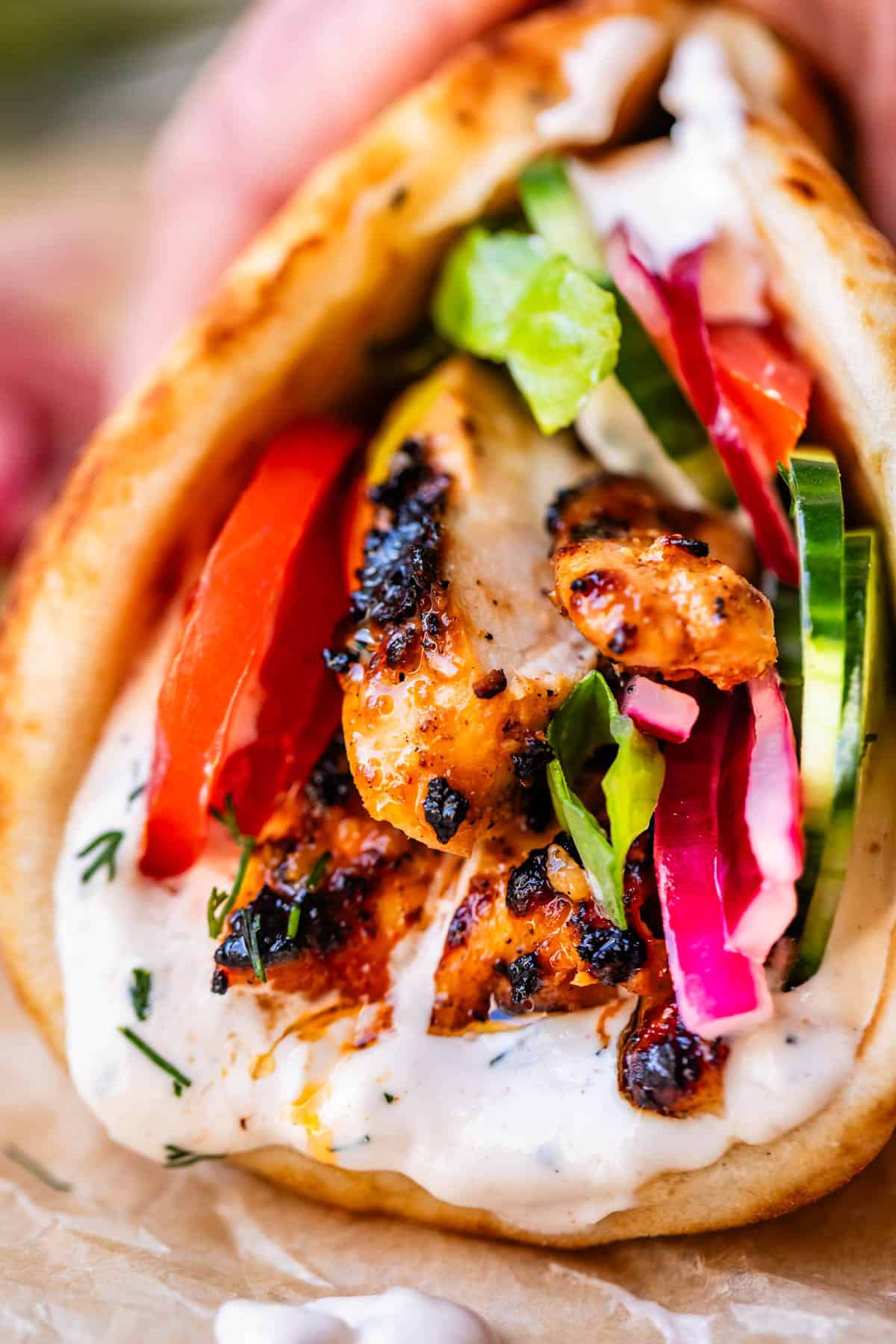
Order a chicken shawarma wrap in Beirut, Amman, or Cairo, and you will almost never see lettuce or tomato inside. Chicken shawarma pairs with toum—a whipped emulsion of raw garlic, oil, salt, and lemon juice—plus sour pickled cucumbers and a few French fries tucked right into the bread. The simplicity lets the tangy marinade shine through.
Beef or lamb shawarma follows a different logic. The rich red meat calls for tahini (sesame paste), sliced red onions dusted with astringent sumac, fresh parsley, and pickled turnip spears dyed pink with beet juice. If a restaurant piles shredded cheddar or heavy cabbage onto a beef wrap, you are eating a fast-casual fusion attempt, not traditional street shawarma.
Shawarma vs. doner vs. gyros: clearing up the confusion
It is easy to lump rotating meat spits together, but their spice profiles and build set them apart:
Doner Kebab (Turkey/Germany): Usually beef or veal mixed with lamb, seasoned mildly with oregano and garlic, served inside fluffy pide flatbread with cabbage and herbaceous yogurt sauce.
Gyros (Greece): Traditionally pork or chicken, seasoned heavily with oregano, thyme, and garlic, tucked into oil-brushed pita with tzatziki, fresh tomatoes, raw red onion, and fries.
Shawarma (Levant/Middle East): Chicken, beef, or lamb loaded with warm spices like cinnamon, clove, cardamom, and allspice, wrapped tightly in thin saj or pita bread and toasted crisp on a flat press.
How to order like a local without getting stuck
Street menus can be confusing when you see options like saj, arabiya, or varied sauce sides. A standard wrap comes tightly rolled in pita, but ordering it on saj bread gives you a paper-thin, blistered exterior with a satisfying crunch. If you see an arabiya meal on the board, the kitchen cuts the rolled wrap into pinwheel slices and serves them alongside dipping sauces, pickles, and crisp fries.
When standing in line in front of a busy counter with unfamiliar terms, scanning the menu with MenuDish helps you see photos of real matched dishes, so you know whether you are ordering a light pita wrap or a heavy platter before stepping up to pay.
The non-negotiable sauces: toum, tahini, and shatta
A dry wrap is a sign of a bad cook. The sauce creates the binding element that connects charred meat ribbons to warm bread:
Toum: An intensely pungent garlic spread made without dairy or eggs. It has the airy texture of mayonnaise but packs a punch that stays with you all afternoon.
Tahini Sauce: Sesame paste loosened with cold water, lemon juice, and crushed garlic. It coats beef shawarma with a nutty, tart finish.
Shatta: A Middle Eastern chili paste made from fermented red or green peppers, olive oil, and coriander. A light smear adds heat without overwhelming the meat marinade.
Don't cook it — find it.
See every dish on any menu before you order. Scan, see the photo, check allergens & nutrition.
Allergens: Gluten, Sesame. The MenuDish app flags these automatically for every dish it scans.