Key takeaways
- Tsukemen separates cold, thick wheat noodles from a hyper-concentrated, piping-hot dipping broth.
- Rinsing cooked noodles in cold water locks in a firm, chewy texture that never gets soggy.
- Dip small, bite-sized bundles of noodles right before slurping to prevent cooling down the broth too quickly.
- Ask for 'soup-wari' when finished so the chef dilutes your leftover dipping sauce into a drinkable soup.
Why tsukemen arrives in two separate bowls
Tsukemen (pronounced tsoke-eh-men) translates literally to 'dipping noodles.' Created in 1955 by legendary ramen chef Kazuo Yamagishi at Taishoken in Tokyo, the dish began as a clever way to utilize leftover noodle trimmings by dipping them into concentrated soup leftovers during busy shop shifts.
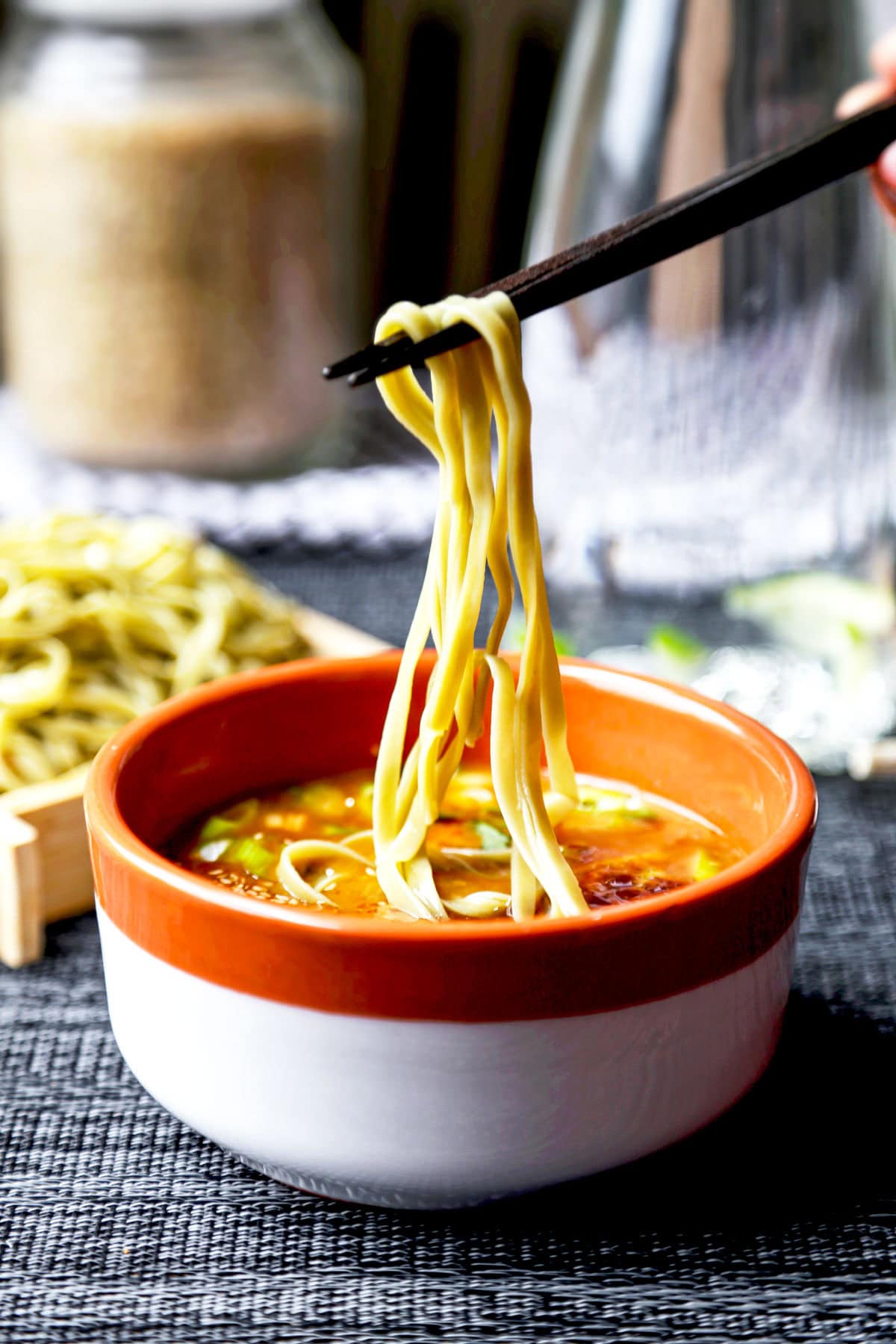
Unlike standard ramen, where noodles sit submerged in hot liquid, tsukemen splits the dish into two distinct components. You get a cold or room-temperature bowl of extra-thick wheat noodles alongside a smaller, heavy ceramic cup containing an intense reduction broth. Keeping them apart preserves the springy texture of the noodles from first bite to last.
The heavy broth and resilient noodles
When noodles sit in hot broth, they steadily absorb liquid and turn soft. Tsukemen avoids this by shocking the noodles in ice-cold water immediately after boiling. This halts cooking and locks in koshi—the elastic, firm bite prized by Japanese noodle makers.
Because cold noodles would instantly dilute a delicate broth, tsukemen soup is built to be aggressive. Most shops reduce long-simmered pork trotters, chicken feet, and dried seafood into a dense emulsion, then supercharge it with pulverized bonito powder (katsuobushi), niboshi (dried anchovies), and dark soy sauce. It is noticeably sweeter, tangier, and saltier than soup ramen, acting like a heavy glaze that clings to every strand.
How to eat tsukemen without making a mess
Eating tsukemen requires a slight adjustment in rhythm compared to standard soup noodles. The goal is to maximize flavor while keeping your dipping broth hot as long as possible.
Grab a small bundle of noodles with your chopsticks—just enough for one clean mouthful. Lower the bottom two-thirds of the noodles into the broth cup, swish briefly to coat them, and slurp immediately. Dumping the entire portion of cold noodles into the cup at once drops the broth temperature straight to lukewarm and waters down the sauce with draining surface moisture.
Broth-wari: The golden final step
When your noodle bowl is empty, you will still have an inch of dense, dark liquid left in your dipping cup. Drinking this reduction straight is far too salty, but leaving it behind misses the best part of the meal.
Hand your cup to the cook or grab the thermal kettle resting on the counter and ask for soup-wari (broth dilution). The staff will pour hot, unseasoned dashi or light fish stock into your cup. This instantly cuts the salinity and opens up hidden layers of smoky seafood and collagen, leaving you with a rich broth meant to be sipped straight from the cup.
Decoding a tsukemen ticket machine
Ordering at a tsukemen shop usually involves a ticket vending machine near the door. Portion size is the first key choice: Nami (standard, roughly 200–250g cooked), Chumi (medium), and Oomori (large). Many shops offer larger noodle portions for the exact same price as standard.
Common menu variations include Gyokai Tonkotsu (the classic rich pork and seafood blend), Spicy/Kara (loaded with chili oil and szechuan pepper), and Atsumori (noodles re-warmed in warm water before serving, ideal for cold winter days). If the kanji buttons on a ticket counter feel overwhelming, scanning the menu with MenuDish matches the Japanese text to real dish photos and breaks down base ingredients so you know whether you are selecting seafood-heavy pork broth or extra bamboo shoots before dropping your coins.
Don't cook it — find it.
See every dish on any menu before you order. Scan, see the photo, check allergens & nutrition.
Allergens: Gluten, Soy, Pork, Fish, Egg. The MenuDish app flags these automatically for every dish it scans.