Key takeaways
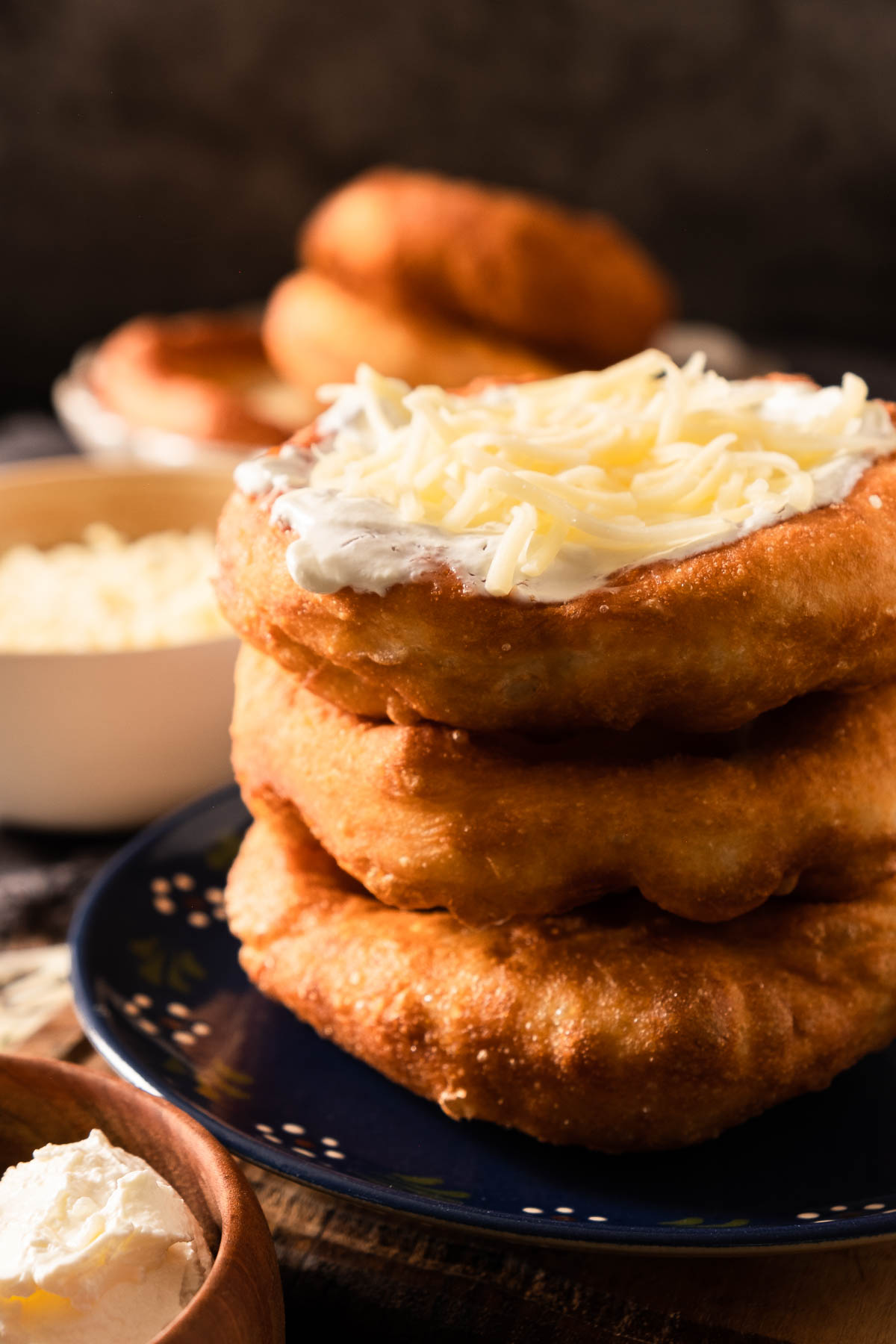
- Lángos is a yeast-risen Hungarian dough flatbread deep-fried until crisp on the outside and soft inside.
- The standard Hungarian topping combination is garlic oil (fokhagymás), sour cream (tejföl), and shredded gouda or trappista cheese (sajt).
- It originated as bread baked in the front lip of brick ovens on baking days, shifting to deep-fat frying in the mid-20th century.
- Lángos must be eaten fresh and blistering hot using your hands—utensils only make it harder to handle.
From brick ovens to seaside street stalls
The name lángos traces back to láng, the Hungarian word for flame. Long before gas fryers existed, rural Hungarian households baked sourdough bread once a week in heavy brick wood-fired ovens. After raking out the embers, embers still danced near the mouth of the oven. Bakers trimmed off scraps of leftover bread dough, stretched them by hand, and tossed them into the flames to bake quickly for breakfast.
Those early flatbreads were dense, slightly charred, and eaten plain or brushed with lard. When home bread baking declined in the mid-1900s, commercial vendors moved the process outdoors. Swapping the wood flame for massive kettles of boiling oil yielded a lighter, puffier bread with a blistered golden crust. Today, lángos is Hungary's ultimate comfort food, consumed at train stations, lake beaches, and city markets year-round.
Anatomy of the dough: Blistered crust, cloud-like middle
A proper lángos dough relies on basic ingredients: high-protein wheat flour, warm milk or water, yeast, sugar, and salt. Many classic vendors toss a boiled, mashed potato into the flour batch—a technique that traps moisture and produces a springier, softer center under the crunch.
After rising, cooks pinch off a ball of yeast dough and stretch it thin from the center outwards, leaving a thicker ring around the perimeter. Dropped straight into oil heated around 180°C (350°F), the dough expands within seconds. Hot air bubbles lift the surface while the wet center fries into a crisp lattice. If the oil is too cold, the dough drinks grease and turns heavy; if hot enough, it emerges airy, pale gold, and remarkably non-greasy.
The golden order: Garlic, tejföl, and sajt
Ordering a lángos plain is rare. At any authentic street kiosk, you will find a small counter jar filled with crushed garlic soaked in salted water or oil. The vendor brushes this pungent water directly onto the boiling hot crust before doing anything else.
Next comes tejföl, Hungary's dense, high-fat sour cream. Unlike western varieties, Hungarian tejföl is smooth, rich, and barely acidic, creating a cool barrier against the scorching fried dough. Finally, a fistful of grated milk-cheese—usually trappista or mild gouda—is scattered across the top, melting instantly into the cream.
How to read the menu board at a lángos sütő
Hungarian street food stalls (lángos sütő) move fast, and ordering boards are often handwritten in fast-paced local shorthand. The core words to spot include:
Sima: Plain fried dough, usually lightly salted.
Fokhagymás: Brushed with garlic water.
Sajtos: Topped with shredded cheese.
Tejfölös: Spread with rich sour cream.
Sajtos-Tejfölös: The crowd favorite with garlic, sour cream, and cheese.
Töltött Lángos: Folded over like a calzone and stuffed with bacon, ham, or sheep cheese (juhtúró).
When standing in line at a busy Budapest food hall where English menu translations are absent, taking a photo with MenuDish allows you to see matched photos of real dishes alongside allergen details, making sure you do not accidentally order sweet jam-topped dough when you wanted savory garlic and cheese.
Street etiquette: How to handle the heat without dripping
Lángos is served wrapped in thick brown paper or resting on a thin cardboard tray. Do not ask for a knife and fork—the dough is far too chewy, and attempting to slice it on paper will puncture your plate.
Fold the disc loosely inward toward the center to keep the sour cream and shredded cheese trapped, or tear off small pieces along the rim with your fingers. Eat it immediately while the steam is still trapped inside the crust. Once cold, the fried dough toughens quickly.
Don't cook it — find it.
See every dish on any menu before you order. Scan, see the photo, check allergens & nutrition.
Allergens: Gluten, Dairy. The MenuDish app flags these automatically for every dish it scans.