Key takeaways
- Pide is a boat-shaped Turkish flatbread baked at high temperatures until the edges turn golden and blistered.
- Common toppings include kıymalı (spiced minced beef or lamb), kuşbaşılı (diced meat with peppers), and peynirli (melted regional cheeses).
- Unlike wafer-thin lahmacun, pide has a thicker, pillowy rim that traps juices and melted butter.
- Most pide bakeries brush melted butter along the crust the second it leaves the wood-fired oven.
More than just 'Turkish pizza'
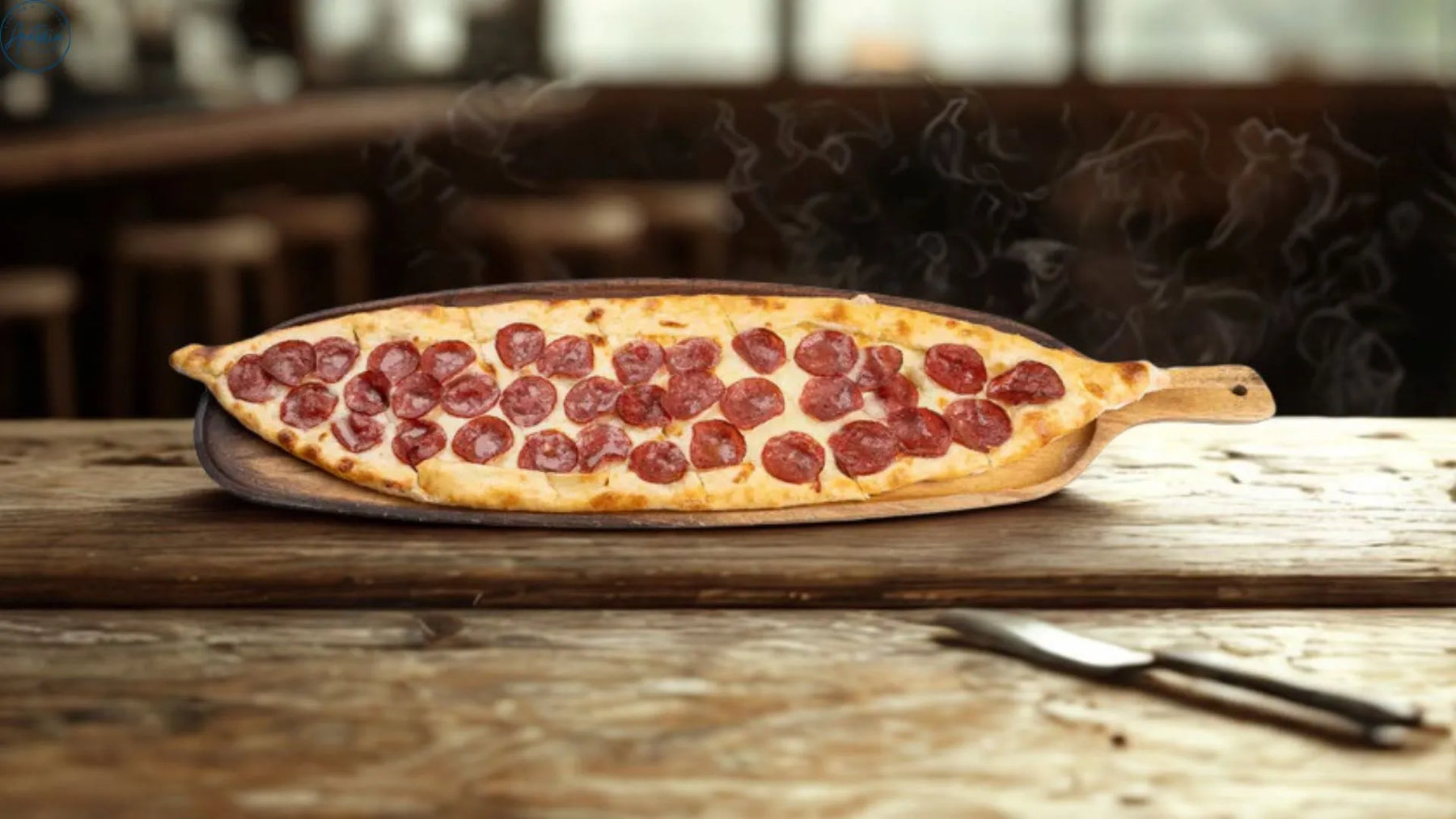
Calling pide Turkish pizza gives you a rough idea of its form, but it misses what makes the crust distinct. Pide (pronounced pee-DEH) uses a kneaded yeast dough enriched with yogurt or milk, giving it a supple interior and a golden, slightly crisp exterior. The baker rolls the dough into a long oval, lays down filling, and folds the outer inches inward to form a raised rim with pointed ends.
That boat shape is functional. It keeps meat juices, melted cheese, and rendered fats from dripping into the floor of the stone oven while baking. The result is a dish that balances crisp bottom dough with a rich, soft center.
Kuşbaşılı, Kıymalı, and Peynirli: Decoding the toppings
When you sit down at a neighborhood pideci (pide shop), the menu is usually organized by topping types rather than complex specialty names. Understanding three or four basic terms unlocks almost every variation:
Kıymalı: Fine ground lamb or beef mixed with minced onions, garlic, tomatoes, and parsley. It bakes down into a savory paste sticking closely to the crust.
Kuşbaşılı: Small, hand-diced cubes of sirloin or lamb meat tossed with bell peppers, tomatoes, and black pepper. The meat cooks quickly in the scorching oven heat while staying tender.
Peynirli: A cheese filling typically made from salty kaşar cheese, Turkish feta (beyaz peynir), or aged local cheeses that stretch like mozzarella when pulled apart.
Sucuklu: Topped with thick slices of sucuk, a cured, heavily spiced garlic beef sausage that releases flavorful red oils as it bakes into the cheese layer.
Pide vs. Lahmacun: What is the actual difference?
Tourists frequently conflate pide with lahmacun because both are flatbreads topped with spiced meat. However, they are fundamentally different textures and eating experiences.
Lahmacun uses unleavened dough rolled as thin as a tortilla. It is smeared with a sparse coat of spiced meat, baked in under two minutes, and eaten rolled up around parsley and lemon juice. Pide uses a raised yeast dough, features a folded border, holds far more heavy topping, and is sliced crosswise into bite-sized strips before serving.
Wood fires, pat of butter, and raw egg yolk
Traditional pide is cooked over oak wood fires at temperature exceeding 700°F (370°C). The intense floor heat crisps the underside within three to four minutes while puffing up the outer crust.
Just as the pide exits the oven, the baker sweeps a block of fresh butter across the piping-hot crust rim. Some shops also crack a raw egg directly over meat or cheese pide thirty seconds before pulling it out of the fire, letting the egg white set while the yolk remains velvety and runny for dipping.
How to pick the right pide on a Turkish menu
Pide menus in Turkey can look overwhelming when listing dozen variations combining different meats, vegetables, and regional cheeses. If you want a bit of everything, look for karışık pide, which translates to mixed flatbread featuring sections of cheese, ground meat, and cured sausage.
When reading untranslated menus abroad, dish descriptions do not always make it clear whether a pide contains spicy sausage, pure cheese, or diced cuts of meat. Using the MenuDish app lets you scan the menu text to quickly view matched real dish photos and ingredient breakdowns before ordering, ensuring you do not accidentally order chopped offal when you wanted plain melted cheese.
Don't cook it — find it.
See every dish on any menu before you order. Scan, see the photo, check allergens & nutrition.