Key takeaways
- Holy basil (kaphrao) provides a peppery, clove-like kick completely different from sweet Italian or sweet Thai basil.
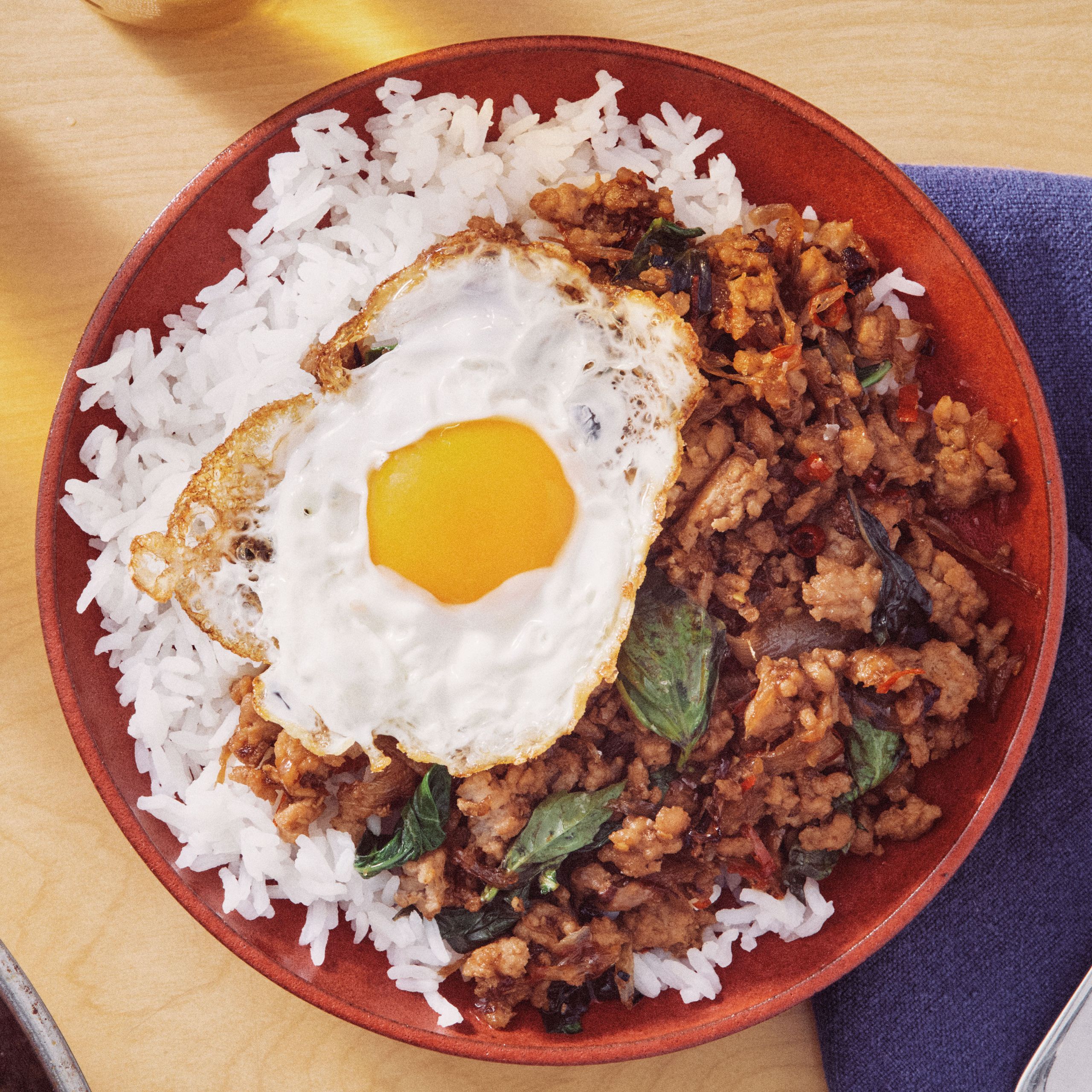
- The dish pairs hand-minced pork, chicken, or crispy pork belly with garlic, bird's eye chilies, fish sauce, and dark soy.
- A Thai fried egg (Kai Dao)—blistered crisp on the edges with a runny yolk—is essential to balance the heat.
- Prik nam pla, a table side condiment of sliced chilies soaked in lime and fish sauce, lets you fine-tune salt and acid.
Holy basil is not the sweet basil in your pasta
If you take a bite of Pad Kra Pao expecting the gentle, fragrant sweetness of an Italian pesto or even sweet Thai basil (horapa), your tastebuds are in for a sharp awakening. The soul of this stir-fry lies in holy basil (kaphrao), a jagged-edged leaf with tiny hairy stems and reddish undertones.
Holy basil tastes peppery, faintly camphoraceous, and almost medicinal when raw. High-heat wok frying tames that astringency, converting it into an earthy, warm aroma with hints of clove and anise. Subbing Italian sweet basil creates an entirely different dish—tasty, perhaps, but lacking the fiery bite that defines authentic Thai street cooking.
Minced pork, crispy pork belly, or squid?
While you can find Pad Kra Pao with chicken breast or beef, hand-chopped pork (pad kra pao moo) remains the gold standard across Thailand. The fat rendered from minced pork coats the aromatic garlic and pounded chilies, creating a glistening, savory sauce that clings to every grain of rice.
For extra texture, look for kra pao moo krob—made with thick slabs of pork belly fried until the skin crackles into golden chicharron-like bubbles. Seafood options like squid (pla muk) or prawns (goong) cook in seconds over searing heat, staying tender against the fierce garlic-chili kick.
The crispy fried egg (Kai Dao) is non-negotiable
Ordering Pad Kra Pao without a fried egg on top is considered a minor food tragedy in Thailand. But this is not a gentle poached egg or a pale, soft sunny-side-up egg from a western diner.
A proper Kai Dao is shallow-fried in hot lard or oil until the white splatters into a puffed, bronze crown with paper-thin crisp edges. The yolk stays soft and liquid. When sliced open, rich yolk cascades over the spiced minced meat, muting the fiery bird's eye chilies just enough to make your next bite manageable.
How to ask for heat without burning your mouth
Street cooks mortar-and-pestle fresh bird's eye chilies (prik kee noo) together with garlic cloves before tossing them into red-hot oil. The oil instantly captures the capsaicin, meaning the heat permeates every millimeter of the stir-fry.
If you prefer a milder plate, tell the cook "เผ็ดน้อย" (phet noi—a little spicy). If you want the full authentic heat that makes your forehead sweat, ask for "เผ็ดปกติ" (phet pokati—normal Thai spicy). Be warned: "normal" in Thailand frequently involves five to eight fiery chilies per portion.
Spotting authentic Kra Pao on foreign menus
Outside Thailand, menu descriptions get muddy. Westernized restaurants frequently dilute the dish by adding onion slices, baby corn, green beans, or sweet bell peppers. True street-style Pad Kra Pao contains almost no filler vegetables—just meat, garlic, chilies, and generous handfuls of holy basil wilting in dark soy and fish sauce.
When sitting at a crowded Bangkok shop with a Thai-only menu, opening MenuDish lets you scan the listing to instantly reveal ingredients, heat indicators, and matched real dish photos so you can confirm whether you are getting chopped pork with crispy eggs or a heavily adjusted vegetable mix.
Don't cook it — find it.
See every dish on any menu before you order. Scan, see the photo, check allergens & nutrition.
Allergens: Fish sauce (anchovy), Soy, Gluten (dark soy sauce), Egg. The MenuDish app flags these automatically for every dish it scans.