Key takeaways
- Greeks rarely order separate three-course meals; instead, order several mezedes (small plates) for the table to share.
- Fresh fish on Greek menus is priced per kilogram, not per portion—always confirm the total weight before ordering.
- Ladera dishes (vegetables simmered in olive oil) are cooked in the morning and served at room temperature.
- Unrequested bread and bottled water brought to your table come with a small cover charge (kouver) added to your bill.
Start with mezedes, not an individual main dish
If you order a traditional starter, main course, and dessert for yourself at a Greek taverna, your waiter will look at you like you just asked for coffee before dinner. Eating out in Greece is built around mezedes—small to medium plates brought out to the middle of the table as soon as they are ready from the kitchen.
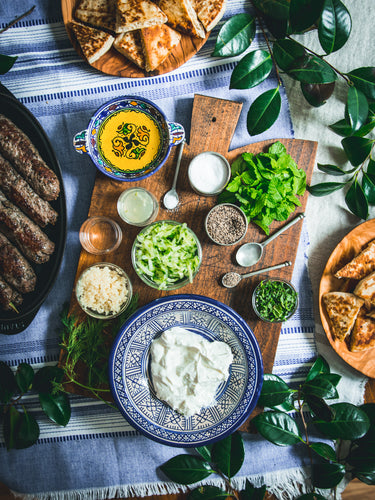
Instead of locking yourself into a heavy steak or pastitsio, start with three or four sharing plates for two people. Classic starters include tzatziki (garlic cucumber yogurt dip), fava (yellow split pea puree topped with capers and red onion), and saganaki (a slab of hard cheese fried until bubbly and squeezed with lemon). Add a plate of grilled octopus or crispy fried zucchini chips, and you already have the foundation of a real meal.
Ladera, Mageirefta, and Psaria: Understanding the layout
Greek menus divide dishes by cooking style rather than meat type. Recognizing these headings keeps you from ordering four dishes that were cooked in the exact same way.
Ladera (literally 'oily dishes') are vegetable-heavy staples simmered slowly in olive oil, onion, and fresh tomatoes. Think fasolakia (braised green beans) or gemista (peppers and tomatoes stuffed with rice and herbs). These dishes are usually prepared early in the day and served warm or at room temperature, making them deeply flavorful.
Mageirefta refers to home-style slow-cooked oven dishes, like kokkinisto (beef braised in rich tomato sauce) or kleftiko (parchment-baked lamb with garlic and potatoes). If you want quick-grilled chops or souvlaki skewers, look under Tis Oras ('of the hour'), which covers items cooked fresh to order over charcoals.
The catch-of-the-day trap: Fish priced by weight
Ordering seafood by the coast leads to some of the finest meals in Greece, but it is also where tourists hit their biggest bill shock. Fresh whole fish—like tsipoura (sea bream), lavraki (sea bass), or barbounia (red mullet)—is listed with a price per kilogram (written as €/kg), not a flat rate per dish.
A menu listing that says €60 might sound steep, but that is for a full 1,000 grams of fish. A typical sea bream for one person weighs around 400 to 500 grams, while a large catch intended for a group could easily reach 1.5 kilograms. To keep your bill predictable, ask to see the fish at the counter or fish display display case. The staff will weigh it in front of you and tell you the exact price before putting it on the charcoal grill.
Reading Greek menus with confidence
Hand-written chalkboards outside seaside tavernas are often written in fluid Greek cursive. Even translated paper menus can leave you guessing whether a dish contains minced lamb, fried squash, or organ meat.
Scanning the menu with MenuDish shows translated names alongside matched photos of actual dishes from real food photography databases. That way, when you spot kolokithokeftedes or gigantes plaki, you see golden zucchini fritters speckled with fresh mint or tender butter beans baked in thick tomato sauce before committing to a dish you have never tried.
Cover charges, bread fees, and tipping etiquette
When you sit down, a basket of country bread and a bottle of mineral water will almost certainly hit your table before you take your jacket off. This is not a free gift, but it is not a scam either. It is standard Greek kouver (cover charge), typically running between €1.00 and €2.50 per person.
If you genuinely do not want the bread, politely tell the waiter right away, though bread is essential for mopping up tomato sauce and olive oil from your salad plate. When the final bill arrives, service charges are built into the listed prices. Tipping in Greece is casual: rounding up a €36 bill to €40 or leaving €2 to €5 in cash on the table for good service is plenty.
Don't cook it — find it.
See every dish on any menu before you order. Scan, see the photo, check allergens & nutrition.