Key takeaways
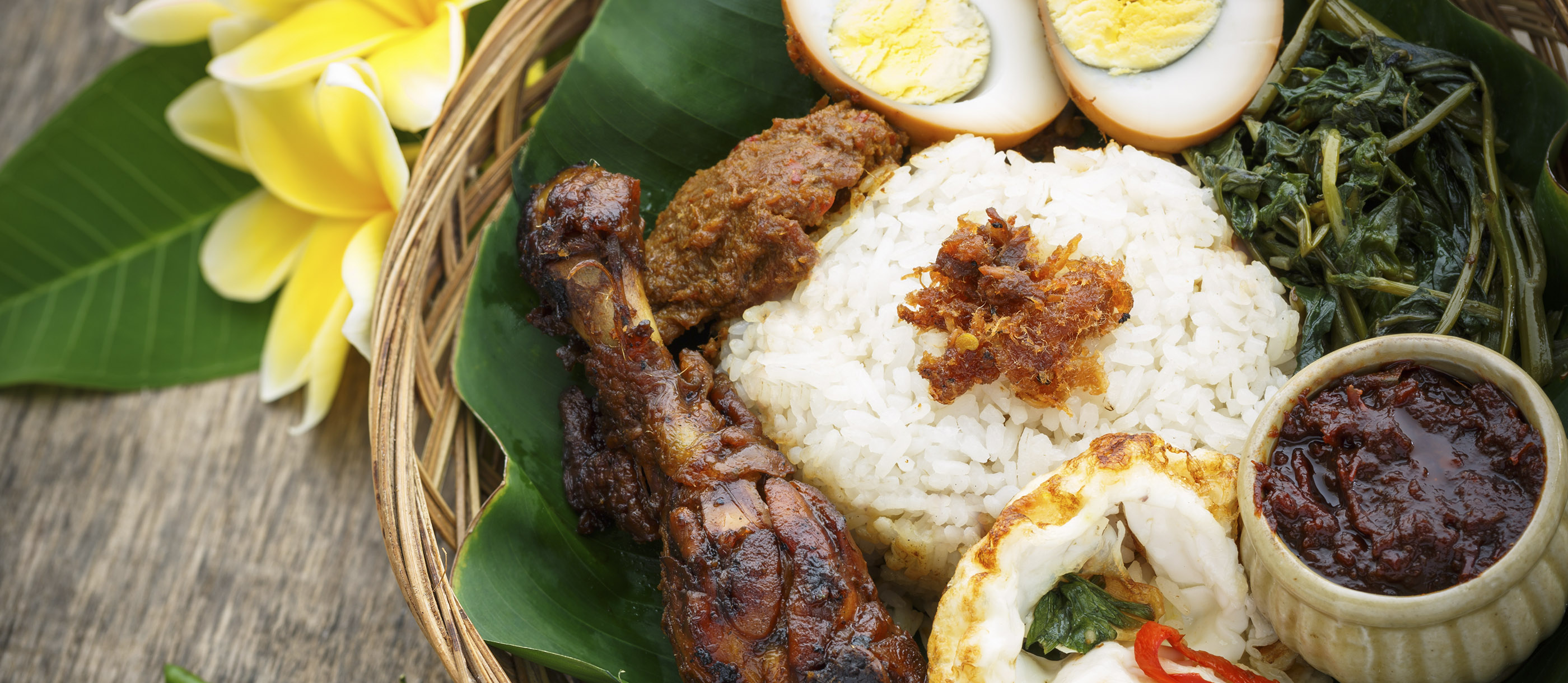
- Warung glass counters (Nasi Campur) let you point to choose side dishes over a central scoop of white rice.
- Sambal is an essential component, not a condiment; options range from raw Sambal Matah to cooked Sambal Terasi.
- Cooking terms like 'Bakar' (charcoal grilled) and 'Goreng' (deep fried) tell you the preparation method before you choose a protein.
- Soups called 'Soto' are aromatic broth dishes built on turmeric, lemongrass, and glass noodles, served separately from rice.
The Warung Glass Counter: Understanding Nasi Campur
Step into a traditional neighborhood warung—a family-run eatery—and you will likely encounter the etalase, a glass front display stacked with freshly cooked dishes. This is where Nasi Campur (mixed rice) happens. Instead of ordering a single main, you start with a warm mound of white rice, then point through the glass to build a custom plate.
A typical combination pairs a protein like Ayam Goreng (fried chicken) or Sapi Rendang (slow-braised coconut beef) with vegetable sides like Sayur Urap (steamed greens tossed in toasted spiced coconut) or Tahu Tempe Bacem (sweet-savory braised tofu and tempeh). Do not skimp on the toppings: a spoonful of fried garlic flakes or a crispy fried kerupuk cracker gives the dish its required texture crunch.
Goreng, Bakar, and Penyet: Deciphering the Cooking Verbs
Indonesian menus prioritize the cooking technique over the cut of meat. Master four basic verbs and half the menu suddenly makes sense. Goreng means deep-fried, usually after meat has been simmered in garlic, coriander, and turmeric broth. Bakar means grilled over glowing coconut charcoal, brushed with sweet soy sauce (kecap manis) and shallot oil as it chars.
If you see Penyet, expect your meat or fried tofu to be smashed flat with a wooden mortar directly onto a pile of fresh sambal, tenderizing the protein and forcing spicy paste into every crevice. Meanwhile, Gulai denotes a rich, spiced coconut milk stew that lies somewhere between a curry and a slow simmer, heavily flavored with galangal and star anise.
Not All Fire Is Equal: A Field Guide to Sambal
Asking for generic hot sauce in Indonesia leaves out every meaningful detail. Sambal is an essential table component, not an afterthought. Sambal Terasi is the deep red workhorse paste, made from bird's eye chilies blended with roasted shrimp paste and lime juice, offering a punch of funky umami.
For crisp freshness, look for Balinese Sambal Matah. It remains raw: sliced shallots, lemongrass stalks, bird's eye chilies, kaffir lime leaves, and warm coconut oil tossed together like a fiery salsa. If you encounter a dark green paste, that is Sambal Hijau, made with green chilies and green tomatoes, delivering a brighter, slightly milder heat popular in Sumatran cooking.
Beyond Basic Skewers: Satay and Soto Decoded
Satay in Indonesia extends far beyond standard peanut chicken skewers. Sate Ayam comes coated in creamy peanut sauce and sweet soy, but Sate Lilit from Bali features minced pork or fish kneaded with grated coconut and lemon basil, wrapped tightly around sugarcane or lemongrass stalks before grilling.
If you want soul food on a rainy afternoon, search for the word Soto. These light, aromatic noodle soups vary dramatically by city. Soto Ayam uses a clear turmeric-yellow chicken broth packed with shredded poultry, glass noodles, boiled egg, and crispy potato tokens. Down south, Coto Makassar uses beef simmered in a rich ground peanut and garlic broth that demands a squeeze of fresh lime.
How to Visual-Check Unfamiliar Indonesian Dishes
When a paper menu simply reads Gudeg Jogja or Rawon, knowing the main ingredient will not tell you what the bowl actually looks like. Rawon, for instance, turns an intimidating jet-black color due to fermented keluak nuts, even though it tastes like a deeply aromatic, nutty beef soup.
Instead of guessing whether a black stew or a dark brown paste fits your palate, scanning the paper menu with the MenuDish app matches menu items to real food photos from database libraries alongside clear ingredient lists. Seeing that dark broth floating with crispy bean sprouts and salted egg makes trying a regional specialty far simpler when you cannot speak fluent Bahasa.
Don't cook it — find it.
See every dish on any menu before you order. Scan, see the photo, check allergens & nutrition.