Key takeaways
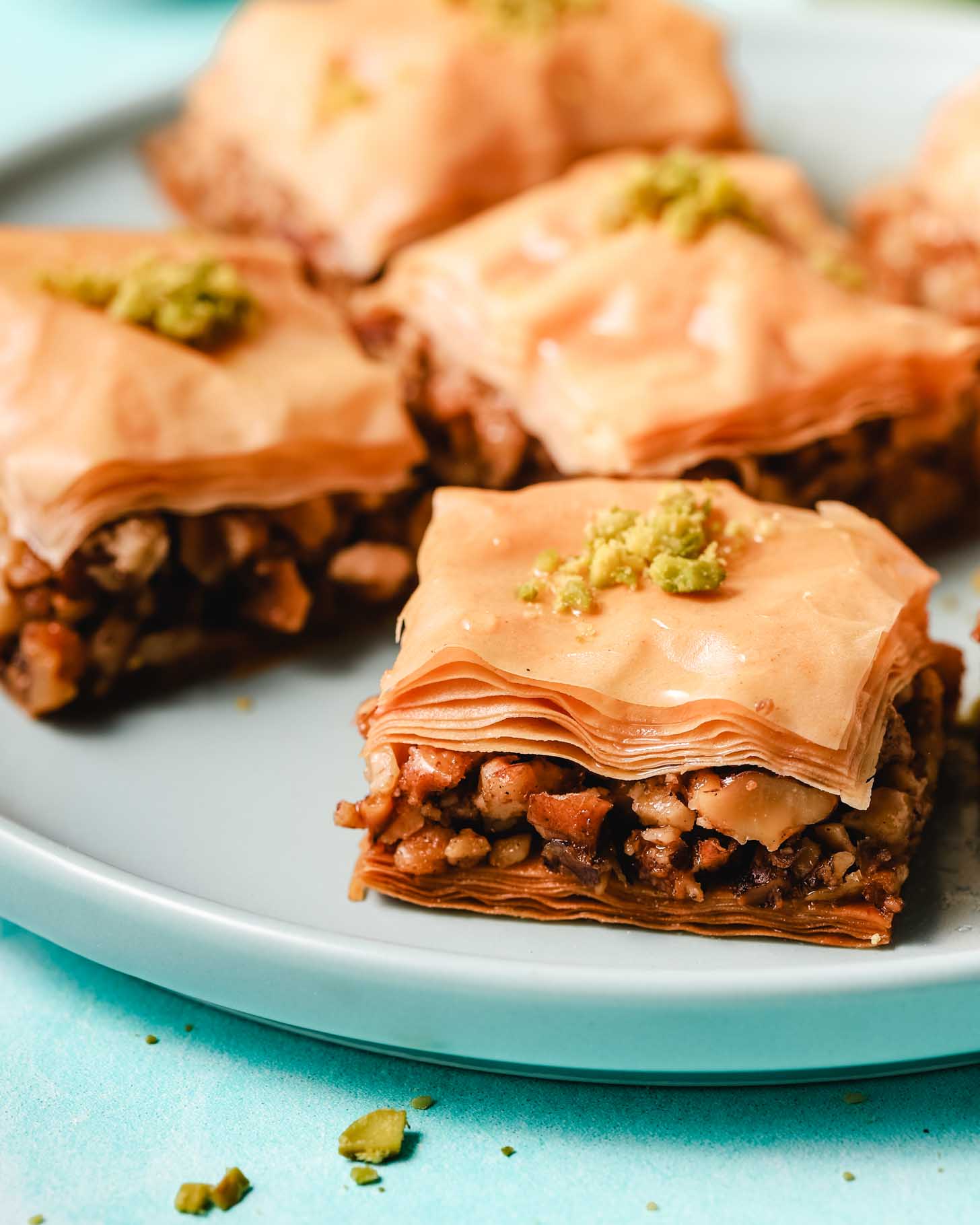
- Baklava is a rich, sweet pastry with thin layers of phyllo dough, chopped nuts, and a sweet syrup.
- Its origins are debated, with strong ties to Ottoman, Greek, and Middle Eastern cuisines, each with unique preparations.
- Key ingredients include phyllo dough, butter (often clarified), nuts (pistachios, walnuts, almonds), and a sugar or honey syrup.
- Expect a delicate crunch from the phyllo, a rich nuttiness, and a sticky, sweet finish from the syrup.
- Variations exist in nut choice, syrup flavorings (lemon, orange blossom, rosewater), and shape.
Layers of History and Flavor: What Exactly is Baklava?
At its core, Baklava is a true masterpiece of pastry making: paper-thin sheets of unleavened dough, called phyllo (or 'filo'), layered with a generous filling of chopped nuts, baked until golden brown, and then drenched in a fragrant, sweet syrup. It’s a dessert that perfectly balances delicate crispness with sticky sweetness, a symphony of textures and flavors that has captivated palates for centuries.
While many associate Baklava primarily with Greece or Turkey, its true origins are a delicious tapestry woven across the vast Ottoman Empire. Each region, from the Balkans to the Middle East, adopted and adapted the pastry, making it their own with local ingredients and techniques. This means you'll find a delightful array of Baklava styles, all sharing that fundamental structure but offering distinct experiences.
The Anatomy of a Perfect Bite: What to Expect
When you take a bite of well-made Baklava, several things should happen:
- The Crunch: The top layers of phyllo should shatter with a delicate crunch, a testament to proper baking and generous buttering.
- The Nuts: You'll hit the sweet, nutty core, typically walnuts, pistachios, or almonds, sometimes a mix. The nuts should be finely chopped but still offer a slight texture.
- The Syrup: This is where the magic happens. A good syrup is not just sugar water; it’s infused with aromatics like lemon zest, cinnamon, orange blossom water, or rosewater, providing a floral or citrusy counterpoint to the sweetness. It should be absorbed into the pastry, making it moist and flavorful, but not soggy.
The overall experience should be rich, sweet, and utterly satisfying, with a lingering warmth from the spices and nuts.
Regional Variations: The Baklava Family Tree
Think of Baklava as a large, delicious family. Here are a few notable members you might encounter:
- Turkish Baklava: Often made with pistachios and a simple sugar syrup, cut into diamonds or squares. Gaziantep, a city in Turkey, is particularly famous for its Baklava.
- Greek Baklava: Commonly uses walnuts, sometimes with a hint of cinnamon or clove, and a lemon-infused syrup. It can be cut into triangles or rolls.
- Middle Eastern Baklava: This category is broad, but you'll often find more elaborate designs, like 'bird's nest' (osh el bulbul) or cigar-shaped rolls, frequently featuring pistachios and scented with rosewater or orange blossom water.
- Balkan Baklava: Often uses walnuts and can be slightly less sweet than its Turkish or Greek counterparts, with a more pronounced spice blend.
Each version offers a unique twist, proving that a simple concept can lead to incredible diversity.
Ordering Your Baklava with Confidence
Next time you're faced with a menu offering Baklava, don't hesitate. Look for descriptions that mention specific nuts, or syrup flavorings. If you're unsure which type to pick, ask your server if it's made with walnuts or pistachios, and what kind of syrup they use. You might even discover a new favorite. If you're dining somewhere new and want to know exactly what to expect, MenuDish can be a great help, showing you real dish photos of different Baklava styles right from the menu, so you can see those golden layers and nutty fillings before you even order.
Don't cook it — find it.
See every dish on any menu before you order. Scan, see the photo, check allergens & nutrition.
Allergens: Gluten, Dairy, Nuts (walnuts, pistachios, almonds). The MenuDish app flags these automatically for every dish it scans.