Key takeaways
- Bánh mì uses a distinct Vietnamese baguette mixed with rice flour, making the crust paper-thin and shattering while keeping the inside light and airy.
- The signature flavor profile relies on high-contrast pairings: rich liver pâté and pork fat balanced by sweet pickled daikon and carrots.
- Common variations range from the cold-cut heavy Bánh Mì Đặc Biệt to charcoal-grilled pork and lemongrass tofu.
- If you are staring at a Vietnamese menu with dozens of cryptic filling options, MenuDish scans the menu and matches dishes with real food photos so you can see exactly what you are ordering.
The bread that shatters
French colonists introduced the wheat baguette to Vietnam in the late nineteenth century, but local bakers modified the technique to suit Saigon's tropical heat and ingredient supply. By cutting the wheat flour with rice flour and using longer proofing cycles, they produced a bread unlike anything found in Paris. The crust on a true bánh mì loaf is micro-thin and crackles like delicate glass under your teeth, while the crumb inside is almost feather-light.
Because the interior bread is light rather than dense and chewy, it doesn't overpower the fillings inside. It acts purely as a crisp, airy vessel to carry rich meats and tart pickles.
Anatomy of a classic bánh mì
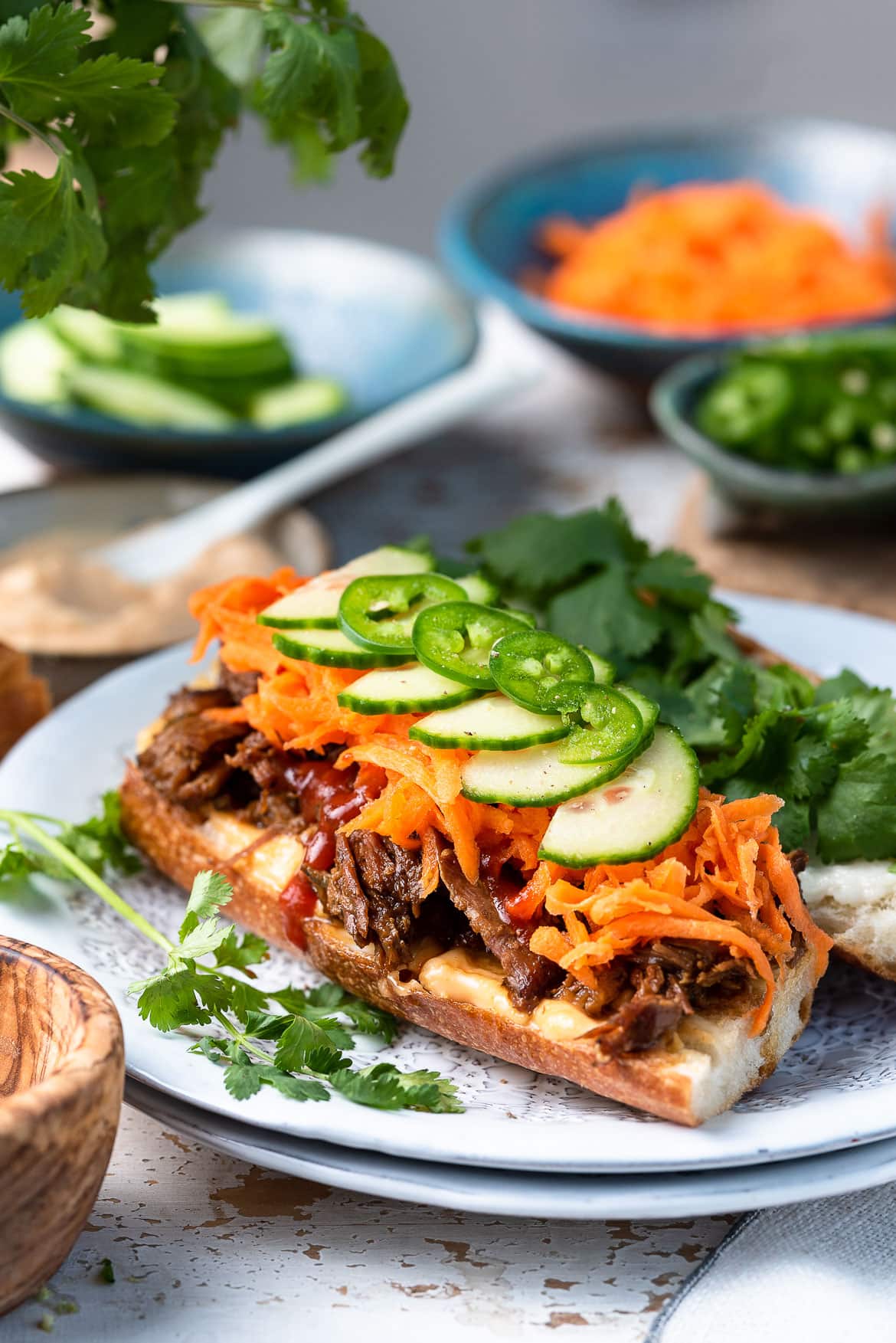
When you order a traditional Bánh Mì Thịt (pork sandwich), a specific stack of ingredients goes into every loaf:
1. The Spreads: A layer of homemade French-style egg mayonnaise goes on one side, and savory pork liver pâté on the other. The pâté adds deep, rich garlic and iron notes that anchor the whole sandwich.
2. The Meats: Traditional street stalls layer thin slices of pork roll (chả lụa), seasoned pork belly, and headcheese or ham. It provides a savory chew in every bite.
3. The Vegetables: Crisp sticks of raw cucumber and generous handfuls of fresh cilantro sprigs cut straight through the pork fat.
4. The Pickles: Shredded daikon radish and carrots pickled in rice vinegar and sugar (đồ chua) deliver a crunch that keeps the sandwich refreshing.
5. The Kick: Slices of fiery fresh jalapeño or Thai chili pepper, finished with a quick splash of Maggi seasoning sauce or soy sauce.
Popular fillings to look for on a menu
Not every shop sticks to cold cuts. Vietnamese menus usually offer several hot meat choices that change the character of the sandwich entirely:
Bánh Mì Thịt Nướng: Thinly sliced pork marinated in garlic, shallots, fish sauce, and sugar, grilled over open charcoal until caramelized and smoky.
Bánh Mì Xíu Mại: Tender pork meatballs simmered in a light garlic-tomato gravy. The warm sauce soaks right into the soft bread crumb.
Bánh Mì Ốp La: Fried eggs with runny yolks, often seasoned with a splash of soy sauce. Popular for breakfast across Vietnam.
Bánh Mì Chay: The vegetarian version, commonly packed with lemongrass-marinated fried tofu, pan-seared mushrooms, or gluten-based mock meats that soak up seasoning well.
How to order with confidence
If you prefer less heat, ask for không ớt (no chilis). If you dislike cilantro, ask for không ngò. Traditional shops pull hot loaves straight out of small ovens every few hours; if you see bread resting in warm cabinets behind the counter, you are in for a good meal.
When faced with a long takeout menu that lists Vietnamese terms without descriptions, open MenuDish to scan the text. The app matches each menu item with real dish photos and ingredient breakdowns, so you can easily spot the difference between boiled pork roll and grilled charcoal pork before you hand over your cash.
Don't cook it — find it.
See every dish on any menu before you order. Scan, see the photo, check allergens & nutrition.