Key takeaways
- Birria originated in Jalisco, Mexico, traditionally made by slow-braising goat meat with dried chiles and spices.
- Birria de res (beef) gained popularity in Tijuana and California, leading to the creation of crispy quesabirria tacos.
- Consommé is the aromatic skimming fat and simmered braising broth used both as a dipping broth and a soup bowl.
- A great birria balances rich fatty marrow, bright acidity from vinegar or lime, and warm spice notes like clove and cumin.
It started with goat in 16th-century Jalisco
Long before cheese-stuffed tacos swept across night markets, birria was a practical solution to an ecological problem. During the Spanish conquest, goats multiplied rapidly across the central state of Jalisco, grazing unchecked and destroying crops. The meat was notoriously tough, lean, and gamey. Local cooks tackled the problem by marinating goat meat in acidic vinegar, wild herbs, and dried chiles before slow-roasting it underground in clay pots.
The word birria originally carried a slightly derogatory meaning in Spanish, loosely translating to 'worthless' or 'a mess.' Yet the low-and-slow cooking method transformed tough goat into meltingly tender morsels soaked in a dark, deeply spiced gravy. To this day, in towns like Guadalajara and Cocula, traditional birrierías serve goat birria on weekend mornings as a hearty breakfast or hangover remedy, served as a thick stew accompanied by hand-pressed corn tortillas, minced raw white onion, and chopped cilantro.
Goat versus beef: The Tijuana transformation
While goat remains the gold standard for purists in Jalisco, beef birria—known as birria de res—changed the dish's trajectory entirely. In the 1950s, street vendors in Tijuana began substituting goat with beef chuck roast and shank. Beef was cheaper, more widely available, and produced a richer broth loaded with natural collagen and rendered beef fat.
This shift laid the foundation for modern taco culture. Beef birria produces a heavier layer of red aromatic fat on top of the cooking liquid. Cooks skim this spiced oil, coat raw corn tortillas in it, and lay them directly onto a piping-hot flat top stove. As the tortilla fries, the red fat caramelizes into the corn dough, creating a shatteringly crisp edge that holds up to wet, juicy meats without falling apart in your hands.
Inside the quesabirria and the art of dipping consommé
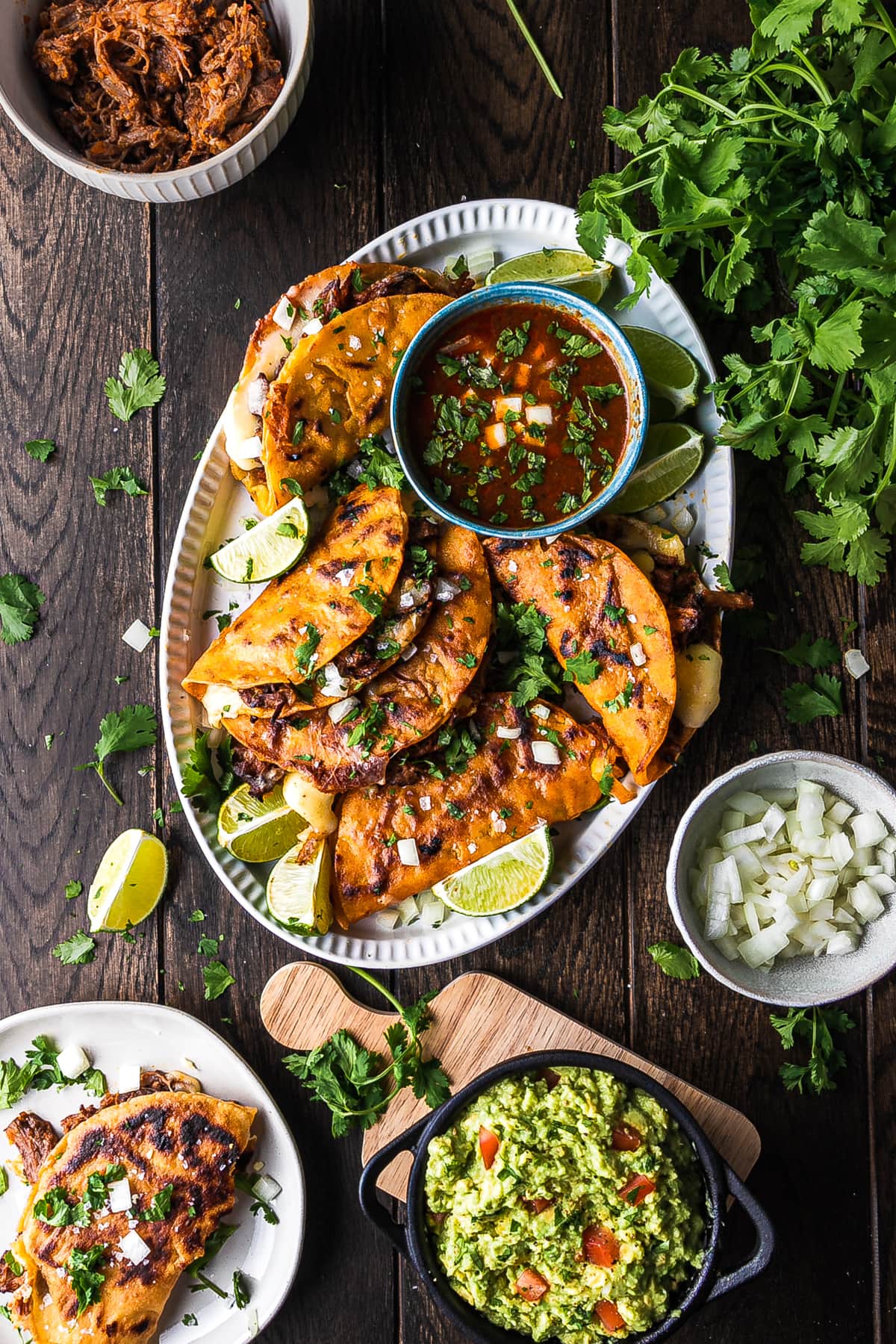
If you have seen birria online, you have almost certainly seen a quesabirria taco. Born in Tijuana taquerias and popularized by food trucks in Los Angeles and Mexico City, quesabirria marries two distinct styles: the melting stringiness of shredded Oaxaca cheese and the spiced depth of slow-braised beef.
The centerpiece of the meal is the consommé. This is the strained, brick-red braising liquid spiced with guajillo chiles, ancho chiles, Mexican cinnamon, cloves, allspice, and roasted garlic. When you order quesabirria, you receive a small cup of this scalding broth alongside your tacos. Dunking the crispy, cheese-stuffed taco into the broth moistens the fried shell and saturates every bite with concentrated braise juices. Don't forget to sip the remaining consommé directly from the cup when your tacos are gone.
What authentic birria actually tastes like
Birria should never taste like a basic beef chili or tomato soup. Its distinct flavor profile comes from a precise balance of dried chiles and warm baking spices. Dried guajillo chiles provide bright red color and a mild, tangy heat, while ancho chiles lend a sweet, raisin-like smoke. Clove, cumin, Mexican oregano, and a pinch of cinnamon add warmth, while apple cider vinegar cuts through the rich beef tallow.
A great bowl or taco hits four notes at once: savory tender meat, tangy acidity, subtle background warmth, and herbal freshness from cilantro and raw onions. If a taco tastes greasy without any spice depth or acidity, the broth was likely rushed or skimped on dried chiles.
How to order birria like a local
When visiting an authentic taqueria or Mexican restaurant, you will often find several options on the menu board. Ordering en plato gives you a deep bowl of rich meat and broth served with warm tortillas on the side. Ordering tacos de birria gives you soft or lightly seared tortillas packed with meat, while quesatacos or quesabirria guarantees melted cheese fried inside a red-dipped tortilla shell.
If you're looking at a printed board menu crammed with regional Mexican terms, pointing your camera using MenuDish lets you instantly see matched photos of each dish option alongside ingredients and allergens. Seeing real food photos before you order makes it easy to choose between a bowl of traditional goat stew and a trio of crispy beef quesabirria tacos.
Don't cook it — find it.
See every dish on any menu before you order. Scan, see the photo, check allergens & nutrition.
Allergens: beef, dairy. The MenuDish app flags these automatically for every dish it scans.