Key takeaways
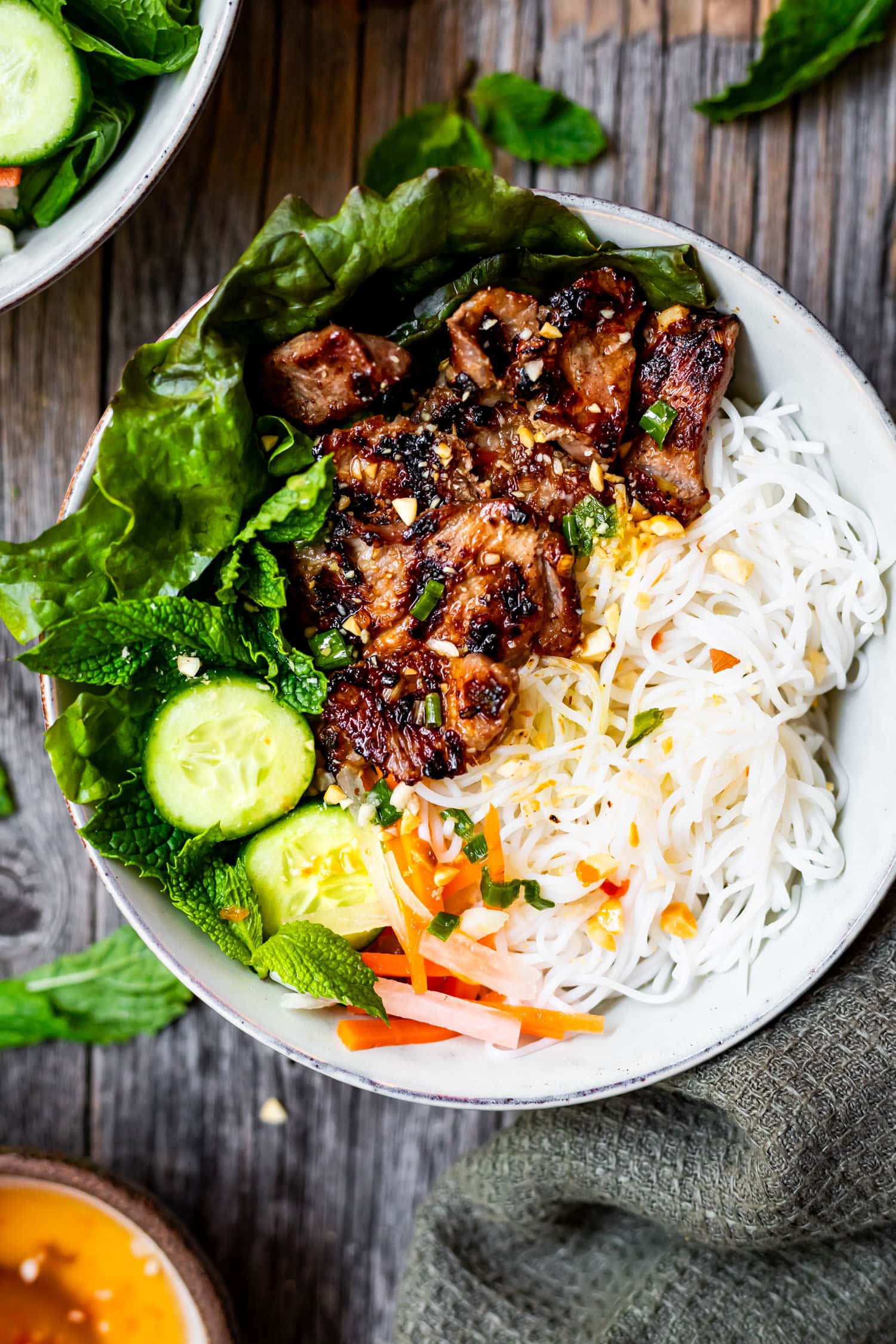
- Bún chả features charcoal-grilled pork belly and seasoned patties suspended in a warm, sweet-savory fish sauce broth.
- Cold rice vermicelli noodles and fresh leafy herbs are dipped into the warm broth in small bite-sized portions.
- The dish originates in Hanoi, where street vendors grill marinated pork over open wire mesh grills.
- Pairing the dish with crispy crab spring rolls (nem cua hải) creates the traditional Hanoian lunchtime combination.
The Hanoi lunchtime smoke signal
In Hanoi, lunch hour belongs to bún chả. By eleven in the morning, street vendors fan red coals while turning iron mesh grids packed with sliced pork and ground pork patties. The fat rendered over raw heat coats the charcoal, creating an unmistakable smoky haze across entire city blocks.
Unlike heavy noodle soups designed to warm you up in winter, bún chả is served mostly at room temperature. It offers a balanced hit of smokiness, tartness, and sweet sugar, accompanied by mountains of fresh green herbs that make it remarkably easy to finish under a hot sun.
What actually comes on the table
Order bún chả and the server will lay down several small plates and bowls rather than a single mixed dish. Navigating what goes where can feel confusing if you haven't seen it served before.
The centerpiece is a wide bowl filled with warm, pale amber broth made from diluted fish sauce, rice vinegar, and sugar. Charred pork slices and patties float inside, along with wafer-thin slices of crunchy pickled green papaya and kohlrabi. Beside the bowl, you will get a basket of cold, thin rice vermicelli noodles (bún), a towering tray of fresh herbs, and small containers holding freshly minced garlic and fiery bird's eye chilies.
Chả viên vs. chả miếng: two textures of pork
A true Hanoian bún chả vendor never limits you to just one style of meat. You get two distinct cuts, each prepared with its own marinade and cooking method.
Chả miếng consists of thin slices of pork belly left overnight in fish sauce, caramel syrup, garlic, and sliced shallots. Chả viên are hand-pressed patties made from seasoned ground pork shoulder. Old-school cooks wrap each patty in wild betel leaf (lá lốt) before charcoal-grilling, adding a peppery, herbal note to the meat. The contrast between the crisp, caramelized edges of the belly and the tender interior of the patties defines the dish.
How to eat it without making a mess
The biggest beginner mistake is tipping all your cold vermicelli noodles straight into the warm soup bowl at once. Doing this instantly cools down the broth and turns the delicate rice noodles into an unwieldy, soaked clump.
The traditional method is gradual. Grab a small nest of cold noodles with your chopsticks and dunk it into the broth for a few seconds. Pick up a slice of grilled pork and a leaf of fresh perilla, wrap them together with the submerged noodles, and lift the whole bundle to your mouth. Between mouthfuls, crunch on a slice of pickled papaya to clean your palate.
The balance of broth, garlic, and wild herbs
The clear dipping broth (a version of nước chấm) acts as the glue holding the meal together. It is diluted until mild enough to sip like a light soup, striking a delicate balance between sweet coconut sugar, salty fish sauce, and sharp lime juice.
The herb platter isn't a decorative garnish—it provides essential bitter and minty contrast to the greasy pork fat. Look for purple perilla (tía tô) with its deep anise note, Vietnamese balm (kinh giới), coriander, and crisp leaf lettuce. If you like heat, stir in a spoonful of raw garlic and sliced red chilies directly into your warm dipping bowl.
Ordering bún chả and spotting side dishes
While small sidewalk joints usually cook only one thing, larger establishments often offer side dishes. The classic pairing is nem cua hải—square, deep-fried spring rolls stuffed with minced crab, ground pork, wood ear mushrooms, and glass noodles. Dunking pieces of shatteringly crisp crab roll into the sweet pork broth adds incredible texture to the meal.
When reviewing a text-only street menu translated vaguely as 'noodle soup with meat', opening MenuDish lets you scan the menu to match items against real photos from photo databases. You can instantly see whether you are getting charcoal-grilled pork patties or a broth-based soup, making ordering straightforward.
Don't cook it — find it.
See every dish on any menu before you order. Scan, see the photo, check allergens & nutrition.
Allergens: Fish, Crustaceans. The MenuDish app flags these automatically for every dish it scans.