Key takeaways
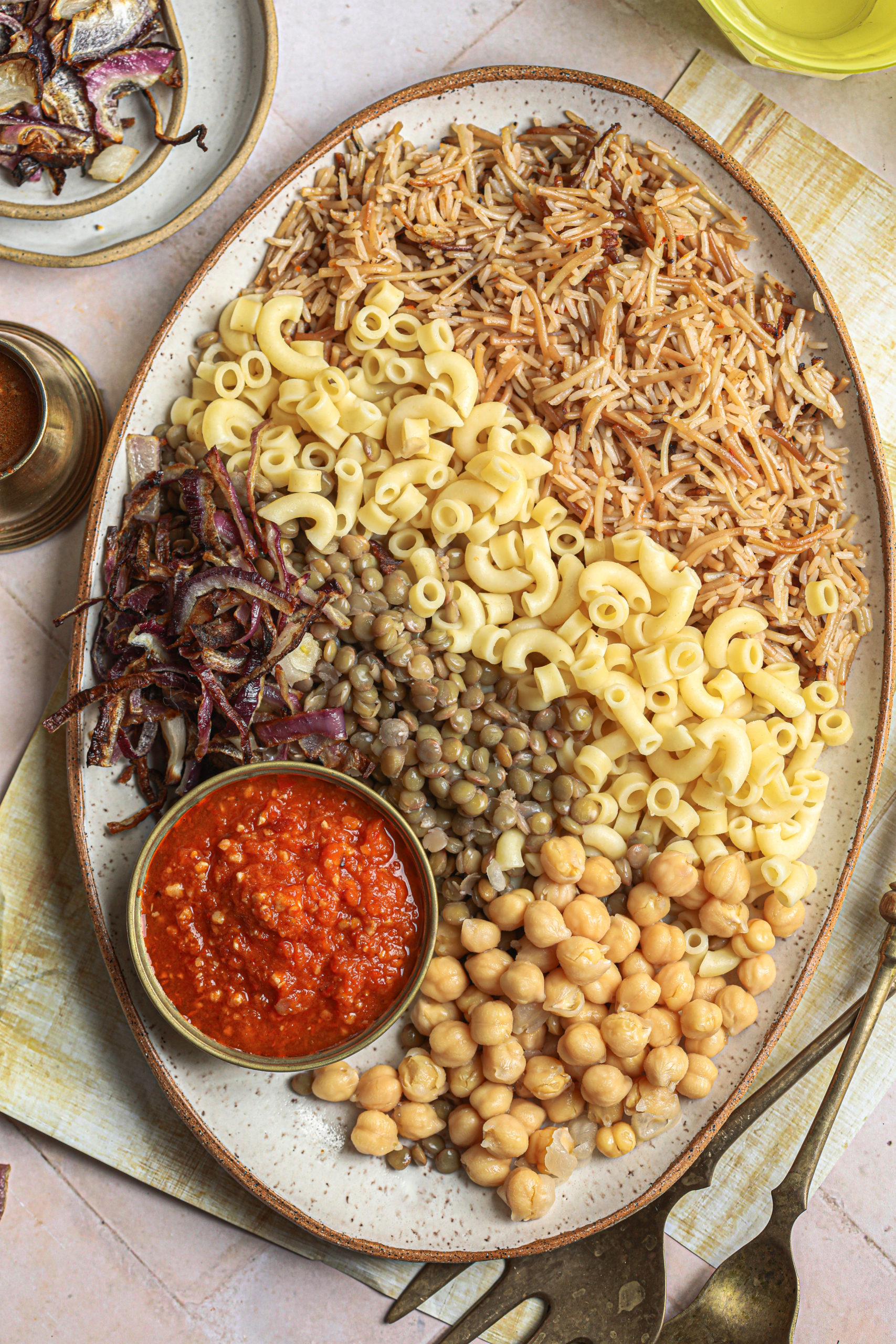
- Koshary combines brown lentils, rice, macaroni, and chickpeas topped with crispy fried onions.
- The secret to its flavor lies in two table condiments: garlic-vinegar daqqa and spicy shatta oil.
- It is 100% plant-based by default, making it one of the world's most satisfying vegetarian comfort foods.
- Cairo shops serve koshary by size (small, medium, large), often packed into foil containers or glass bowls.
Four carbs in one bowl: why the chaotic combo works
On paper, koshary sounds like a chaotic pantry clean-out. Mixing brown lentils with short-grain rice, tiny elbow macaroni, and plump chickpeas in a single bowl breaks almost every western rule of carb pairing. Yet millions of Egyptians eat it several times a week, and for good reason.
The secret is structural contrast. The brown lentils supply an earthy base, while short-grain Egyptian rice—often cooked with broken vermicelli noodles—adds a light, aromatic bite. Macaroni gives a firm chew, chickpeas add creamy pops of protein, and a deep layer of golden-brown fried onions provides a sweet, fragrant crunch on top.
The layers that build a traditional koshary
Every proper koshary bowl follows a proven sequence. Cooks build the dish starting with the heavier warm staples, then move to delicate toppings and rich, simmered sauces:
1. The Grain Base: Rice cooked with toasted vermicelli noodles forming a light foundation.
2. The Legumes: Earthy brown lentils (brown brown, not split red) tossed with olive oil and cumin, topped with boiled chickpeas.
3. The Pasta: A mixture of small elbow pasta and occasionally broken spaghetti strands.
4. The Sauce: A glossy, warm tomato sauce seasoned heavily with cumin, coriander, garlic, and vinegar.
5. The Onion Crown: Thinly sliced onions fried until dark amber, drained so they stay deeply crispy.
Daqqa and shatta: the table bottles you can't ignore
When your bowl arrives at the counter, it is only half finished. The true character of koshary comes from two liquid shakers sitting on every table in Cairo.
The light, cloudy liquid is daqqa—a pungent mixture of warm crushed garlic, ground cumin, white vinegar, water, and lime juice. Splash it generously over the entire bowl to cut through the starch. The red container holds shatta, a fiery condiment made by searing crushed dried chili flakes in vegetable oil until smoky. A few drops add heat; a tablespoon will make your forehead sweat.
How to order and eat koshary without looking lost
In famous Cairo institutions like Koshary Abou Tarek or Koshary El Tahrir, ordering moves fast. You pay a cashier first at the entrance, pick up a ticket, and hand it to the counter worker slinging bowls behind stainless steel counters.
Portions are listed by size (small, medium, large, or double) rather than dish variations, because koshary shops serve almost exclusively one thing. If you are standing in front of an Arabic menu unsure which portion size you are looking at, opening the MenuDish app lets you scan the menu to view matched photos and dish sizes instantly before you hand over your Egyptian pounds.
Once seated, pour your daqqa and shatta, mix the bowl thoroughly from the bottom up so every spoon picks up sauce, lentils, pasta, and crispy onions together.
What separates a average bowl from a legendary one
Because koshary relies on humble staples, quality comes down to execution details. Great shops never let their pasta turn soggy or sit in pooling water. The rice stays distinct rather than sticky, and the lentils maintain a firm bite.
Pay close attention to the tomato sauce and onions. Inferior places use flat, heavy tomato paste diluted with tap water. Outstanding koshary parlors simmer crushed fresh tomatoes with vinegar and garlic until velvety. The fried onions (known locally as ward, or 'roses') should be thin, sweet, and crackling crisp—never limp or saturated with old fryer oil.
Don't cook it — find it.
See every dish on any menu before you order. Scan, see the photo, check allergens & nutrition.
Allergens: Gluten. The MenuDish app flags these automatically for every dish it scans.