Key takeaways
- Schnitzel is a thin cutlet of meat, typically veal or pork, pounded flat, breaded, and pan-fried.
- Wiener Schnitzel is the original and legally protected version, made exclusively with veal and fried in clarified butter or lard.
- Many other delicious schnitzel variations exist, like Jägerschnitzel (with mushroom sauce) and Rahmschnitzel (with cream sauce), often made with pork.
- Expect Schnitzel to be served with simple sides like lemon wedges, lingonberry jam, or potato salad.
- MenuDish can help you see real photos of different Schnitzel types and their ingredients before you order.
The Golden Standard: What Exactly is Schnitzel?
At its heart, a Schnitzel is a thin, boneless cutlet of meat, typically pounded until it's almost paper-thin. This flattened cutlet is then breaded and pan-fried until it achieves a perfect golden-brown crispness. The technique is key: it's not deep-fried, but shallow-fried, allowing the breading to puff up slightly, creating air pockets that give it that signature light, crunchy texture. When done right, it should be juicy and tender inside, encased in a delicate, almost ethereal crust.
While many cultures have their own version of a breaded cutlet, the Schnitzel, especially the Wiener Schnitzel, holds a special place in Austrian culinary tradition. It's comfort food elevated to an art form, a dish that can feel both hearty and elegant at the same time.
Wiener Schnitzel: The Original and The Law
When someone says “Schnitzel,” they're usually thinking of Wiener Schnitzel. This isn't just a name; it's a protected designation of origin in Austria, similar to how Champagne must come from Champagne. For a dish to be called Wiener Schnitzel, it must be made from veal. Specifically, it uses a cut from the leg, pounded thin, lightly salted, dredged in flour, dipped in beaten egg, and coated in fine breadcrumbs (usually from stale Kaiser rolls).
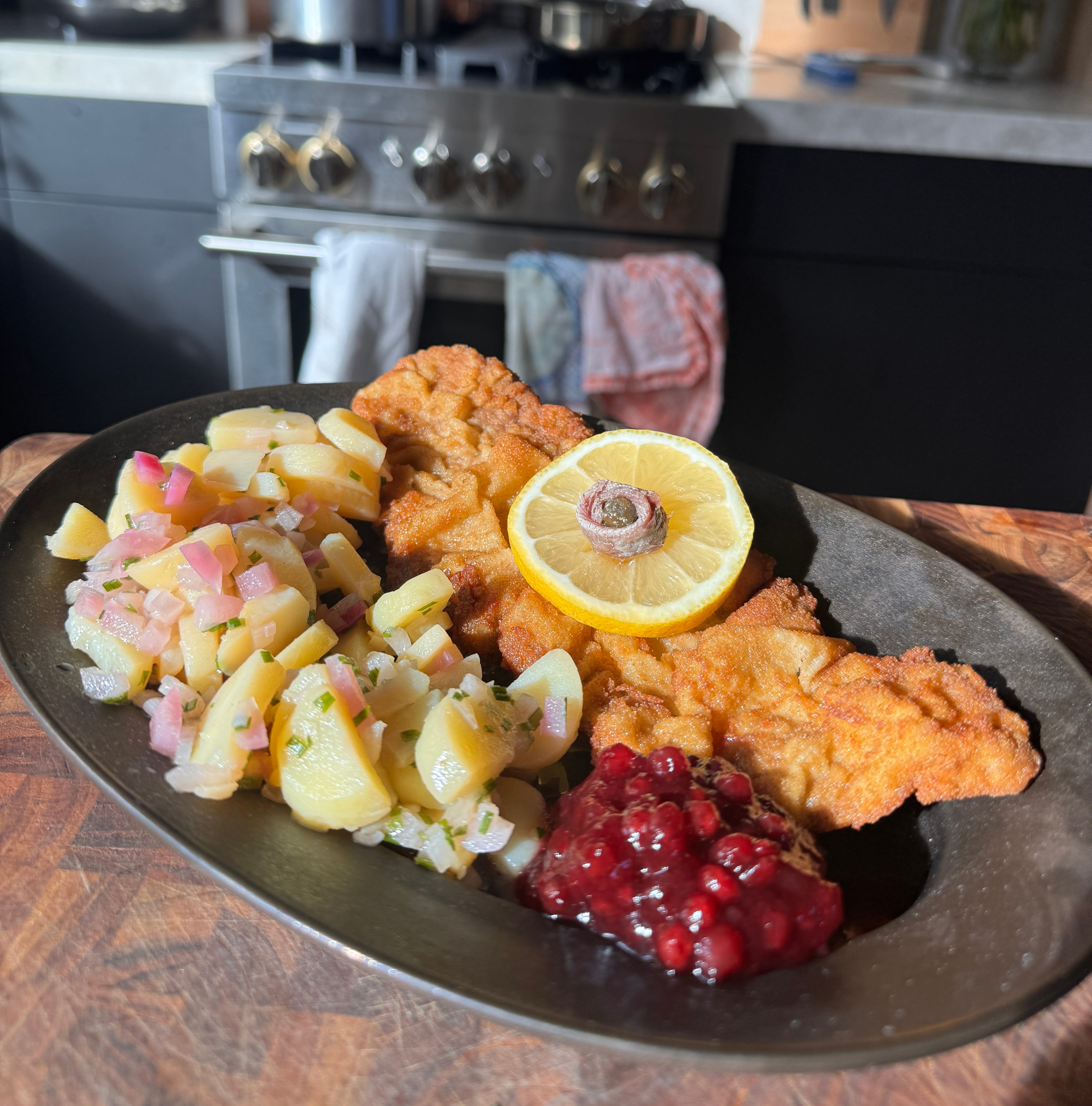
The traditional preparation calls for frying in clarified butter or lard, which imparts a distinct, rich flavor and helps achieve that characteristic golden hue and crispy, slightly wavy crust. It's usually served with just a lemon wedge for squeezing, perhaps a simple potato salad or lingonberry jam. Anything else, and it's not a true Wiener Schnitzel. If you see “Wiener Art” or “Schnitzel Wiener Art” on a menu, that’s your cue that it’s made in the Viennese style, but likely with pork or another meat.
Beyond Vienna: Other Popular Schnitzel Varieties
While Wiener Schnitzel holds the crown, many other delicious variations are widely enjoyed across Austria, Germany, and beyond. These often offer different flavor profiles and are typically made with more accessible meats like pork or chicken:
- Schweineschnitzel: This is a very common and popular choice, made with pork loin or tenderloin. It's often more affordable than veal and has a slightly richer flavor.
- Hähnchenschnitzel: Made with chicken breast, this version is a lighter alternative, popular for those who prefer poultry.
- Jägerschnitzel: Meaning “hunter’s schnitzel,” this variety is typically a pork cutlet (though sometimes veal) served with a rich mushroom gravy, often made with wild mushrooms. It's a hearty, earthy dish.
- Rahmschnitzel: “Cream schnitzel” features a pork or chicken cutlet smothered in a luscious cream sauce, sometimes with a hint of white wine or brandy.
- Zigeunerschnitzel: Literally “gypsy schnitzel,” this controversial name refers to a schnitzel served with a piquant sauce made from bell peppers, onions, tomatoes, and sometimes paprika. Many establishments now use alternative names like “Paprikaschnitzel” to avoid the offensive term.
Each of these offers a distinct experience, from the simple elegance of a Wiener Schnitzel to the comforting richness of a Jägerschnitzel. When you encounter these names on a menu, knowing the base meat and sauce can guide your choice.
The Perfect Plate: What to Expect When Ordering
When your Schnitzel arrives, it’s usually quite a sight. Expect a large, golden cutlet, often so big it spills over the edges of the plate. The aroma of fried breadcrumbs and perhaps butter will be intoxicating. For a classic Wiener Schnitzel, you’ll typically get a simple lemon wedge to squeeze over the top – essential for cutting through the richness and brightening the flavors.
Sides are usually straightforward: think potato salad (often vinegar-based, not creamy), boiled potatoes with parsley, or sometimes french fries. Lingonberry jam is another common accompaniment, especially with pork or chicken schnitzel, offering a sweet-tart contrast. Don't be afraid to ask your server for recommendations if you're unsure about pairings.
If you're still unsure about what a Jägerschnitzel or Rahmschnitzel actually looks like, or what specific ingredients are in that mushroom sauce, the MenuDish app can be incredibly helpful. You can scan the menu and see real dish photos, often with ingredient breakdowns and allergen information, so you know exactly what’s coming to your table before you even place your order.
Making Your Choice with Confidence
The world of Schnitzel is far richer than just a simple fried cutlet. Understanding the nuances between a protected Wiener Schnitzel and its many delicious cousins allows you to order with confidence, exploring the hearty and comforting flavors of Central European cuisine. Whether you opt for the traditional veal or a sauce-laden pork cutlet, you're in for a treat.
Next time you see “Schnitzel” on a menu, you'll know exactly what to expect, and more importantly, what to ask for to get the perfect crispy, golden meal you're craving. Enjoy the crunch!
Don't cook it — find it.
See every dish on any menu before you order. Scan, see the photo, check allergens & nutrition.