Key takeaways
- Vietnamese menus group items primarily by the base carbs: noodles (Pho or Bún), rice (Cơm), or rolls/pastries (Bánh).
- Bún refers to round, slippery rice vermicelli served cold in bowls or hot in spicy broths, totally separate from flat Pho noodles.
- The basket of fresh herbs on your table is an essential ingredient meant to be torn into soups or wrapped around grilled meats.
- Nước chấm is the ubiquitous fish-sauce-based dipping condiment that balances sweet, salty, tangy, and garlic notes.
The Big Three: Pho, Bún, and Cơm
Most Vietnamese menus break down by the foundation of the meal rather than by protein. Once you spot the foundational word, you know the style of the dish right away.
Phở features flat rice noodles in clear, slow-simmered broth. While beef (phở bò) is standard, chicken (phở gà) offers a lighter, clearer broth enriched with ginger and golden scallion oil.
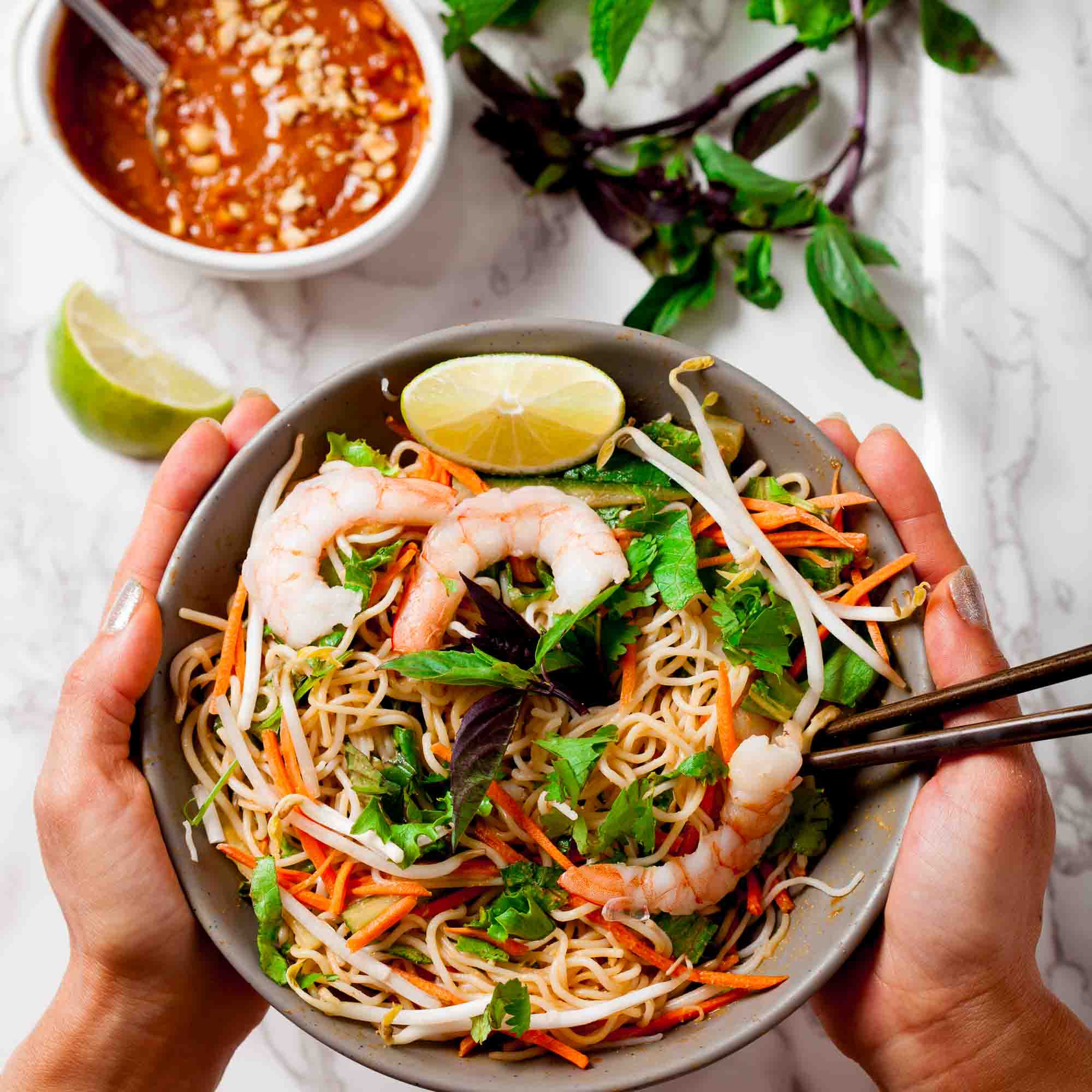
Bún (pronounced like 'boon') refers to thin, cylindrical rice vermicelli. If you order a bún bowl on a hot day, expect a bed of room-temperature noodles topped with warm grilled pork, crisp cucumber, bean sprouts, crushed peanuts, and fresh herbs. You pour sweet-and-sour fish sauce right over the whole bowl before digging in.
Cơm means cooked rice. If a menu section starts with Cơm Tấm, you are getting broken rice—smaller, slightly chewy grains originally sold as cheap surplus, now beloved for how well they absorb scallion oil and meat juices. It usually comes flanked by a marinated pork chop (sườn nướng), a slice of steamed egg meatloaf (chả trứng), and pickled daikon.
Cooking keywords: Nướng, Xào, and Kho
Once you recognize the noodle or rice base, look for the modifier that tells you how the meat was prepared.
Nướng means charcoal-grilled or roasted. It carries a distinct smoky crust from sugary marinades caramelized over high heat. Thịt nướng is sliced grilled pork, while bò nướng lá lốt is seasoned minced beef wrapped in earthy betel leaves before hitting the grill.
Xào indicates stir-fried in a hot wok. Dishes like bò lúc lắc ('shaking beef') fall here, featuring seared cubes of tenderloin tossed with onions, butter, and black pepper.
Kho means braised or stewed in a clay pot. Cá kho tộ (caramelized fish braised with shallots, garlic, and heavy black pepper) yields a deep, savory reduction meant to be eaten over plain white rice.
Why 'Bánh' doesn't just mean bread
While Westerners associate bánh mì strictly with crisp baguettes filled with cold cuts and pate, the word bánh broadly covers anything made from grain flour or dough, including cakes, crepes, and dumplings.
Bánh Xèo is a giant, golden crepifying blend of rice flour and turmeric, sizzled in pork fat until lacy and stuffed with shrimp, pork slices, and bean sprouts. It contains no eggs; the vibrant yellow hue comes entirely from ground turmeric.
Bánh Hỏi consists of delicate, woven nests of rice vermicelli topped with scallion oil, served alongside roasted pork belly or sugar cane shrimp. You wrap a bundle of the delicate noodles inside lettuce leaves along with fresh herbs.
Bánh Cuốn are silky, steamed rice rolls rolled around seasoned ground pork and wood ear mushrooms, served warm with crisp bean sprouts and sliced Vietnamese ham (chả lụa).
Herbs and condiments: How to use what lands on your table
Vietnamese food relies on contrast: hot meat against cold herbs, crunchy greens against soft noodles, pungent fish sauce against sweet citrus. When a plate of raw foliage arrives at your table, do not treat it like a garnish left over from 1995.
For soups like phở or spicy beef bún bò Huế, tear fresh Thai basil, saw-tooth herb (ngò gai), and mint directly into the hot liquid so the aromatic oils release instantly. Squeeze in fresh lime juice and submerge bean sprouts under the hot noodles so they soften slightly.
For dry noodle bowls or grilled wraps, take a broad leaf of lettuce, layer a sprig of mint and cilantro inside, add your grilled meat or piece of crispy bánh xèo, roll it tightly, and dip it directly into the small bowl of Nước Chấm provided.
If you encounter a menu filled with obscure regional specialties and minimal English translations, using MenuDish allows you to match dish names to real photos on your phone so you can easily verify whether a dish is a fiery noodle broth or a crispy herb wrap before placing your order.
Don't cook it — find it.
See every dish on any menu before you order. Scan, see the photo, check allergens & nutrition.