Key takeaways
- Grill unmarinated meats first to avoid burning sweet sauces on the grill grate.
- Banchan are complimentary, refillable side dishes designed to balance rich meat.
- Samgyeopsal is thick, unmarinated pork belly; Galbi refers to marinated short ribs.
- Construct lettuce wraps (ssam) with grilled meat, garlic, ssamjang sauce, and scallions in a single bite.
The Golden Rule: Unmarinated Before Marinated
The biggest rookie mistake at a Korean BBQ house is cooking sweet, marinated ribs before unmarinated pork belly. Heavy marinades full of sugar and soy sauce drip onto the grill grate, blackening quickly and scorching subsequent cuts. Always order and cook unmarinated meats first to keep your grill clean and clean-tasting.
When you start with plain cuts, you taste the crisp quality of the pork or beef fat. Save marinated cuts like soy-drenched ribs for the second half of the meal. If your grate accumulates black soot, ask your server for a grate change—they expect to swap grates several times during a meal.
Knowing Your Cuts: Galbi, Samgyeopsal, and Chadolbaegi
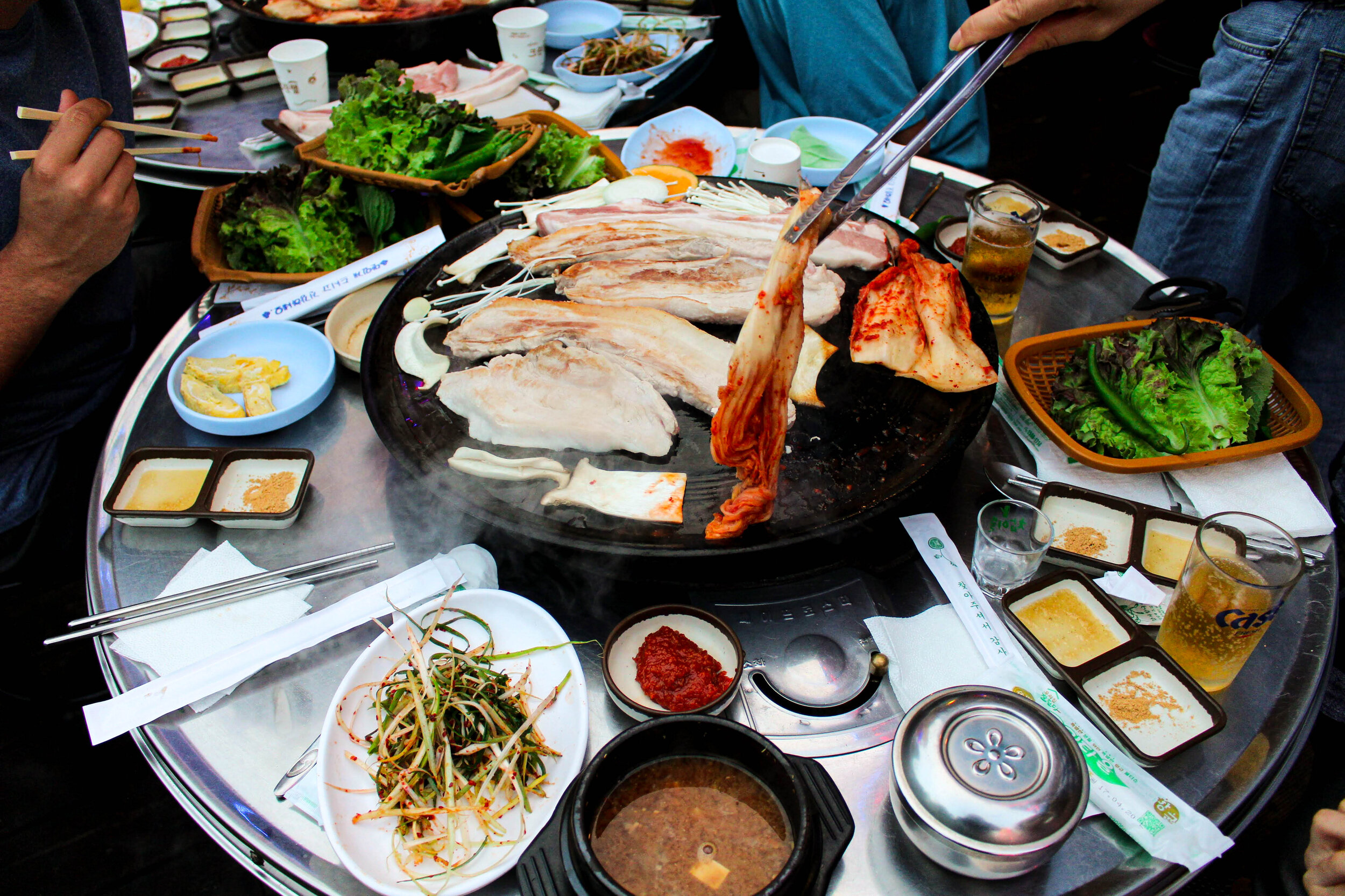
Pork and beef dominate KBBQ menus, but names vary depending on the cut and prep style. Samgyeopsal is uncured pork belly sliced thick or thin; it renders rendered fat that crisps on the grill. Moksal is pork shoulder, a leaner cut with a hearty chew.
On the beef side, Galbi refers to short ribs, usually butterflied off the bone and marinated in soy, pear juice, garlic, and sesame oil. Chadolbaegi is paper-thin sliced beef brisket that cooks in under fifteen seconds on a hot metal plate. If reading transliterated Korean menus feels confusing, launching MenuDish lets you scan the menu to view matched photos of each cut from food image databases, showing you meat marble levels before you order.
Banchan: The Side Dishes Are Not Appetizers
Those small bowls of seasoned vegetables, fermented kimchi, soybean sprouts, and potato salad placed on your table aren't appetizers to eat while waiting. They are banchan, essential side dishes designed to cut through the heavy fat of grilled meats throughout your meal.
Every restaurant offers its own banchan mix. Pickled radish slices (ssam-mu) bring sharp acidity, while seasoned scallion salad (pa-joori) provides punchy bite. Banchan are complimentary and almost always refillable upon request.
How to Build the Perfect Lettuce Wrap (Ssam)
Eating Korean BBQ isn't just picking meat off the grill with chopsticks. The classic bite is a ssam, or wrap. Take a lettuce leaf or perilla leaf, lay it flat in your palm, and add a piece of hot grilled meat.
Dab a small smear of ssamjang—a thick condiment made from soybean paste, chili paste, and sesame oil. Top with a piece of grilled garlic, a pinch of scallion salad, and fold the leaf into a compact parcel. Pop the entire bite into your mouth at once; biting a wrap in half often results in a messy spill.
Grill Etiquette: Who Controls the Tongs?
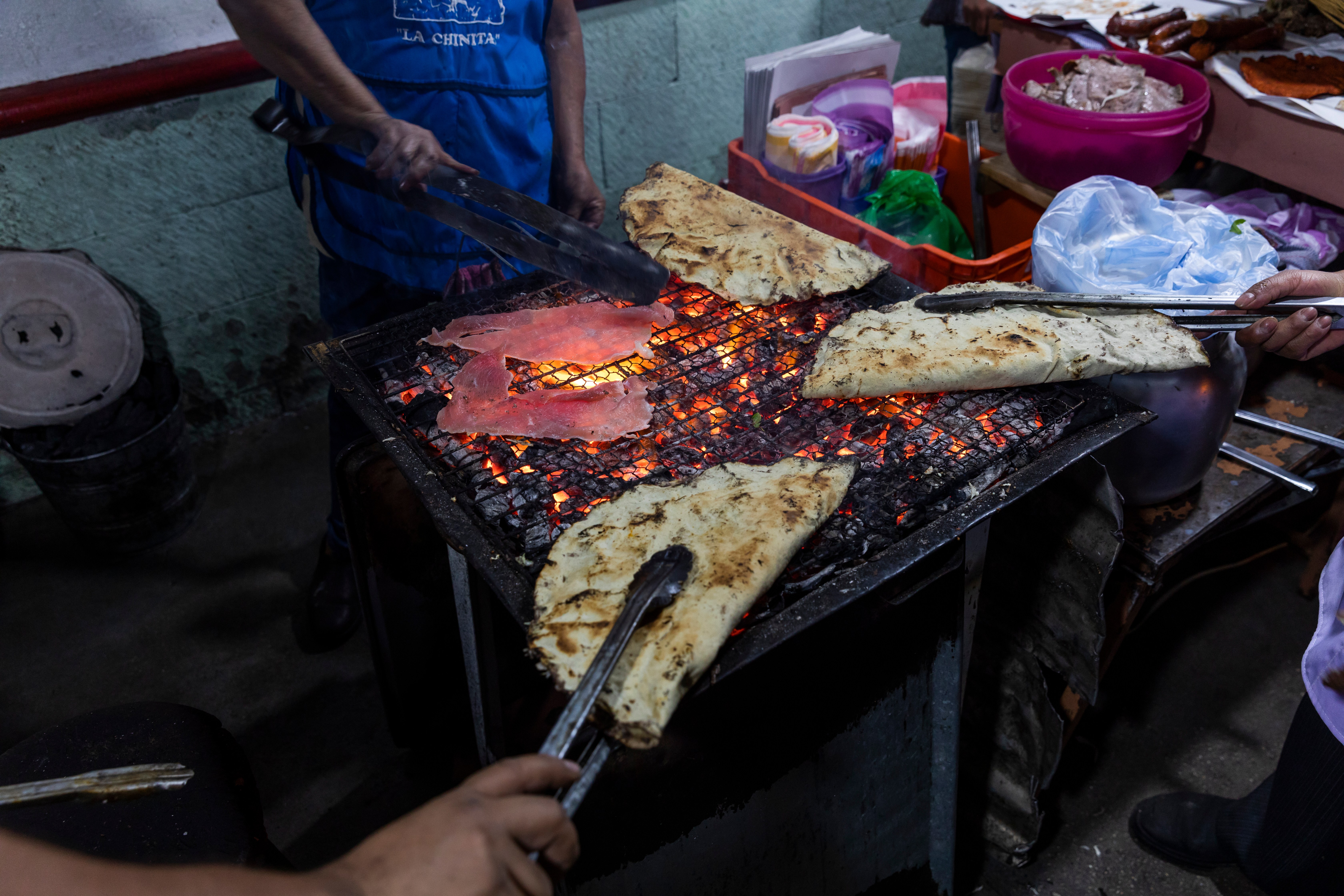
At most casual KBBQ spots, guests handle the grilling themselves, while upscale venues assign a server to tend the meat. If you are grilling, assign one person at the table to hold the tongs and metal scissors to avoid conflicting flipping styles.
Use tongs to place raw meat onto the grill, but use your personal chopsticks to eat cooked pieces once transferred to your plate. When cutting thick meats like pork belly or galbi with shears, snip them into bite-sized pieces only after the meat is partially seared and easier to cut.
Don't cook it — find it.
See every dish on any menu before you order. Scan, see the photo, check allergens & nutrition.
Allergens: Soy, Sesame, Wheat. The MenuDish app flags these automatically for every dish it scans.