Key takeaways
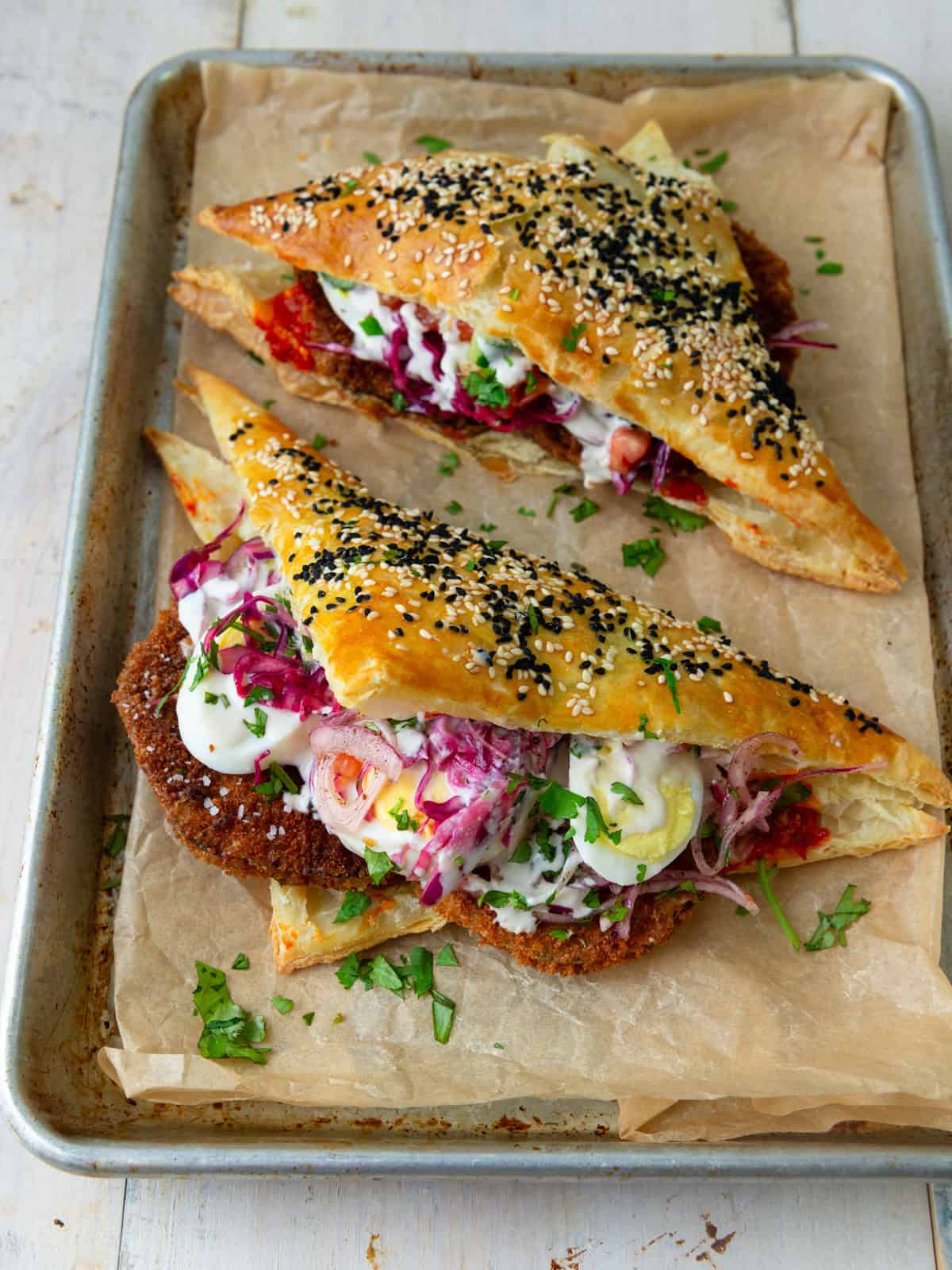
- Sabich is an Iraqi Jewish pita sandwich packed with fried eggplant, hard-boiled egg, tahini, and amba.
- The dish originated as a traditional cold Saturday morning breakfast brought to Israel by Iraqi immigrants in the 1950s.
- The secret to its distinct sharp, tangy flavor lies in amba, a fermented pickled mango condiment seasoned with fenugreek.
- Unlike falafel, which relies on crunchy fried chickpea patties, sabich focuses on creamy, velvety textures layered inside pillowy pita.
From Saturday morning breakfast to street corner obsession
Sabich was never originally meant to be eaten on a noisy sidewalk. Its roots belong to the Iraqi Jewish community, who moved to Israel in large numbers during the early 1950s. On the Jewish Sabbath (Shabbat), religious law prohibits cooking food from sunset on Friday until nightfall on Saturday. To observe this without sacrificing flavor, families prepared components ahead of time.
On Saturday morning, they pulled out cold pre-cooked fried eggplant slices, boiled eggs, and chilled salads, wrapping them into flatbreads for a quick meal. The name itself is widely believed to stem from the Arabic word sabah, meaning morning, though locals often joke it stands for the Hebrew initials of its main ingredients: Salat, Beitzah, Hatzil (salad, egg, eggplant).
In 1961, an Iraqi immigrant named Sabich Tsuberi opened a small kiosk near a bus station in Ramat Gan, serving these home-style pita wraps to commuters. What started as a hyper-local breakfast quickly spread into one of the country's most cherished midday street foods.
The anatomy of a proper sabich
A great sabich relies on heat contrast and careful layering. If the vendor simply dumps everything in at random, you end up with soggy bread and bite-sized pockets of unmixed condiment. Here is what actually goes inside:
- Fried Eggplant (Hatzil): Thick slices of globe eggplant fried until deeply browned and soft. The flesh turns creamy like custard, soaking up salted juices.
- Haminados Eggs (Beitzah): These are not standard hard-boiled eggs. They are slow-cooked overnight alongside chunt or broth until the whites turn amber brown and the yolks develop a nutty, rich finish.
- Tahini (Tchina): Rich sesame paste whipped with cold water, garlic, and lemon juice to soften the heavy fried elements.
- Amba: The signature sauce. Made from salted pickled green mangoes, turmeric, and fenugreek, it delivers an unmistakable pungent, sour, and mildly spicy kick.
- Israeli Salad & Herbs: Finely diced cucumber and tomato toss mixed with fresh flat-leaf parsley provide much-needed crunch and acidity.
- Boiled Potatoes (Tekat): Many vendors smear a warm slice of boiled potato against the inside wall of the pita to soak up juices.
Why amba makes or breaks the sandwich
If you have never smelled or tasted amba before, your first bite can be startling. The sauce reached Iraq via trade routes with India, sharing an ancestry with Indian mango pickles. Turmeric gives it an electric yellow pigment, while crushed fenugreek seeds impart a deep, slightly bittersweet aroma.
When combined with nutty tahini and warm fried eggplant, amba cuts through the oil and richness. Without amba, a sabich is just a heavy sandwich with fried vegetables. With it, every mouthful balances fat, starch, spice, and sour citrus notes.
How to order at the counter without hesitation
When you approach a busy counter, assembly moves quickly. The worker will slice open a pillowy piece of pita, spread tahini inside, and ask you what toppings you want. Most locals ask for "hakol" (everything), but you can tailor your order easily.
If you prefer less heat, ask for light amba, or request extra parsley to keep things crisp. Some stalls offer spiced chickpeas or pickled turnip slices as optional add-ins, though purists stick to the core ingredients.
When staring down a Hebrew menu board coated in grease pencil scribbles at a tiny hole-in-the-wall stall, pulling up MenuDish lets you scan the menu to see matched photos of finished dishes and complete ingredient lists, ensuring you do not mistake spicy schug for mild herbs.
Don't cook it — find it.
See every dish on any menu before you order. Scan, see the photo, check allergens & nutrition.
Allergens: Sesame, Eggs, Gluten. The MenuDish app flags these automatically for every dish it scans.