Key takeaways
- Creole cooking relies heavily on tomatoes, butter, and refined French techniques, while Cajun cooking is tomato-free, rustic, and oil-and-lard driven.
- Dark roux gives Cajun gumbo its deep, nutty base, whereas light blonde roux is used to thicken delicate butter-based sauces like étouffée.
- Jambalaya cooks rice directly inside the seasoned meat stock, while gumbo and étouffée are spooned over fresh white rice right before serving.
- Boudin is a cooked pork and rice sausage meant to be squeezed out of its casing or fried into crispy breaded balls.
Cajun vs. Creole: the tomato line in the sand
The quickest way to tell if a kitchen leans Cajun or Creole is to spot a tomato. Creole cuisine originated in New Orleans, blending French, Spanish, West African, and Caribbean influences. City cooks had access to fresh canned tomatoes, imported butter, and fine cream. Creole dishes frequently feature rich red sauces, butter-heavy roux bases, and delicate seafood like crab and shrimp.
Cajun cuisine belongs to the rural bayous and prairies of Acadiana in southern Louisiana. French-Canadian refugees adapted their cooking to what they could trap, hunt, or farm locally. Cajun food rarely includes tomatoes in classic stews or gombos. Instead, it relies on deep brown oil-based roux, smoked pork products like andouille sausage and tasso ham, and cast-iron skillet caramelization. If your jambalaya is red, it is Creole; if it is brown, you are eating Cajun.
Why the color of the roux dictates the dish
Roux is a simple mix of fat and flour cooked together, but the length of time it stays on the fire determines the flavor profile of the entire dish. Menu descriptions rarely mention roux color explicitly, but the dish name gives it away instantly.
A chocolate-brown or black roux cooks slowly for nearly an hour until it smells like roasted nuts and dark coffee. High heat strips away the flour's thickening power, so dark roux is used for deep flavor rather than heavy body—this is the foundation of traditional Cajun seafood and chicken gumbo. A medium blonde or peanut-butter-colored roux retains more starch and delivers a buttery, silky body perfect for crawfish étouffée or cream-based pan roasts.
Gumbo vs. Jambalaya vs. Étouffée: clearing up the big three
Travelers often confuse these three staples because all three feature celery, bell pepper, and onion—the 'holy trinity' of Louisiana cooking. However, their textures and cooking techniques are completely distinct.
Gumbo is a rich, savory soup served over a mound of warm white rice. It is built on a dark roux and thickened further with either sliced okra or file powder (ground sassafras leaves added at the end). Seafood gumbo usually stays light, while chicken and andouille gumbo is thick and smoky.
Jambalaya is a single-pot rice dish similar to Spanish paella. The rice is raw when added to the broth, absorbing all the rendered fat, garlic, and cayenne pepper directly into every grain as it simmers dry.
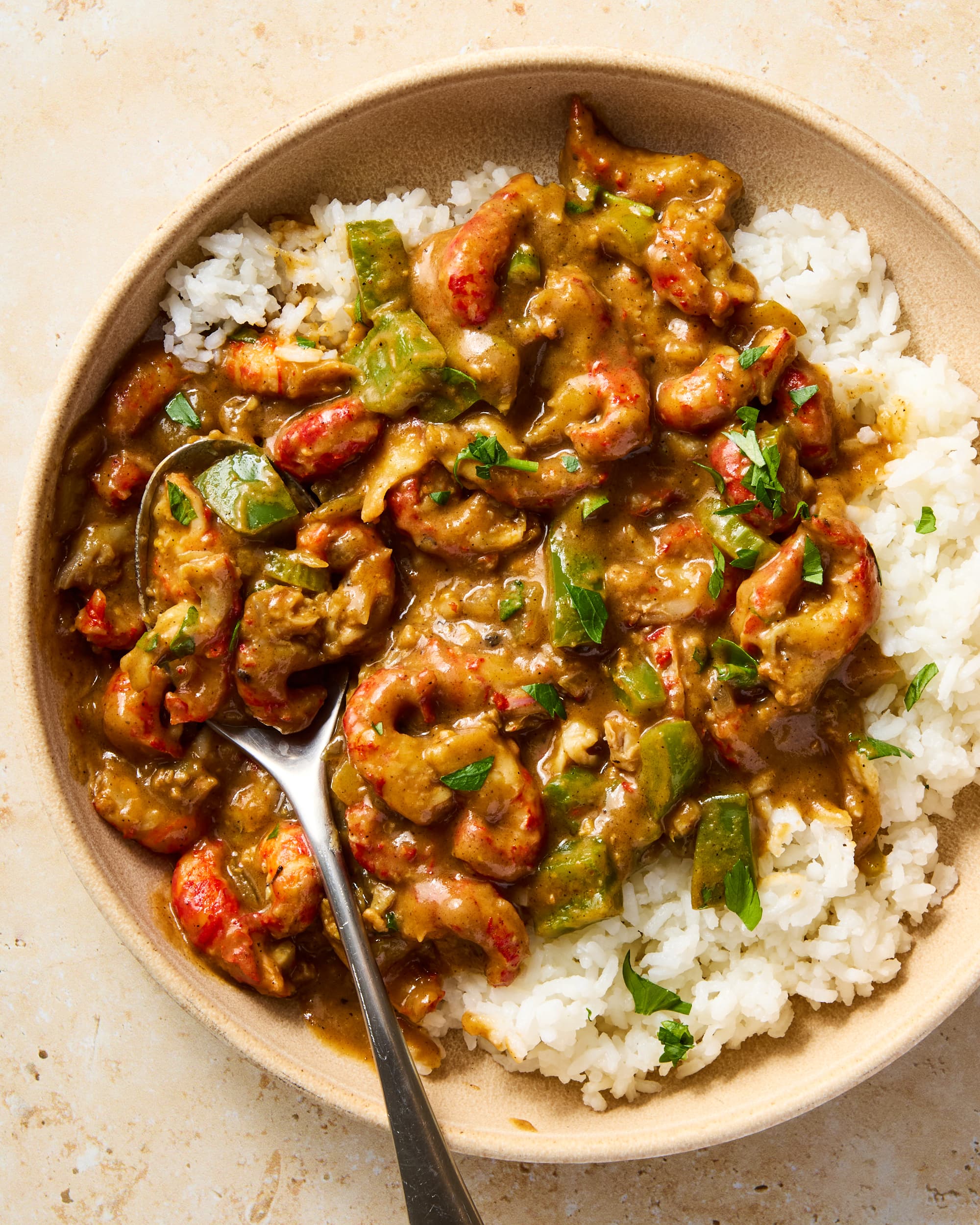
Étouffée comes from the French word for 'smothered.' Crawfish tail meat or shrimp is smothered in a light butter-and-flour sauce packed with green onions and garlic, then poured directly over a bed of steamed rice. It is thicker than gumbo, velvety, and intensely sweet from the fresh seafood tail meat.
Navigating hidden shellfish and flour on the menu
Ordering in South Louisiana can present sudden hurdles if you have food allergies. Shellfish stock often hides inside dishes that sound like pure poultry specials, and nearly every stew begins with a flour-based roux. If you are staring at a blackboard menu in Lafayette or the French Quarter wondering what 'boudin balls' or 'crawfish étouffée' actually look like on the table, scanning the menu with MenuDish shows real photos of each dish before you order, along with key allergen flags like shellfish or flour-based roux.
Appetizers and sides you should not skip
Do not pass over the appetizer board. Look for boudin, a regional sausage stuffed with cooked pork shoulder, pork liver, rice, and fresh parsley. You can eat it poached straight out of the casing, smoked over oak, or rolled into breaded boudin balls and deep-fried until golden crisp.
Another classic is cracklins (or gratons)—thick cubes of pork belly and skin fried twice until the skin shatters and the interior rendered pork melts. On the side of your gumbo, locals often insist on a scoop of cold yellow potato salad right inside the hot broth, or a buttered slab of sweet southern cornbread.
Don't cook it — find it.
See every dish on any menu before you order. Scan, see the photo, check allergens & nutrition.
Allergens: Gluten, Shellfish, Dairy. The MenuDish app flags these automatically for every dish it scans.