Key takeaways
- Authentic bouchons are certified with the 'Les Bouchons Lyonnais' seal featuring a puppet named Gnafron holding a glass of wine.
- Lyonnaise cuisine heavily features offal, pork, and river fish, so knowing cuts like tripe and pike is essential.
- House wine is served in heavy-bottomed glass bottles called 'pots' measured in 46cl portions.
- Cervelle de canut contains zero brain matter—it is a seasoned fresh cheese named after 19th-century silk weavers.
What actually separates a bouchon from a standard bistro
A bouchon is not just a French restaurant that serves wine. Originating in the 17th century to feed silk workers (known locally as canuts), these small eating houses were built around inexpensive, hearty meals designed to sustain physical labor. Pork, offal, and rich sauces form the spine of the menu.
Today, the official association Les Bouchons Lyonnais certifies genuine spots to keep tourist traps at bay. Look for a sticker on the front window showing Gnafron, a traditional Lyonnaise puppet, holding a glass of wine and a wooden spoon. If the menu outside offers wood-fired pizza or burgers alongside escargot, you are not in an authentic bouchon.
Grattons, salad, and the mystery of cervelle de canut
Before you even place your order, a small bowl of grattons usually arrives on the table. These are salty, crackling bites of fried pork fat and skin. Eat them like salted peanuts while reading the starter options.
First-time diners often stare at cervelle de canut in confusion because the name literally translates to 'silk weaver's brain.' It contains no offal whatsoever. Instead, it is a bowl of fresh, whipped fromage blanc folded with shallow-cut chives, parsley, garlic, olive oil, and white wine. It tastes herbal, tangy, and cold—ideal spread across thick country bread.
If you want a salad, the Salade Lyonnaise is a classic benchmark. Expect curly endive (frisée) tossed in warm bacon vinaigrette, crowned with thick lardons and a warm poached egg that thickens the dressing when broken.
Quenelles, tablier de sapeur, and the pork heartland
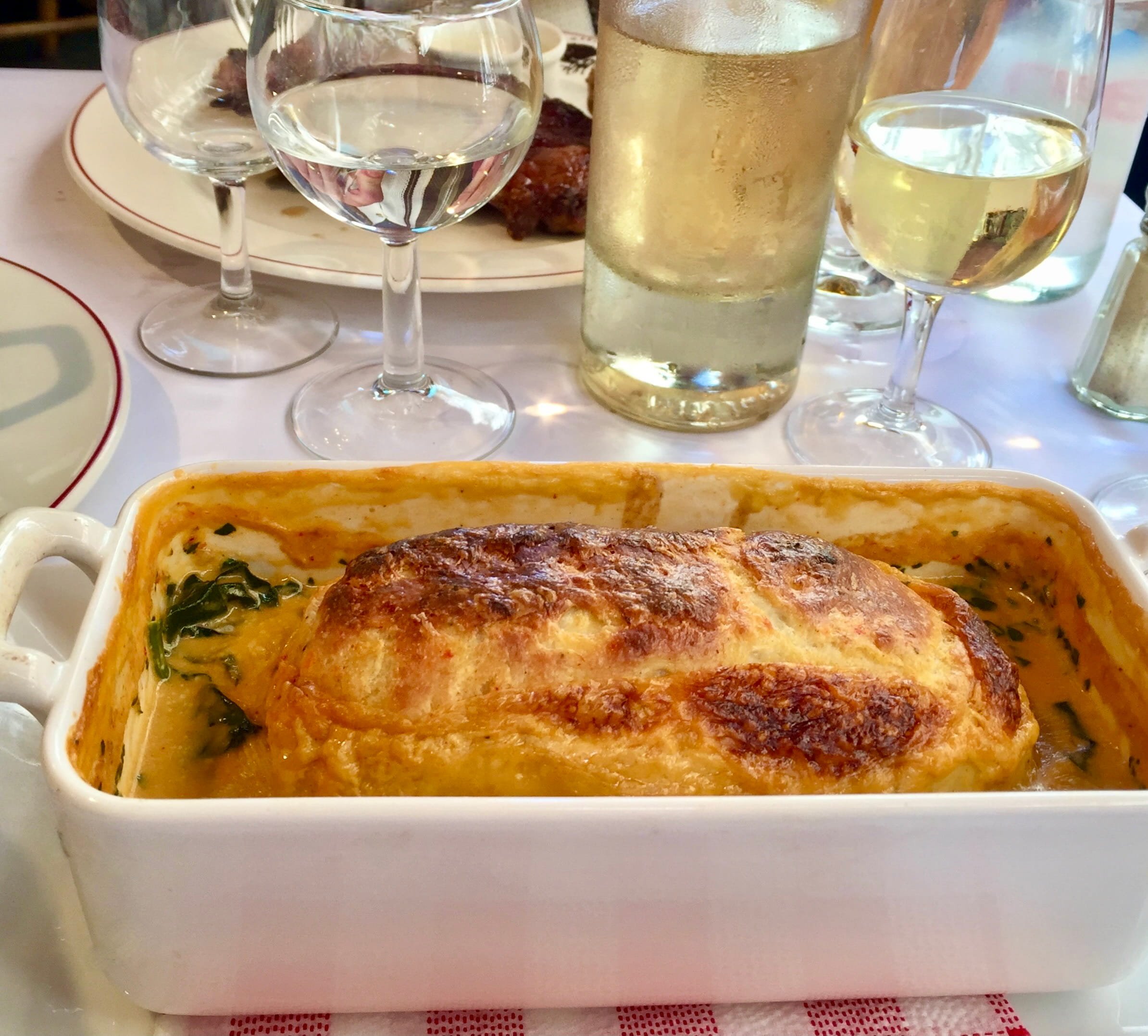
Main courses in Lyon separate adventurous eaters from casual diners. The undisputed king of the table is the Quenelle de brochet. This is a light, torpedo-shaped soufflé dumpling made from cream, eggs, flour, and northern pike, poached and baked in a rich, orange-red sauce Nantua made from crayfish butter. It arrives puffed up and bubbling in a hot earthenware dish.
For those comfortable with tripe, Tablier de sapeur translates to 'sapper's apron.' It is a slab of beef honeycomb tripe marinated in white wine and lemon, boiled, breaded, and pan-fried crispy. It comes with a tangy sauce gribiche (made from hard-boiled egg yolks, mustard, oil, and capers).
If you prefer standard cuts of meat, look for Andouillette sauce à la moutarde. Be forewarned: authentic Lyonnaise andouillette is a coarse sausage made entirely from pork intestines and stomach. It has an unmistakable, pungent aroma and a chewy texture. If you want pork without the intense organ profile, opt for Rognons de veau (veal kidneys in mustard sauce) or Saucisson chaud (warm garlic pork sausage cooked with lentils).
Pots of Beaujolais and pink praline tart
Ordering wine in a bouchon follows a unique system. Rather than ordering standard 75cl bottles, ask for a pot (pronounced poh). These are thick, heavy-bottomed glass carafes with an unusually narrow base holding exactly 46 centiliters of local wine—typically a crisp Beaujolais or a fruity Côtes du Rhône.
Save room for dessert, specifically anything featuring Praline Rose. Lyon is famous for these bright pink, sugar-coated almonds. The classic finish to a heavy meal is a slice of Tarte à la praline, where crushed pink pralines are simmered with heavy cream into a sticky, ruby-red filling inside a buttery pastry shell.
How to order without panicking at the chalkboard
Bouchon service moves fast, and tables sit remarkably close together. Most places offer a fixed Menu Lyonnais giving you a choice of starter, main, cheese, and dessert for a set price. This is almost always better value than ordering à la carte.
Because chalkboards are handwritten in quick French script, ingredients can get lost in translation. If you want to see what dishes look like before ordering, opening MenuDish lets you scan the chalkboard text and see matched photos of the food, along with precise ingredient listings, so you can tell a delicate fish quenelle apart from an intestine sausage before the waiter comes back around.
Don't cook it — find it.
See every dish on any menu before you order. Scan, see the photo, check allergens & nutrition.