Key takeaways
- Tiffin refers to light, predominantly vegetarian meals and snacks served from early morning through late evening across South India.
- Dosa variations depend primarily on batter texture (rice and lentils vs. semolina) and internal pastes or fillings.
- Every tiffin platter centers on three core condiments: hot sambar stew, cool coconut chutney, and tangy tomato or coriander chutney.
- Degree filter coffee comes in a brass cup and dish set (dabarah) and requires a simple pouring technique to cool and froth before drinking.
What 'tiffin' actually means on the menu
In South India, tiffin is not a metal lunchbox—though that is where the word originated during British colonial rule. On a restaurant menu, tiffin refers to quick, light, vegetarian meals served for breakfast, mid-afternoon snacks, or casual late dinners. These dishes rely heavily on fermented batters made from soaked rice and black gram lentils, producing meals that taste sour-savory, digest easily, and offer distinct contrasts between crisp edges and soft centers.
Tiffin eateries range from fast-paced stand-and-eat counters in Bengaluru and Chennai to relaxed family dining rooms worldwide. The menus look deceptively simple, but the sheer variety of rice batters, spices, and fillings can leave newcomers hesitant. Understanding how a few foundational elements combine makes ordering straightforward and rewarding.
Rava, Mysore, and Sada: Unpacking dosa styles
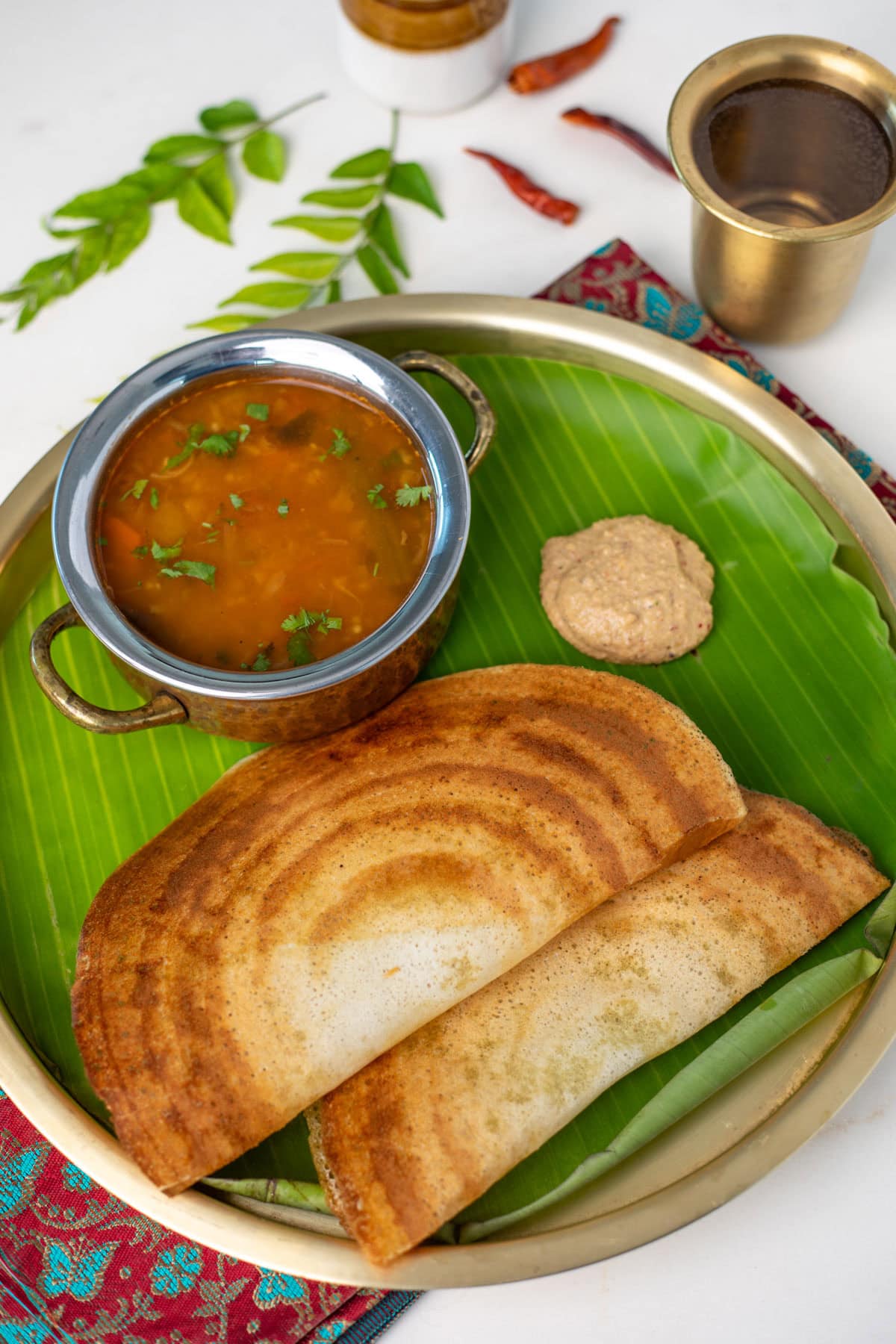
A dosa is a fermented rice and lentil crepe, but texture and flavor shift dramatically depending on the specific style listed. A Sada Dosa (often called a plain dosa) is the baseline: thin, golden brown, folded into a tall cone or long roll, and served unadorned with chutneys on the side. Add a center scoop of warm, turmeric-spiced mashed potatoes seasoned with mustard seeds, curry leaves, and green chilies, and you have a classic Masala Dosa.
Subtle shifts in preparation alter the final texture completely. A Rava Dosa replaces the fermented batter with a thin semolina batter, cooked on the flat top until it forms a crisp, web-like crepe studded with whole black peppercorns, cumin seeds, and sliced onions. If you see Mysore Masala Dosa, expect a slightly thicker crepe coated on the inside with a spicy, pungent paste made from red chilies and garlic before the potato filling is added. Opening a quick tool like MenuDish lets you see matched photos of a lacy Rava next to a smooth paper dosa, taking the guesswork out of texture choices.
Beyond the crepe: Idlis, vadas, and uttapams
Dosas command attention, but the rest of the tiffin menu holds equally traditional staples. Idlis are round, pillow-soft cakes steamed from the same fermented rice and lentil batter. Mild on their own, they function as damp sponges designed to absorb spoonfuls of hot sambar and cool coconut chutney.
For contrast, Medu Vada provides deep-fried satisfaction. Shaped like small savory donuts, these fried lentil fritters are crunchy outside and light within, spiced with minced ginger, black pepper, and curry leaves. Then there is the Uttapam. Unlike tissue-thin dosas, an uttapam is a thick, pancake-style disc griddled until the exterior browns while the interior stays moist and airy. Chopped onions, green chilies, tomatoes, or coriander are pressed straight into the top of the batter while it cooks.
The liquid support system: Sambar, chutneys, and podi
No tiffin plate arrives bare. Every item comes accompanied by small steel bowls or generous scoops of sauces that elevate plain rice grains into complex bites. Sambar is a yellow lentil stew flavored with tamarind, vegetable chunks, mustard seeds, and freshly ground spices. It arrives hot, intended for dipping your dosa or breaking up idlis directly inside the bowl.
Platters also include at least two chutneys: fresh white coconut chutney blended with roasted split chickpeas, and a second chutney made from roasted tomatoes, red chilies, or mint. On many menus, you will also spot Podi (frequently nicknamed "gunpowder"). This is a dry, coarse spice blend of roasted lentils, dried red chilies, and sesame seeds. Waiters sprinkle it over dosas or serve it in a small pile alongside spoonfuls of hot melted ghee to form a dipping paste.
How to handle degree filter coffee without spilling
Finishing a tiffin order without South Indian Filter Coffee (often called "degree coffee") means missing half the experience. Brewed from dark roasted coffee beans mixed with chicory root using a metal drip percolator, the intense brew is combined with boiled whole milk and sugar.
It arrives in a small brass or stainless steel cup called a tumbler, seated inside a shallow container known as a dabarah. To drink it properly, hold the tumbler and pour the boiling coffee back and forth into the dabarah from a short height. This cools the coffee down to a comfortable drinking temperature, thoroughly dissolves the sugar, and generates a thick layer of foam across the top before your first sip.
Don't cook it — find it.
See every dish on any menu before you order. Scan, see the photo, check allergens & nutrition.