Key takeaways
- Tapas are small single bites, media raciones are half-plates for two, and raciones are full sharing platters for the table.
- The menú del día is a two-course weekday lunch special that almost always includes bread, dessert, and a bottle of wine or beer.
- S/M stands for según mercado (market price), which means seafood or steak is priced by weight—always ask the price before ordering.
- Bread placed on your table is rarely free; expect a small pan y servicio charge per person on your final bill.
The portion size trap: Pincho, tapa, media, and ración
Walk into any traditional Spanish spot and you will often see three prices listed next to a single item like jamón ibérico or croquetas de jamón. Ordering wrong here is the quickest way to end up with either two bites of ham or a serving platter large enough to feed four people.
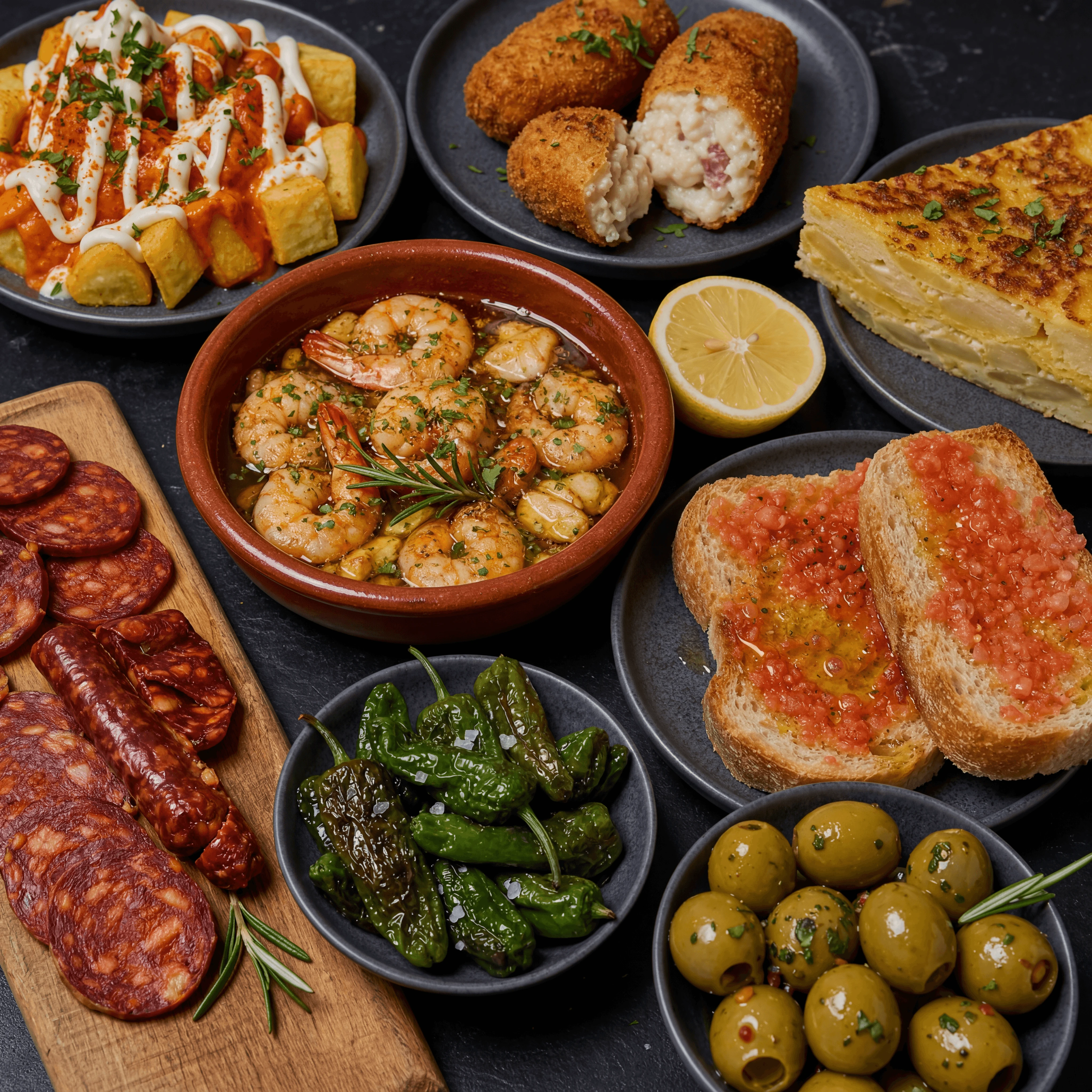
A pincho or tapa is an individual bite or tiny saucer meant for one person alongside a cold drink. A media ración is a half-plate—ideal for two people sharing a few different items. A full ración is a generous main platter designed for the whole table to split. If you order three full raciones just for yourself, the waiter will nod politely, but your table will quickly overflow with food.
Cracking the Menú del Día
Originally created as a budget meal for workers, the menú del día remains Spain's best dining value. Offered Monday through Friday between 1:30 PM and 4:00 PM, this fixed-price lunch delivers high-quality regional cooking without steep prices.
The set meal gives you a primer plato (first course, usually vegetable stews, soups, rice, or pasta) followed by a segundo plato (second course, focused on grilled meats or fish). It includes bread, dessert or coffee, and a drink. The drink options almost always include a bottle of house wine (vino de la casa). Expect honest, hearty cooking like lentejas con chorizo or grilled merluza rather than delicate fine-dining plates.
Fuera de carta and the dreaded S/M price tag
When the waiter recites items not printed on the menu, they are pitching the fuera de carta (off-menu daily specials). These feature seasonal catches or morning market finds, such as wild mushrooms in autumn or grilled red prawns.
Keep an ear open for the phrase según mercado, abbreviated on menus as S/M. This means market price. Seafood like turbot, sea bass, or goose barnacles (percebes) are frequently priced by weight rather than by the plate. Ask for the cost per serving before agreeing, or you might find a sixty-euro surprise on your final tab.
Bread fees, IVA, and table etiquette
When you sit down, a basket of crusty bread with small bags of breadsticks (picos) will often hit the table immediately. Bread is rarely free in Spain. It appears on your bill as pan y servicio or cubierto, typically between one and three euros per person.
Pay attention to the bottom of the printed page for sales tax notes: 10% IVA incluido means tax is already in the price. If it says IVA no incluido, add ten percent to every item listed. Tipping is modest across Spain; leaving small change or a couple of euros for good service is plenty.
Spotting what arrives before you order
Handwritten slate boards outside traditional tabernas can challenge anyone's language skills, especially when regional names pop up. For instance, tiny fried squid are called chipirones in the north but puntillitas in Andalusia. Deciphering scribbled shorthand while starving is stressful.
Using MenuDish lets you scan printed or handwritten Spanish menus to read clear translations alongside matched photos of real dishes. Rather than guessing whether carrilleras is tender braised beef cheek or an offal cut you would rather skip, you can see real photos of the dish, review ingredients and allergens, and order with complete clarity.
Don't cook it — find it.
See every dish on any menu before you order. Scan, see the photo, check allergens & nutrition.