Key takeaways
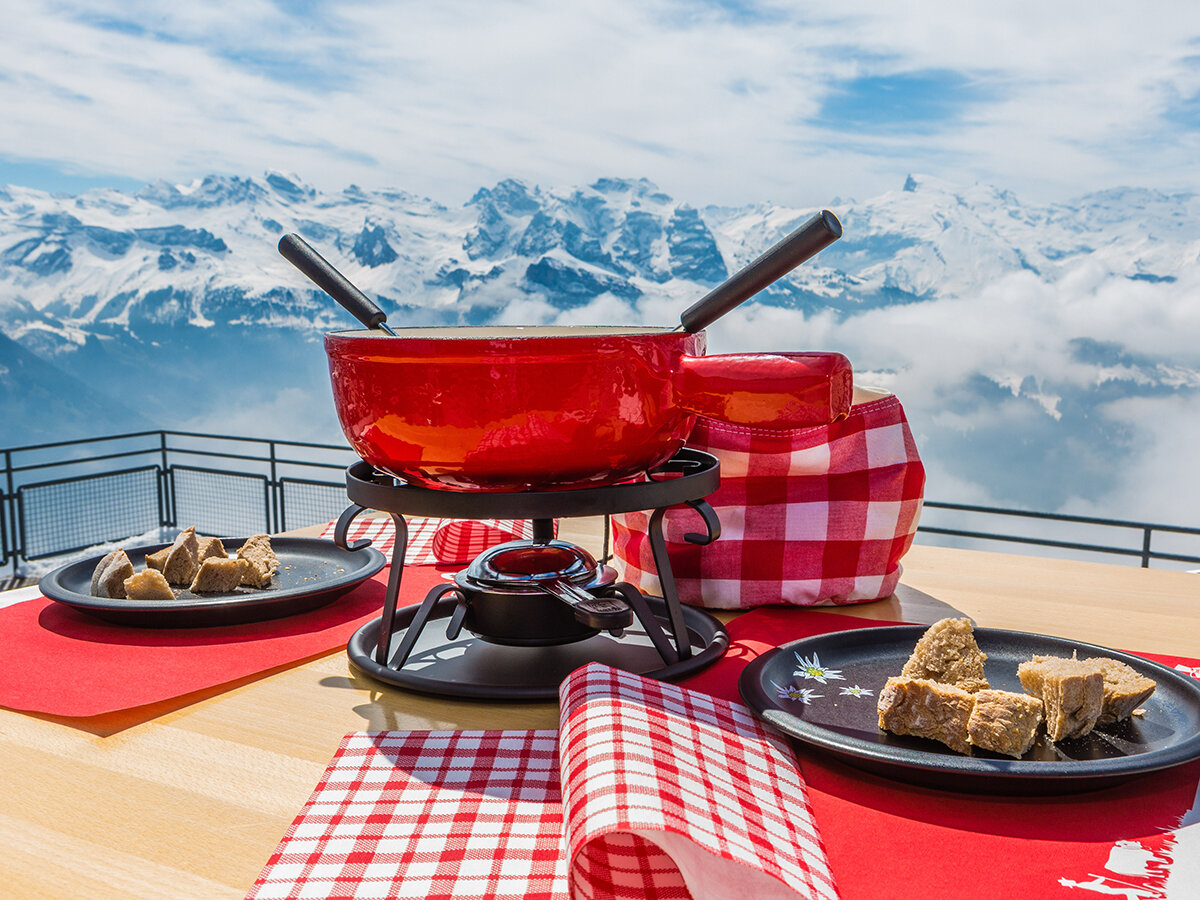
- Fondue is traditionally priced per person with a strict minimum order of two portions.
- Rösti ranges from a simple crispy side potato pancake to an entire main course baked with ham and fried eggs.
- Drinking iced water or soda with heavy cheese fondue is considered a fast track to stomach cramps by locals; stick to hot tea or dry white wine.
- Älplermagronen always arrives with a bowl of warm applesauce meant to be eaten directly alongside the cheesy pasta.
Fondue Moitié-Moitié and the Chalet Fine Print
When you look at the Käsefondue section, you will usually see three or four options. The gold standard across French and German Switzerland is Moitié-Moitié, which translates to 'half-and-half'. It combines equal parts aged Gruyère for sharp creaminess and Vacherin Fribourgeois for low-heat melting quality, stirred together with white wine, kirsch (cherry brandy), garlic, and cornstarch.
Pay attention to the pricing structure listed in small print underneath. Alpine menus almost always list fondue prices per person (e.g., 'CHF 34.- pro Person'), and most kitchens enforce a strict two-person minimum per pot. If you order fondue for one while your dining partner orders a soup, the waiter will likely tell you the kitchen cannot fire up a single pot. Watch out for dipping extras too—boiled baby potatoes (Gschwellti) or pickled onions and gherkins often carry an extra CHF 4 to 8 surcharge if they are not explicitly marked as included.
Rösti: From Plain Hash Browns to Heavy Mountain Skillets
Rösti is Switzerland's national dish—coarsely grated potatoes fried in heavy butter or lard until a thick, golden crust forms on the outside while the inside remains tender. On an alpine menu, rösti appears both as a simple side dish (Beilage) alongside sliced veal and as a towering main meal cooked directly in a cast-iron skillet.
If you see Rösti Berner Art, expect diced bacon (Speck) mixed directly into the potato mass. Rösti Valaisanne (or Walliser Rösti) takes things further by topping the fried potatoes with thick tomato slices, a slab of cured ham, and a blanket of melted Raclette cheese, finished under a salamander grill. If you want something simpler, look for Rösti mit Spiegelei, which comes topped with one or two runny fried eggs.
Älplermagronen and Cured Meat Plattes
When alpine herdsmen needed fuel that would not rot in high-altitude huts, they combined dried pasta, potatoes, onions, and local cheese into Älplermagronen (alpine herdsman's macaroni). Modern chalet menus serve this baked in a cream and cheese sauce, tossed with crispy fried onion rings and lardons. It is almost always served with a side bowl of Apfelmus (warm applesauce). Do not send it back thinking it is dessert— locals spoonful the sweet sauce right over the salty pasta or eat it between bites.
If you want a lighter afternoon bite, check the cold section for a Walliser Teller or Bündner Platte. These are wooden boards piled high with paper-thin slices of Viande séchée (air-dried beef cured in salt and mountain herbs), regional mountain cheese (Alpkäse), rye bread, and house-pickled walnuts. If you are struggling to decipher handwritten dialect cuts on a chalkboard, scanning the menu with an app like MenuDish displays matched photos of the actual food so you know exactly what is coming to your table before you order.
The Wine, Tea, and Water Rules of Cheese Dining
Ordering drinks with a heavy pot of fondue or raclette comes with strong cultural taboos. Swiss locals almost exclusively drink crisp, dry white wine—specifically Fendant (made from the Chasselas grape in Valais) or Epesses from the Lavaux terraces. The high acidity cuts through the fat of the melted cheese and aids digestion.
If you prefer not to drink alcohol, skip iced water and sugary sodas. Swiss tradition holds that cold liquid congeals melted cheese into an impenetrable ball in your stomach, causing discomfort. Mountain waiters will gladly bring you hot black tea (Schwarztee) or herbal infusions, which keep the digestive system warm throughout the meal.
Don't cook it — find it.
See every dish on any menu before you order. Scan, see the photo, check allergens & nutrition.