Key takeaways
- Night market stalls usually specialize in just one or two dishes done exceptionally well.
- Order sheet slips (dian dan) are common at sit-down stalls where you tick boxes for your choices.
- Key staple markers like 肉 (pork), 麵 (noodles), and 湯 (soup) help you decode dense text menus quickly.
- Pungent smells aren't a warning sign; fermented stinky tofu is a beloved national delicacy with a surprisingly mild taste.
How stalls work: Tick sheets, lines, and fast orders
Taiwanese night markets look chaotic, but they run on strict unspoken systems. Stalls generally fall into two types: grab-and-go windows and sit-down pop-ups with low plastic stools. For grab-and-go vendors—think fried chicken cutlets or scallion pancakes—you simply point, state your spice level, and hand over cash. Spice is usually rated from weila (mild) to dada (extra spicy).
Sit-down stalls almost always use small paper order sheets (dian dan) stacked near the front counter with red pens. You grab a slip, find an open plastic stool, and mark a tally next to the items you want. Write your table number on top—it is usually painted in faded acrylic directly on the folding table corner—and hand it back to the cook. Paying happens either when the bowl hits your table or right after you hand over the paper slip.
The big hitters: Gua bao, lu rou fan, and savory bowls
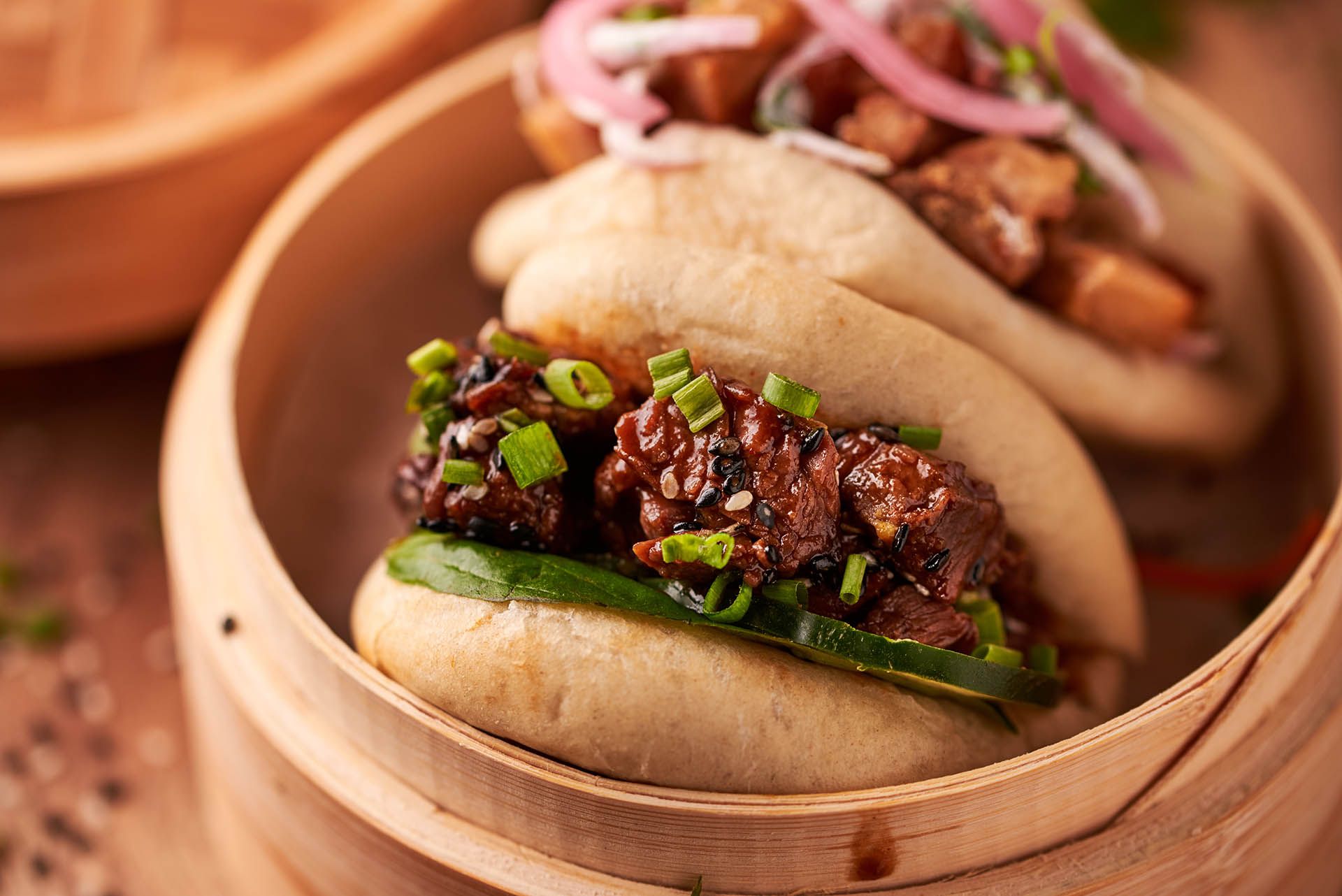
If you see a giant bamboo steamer belching clouds of sweet white vapor, you are likely looking at a gua bao stall. Often called a Taiwanese hamburger, this steamed lotus leaf bun gets stuffed with thick-cut braised pork belly, pickled mustard greens, crushed sweetened peanuts, and fresh cilantro. Good vendors let you specify whether you prefer fatty pork (fei rou) or lean cuts (shou rou)—always lean toward the fatty cut, as the acidity of the pickles cuts straight through the rich melt-in-your-mouth lard.
Nearby, you will almost certainly find small pots bubbling with dark, star anise-perfumed master stock. This is the domain of lu rou fan—minced pork belly braised down with soy sauce, five-spice, and shallots until gelatinous, spooned piping hot over plain steamed rice. It is fast, cheap, and deeply comforting. If you see yellow egg noodles swimming in a shrimp-head broth topped with ground pork and a single poached shrimp, that is Dan Zai noodles (dan zai mian), a Tainan classic born on fishing boats during off-seasons.
Fried, crusted, and chewy: Oyster omelets and XXL chicken
The signature sizzle of a Taiwanese night market comes from massive flat-top griddles frying up oyster omelets (e-a-o-a in Taiwanese Hokkien). Fresh small coastal oysters are cooked alongside sweet potato starch batter, leafy green crown daisy, and beaten egg, then flipped until the edges crisp up into a chewy, translucent gel. It arrives smothered in a sweet and tangy orange sauce made from ketchup, miso, and soy.
Then there is ji pa—the oversized, flattened chicken cutlet fried in coarse sweet potato flour that shatters between your teeth. Stalls dust these fried slabs with white pepper, salt, and pulverized dried plum powder or chili pepper. If you want to know what a dish looks like before committing to a 30-minute line at a crowded stall, opening MenuDish to scan the character-heavy menu board instantly pulls up matched food photos, ingredient breakdowns, and allergen tags so you know exactly what is going into your paper bag.
Tackling stinky tofu: What it actually tastes like
You will smell a chou dou fu (stinky tofu) stall long before you spot it. The pungent aroma comes from tofu fermented in brine made from fermented milk, vegetables, and meat for weeks or months. Beginners should stick to the deep-fried version: golden squares cubed up, punctured in the center, and drizzled with garlic soy sauce and chili paste, served with a pile of tart pickled cabbage (pao cai).
Despite the intimidating smell, deep-fried stinky tofu tastes astonishingly mild—savory, nutty, and crisp on the outside with a custardy center. Steamed or stewed versions cooked in spicy Sichuan-style broth with duck blood jelly are far more intense and better suited for seasoned eaters once you have mastered the fried bite.
Essential character cheat sheet for night market signboards
While hundreds of unique dishes exist across Taiwan's markets, learning a few repeated Chinese radicals makes menu boards instantly readable. Look out for these anchor words on wooden placards and backlit banners:
肉 (Ròu): Meat, usually pig/pork unless preceded by 牛 (beef) or 雞 (chicken).
麵 (Miàn): Wheat noodles of any thickness.
粉 (Fěn): Rice noodles or starch-based ingredients (like glass noodles or sweet potato starch).
湯 (Tāng): Soups and broths.
飯 (Fàn): Rice bowls or sticky rice dishes.
煎 (Jiān): Pan-fried or griddled items like dumplings and omelets.
Don't cook it — find it.
See every dish on any menu before you order. Scan, see the photo, check allergens & nutrition.