Key takeaways
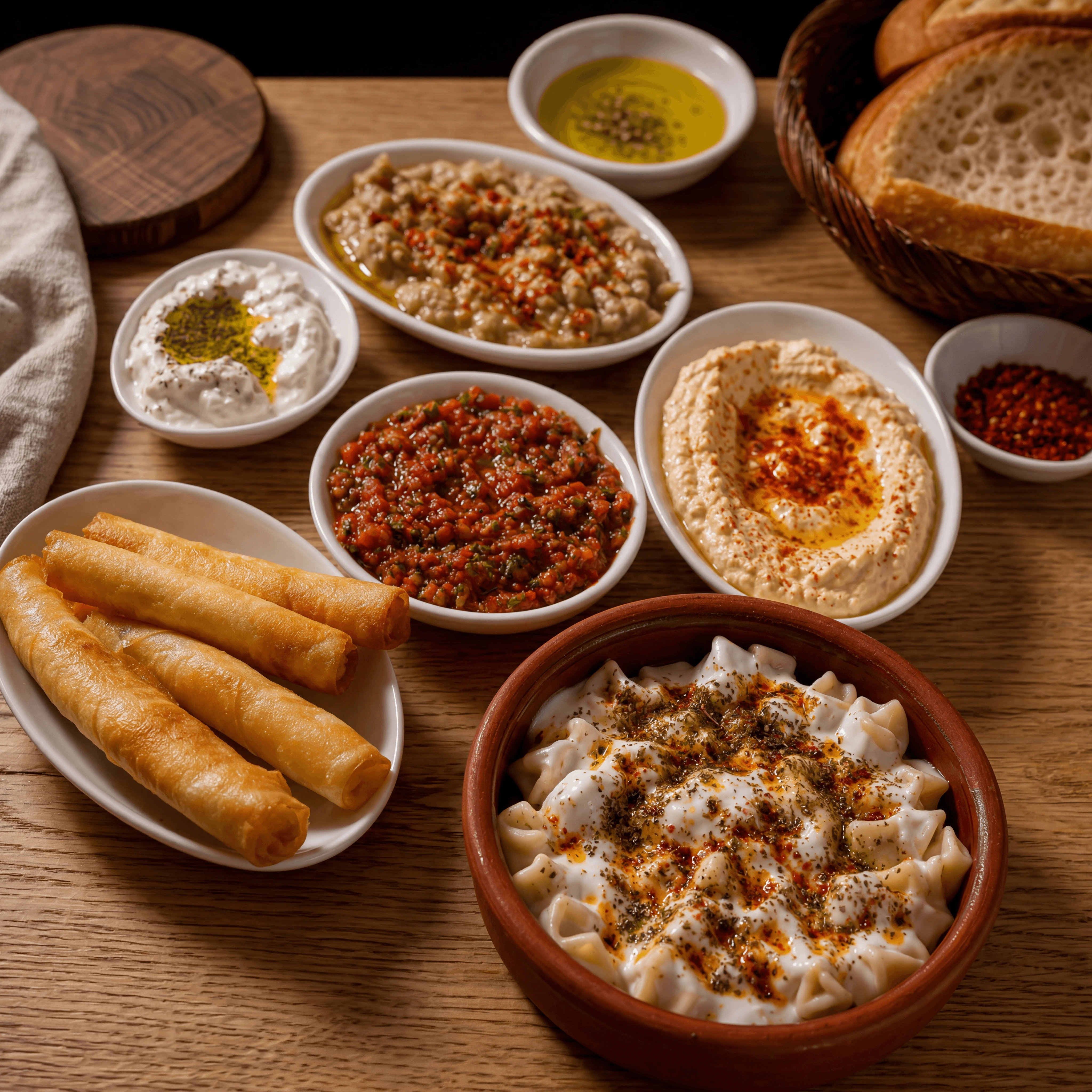
- Meze spreads are communal starters served in small bowls alongside warm flatbread.
- Lahmacun is thin and rolled like a taco, while pide is a thicker, boat-shaped flatbread.
- Kebabs vary widely by region, spice level, and serving style beyond simple skewers.
- Look for lokantas at lunch for home-style stews (sulu yemek) that highlight everyday cooking.
The meze table: Where every Turkish meal actually starts
Mezes aren't starters in the fast-food sense meant to pass ten minutes before a main course arrives. In Turkish dining, especially at a traditional meyhane (taverna), the cold meze spread is the central event for the first hour of dinner. Waiters often carry a large tray (tepsi) directly to your table loaded with small ceramic bowls. You simply point at what catches your eye.
Popular cold choices include patlıcan salatası (smoky charred eggplant puree with olive oil and garlic), haydari (thick strained yogurt whipped with garlic, mint, and dill), and acılı ezme (a hand-chopped fiery tomato, onion, and pepper relish). Pairing these spreads with hot, puffed pide bread freshly baked in a stone oven sets the tone for the rest of the meal.
Pide vs. lahmacun: Turkish flatbreads explained
It is easy to lump all Turkish flatbreads under the blanket term 'Turkish pizza,' but locals treat them very differently. Lahmacun features a paper-thin, crispy dough lightly smeared with a mixture of minced lamb, diced onions, tomatoes, and parsley. It arrives piping hot. To eat it like a local, squeeze fresh lemon juice over the top, scatter fresh parsley leaves down the middle, roll it up tight, and eat it with your hands.
Pide, on the other hand, is a sturdier boat-shaped flatbread with a chewier crust and thick folded edges. Popular toppings include melted kaşar cheese, spiced ground meat (kıymalı), or tender chunks of beef (kuşbaşılı). If you want a quick, filling lunch for just a few dollars, two crispy lahmacun alongside a cold glass of salted yogurt drink (ayran) is hard to beat.
Kebab categories: Iskender, Adana, and Beyti aren't just names
If you expect a simple skewer of cubed meat when you order a kebab, a Turkish menu will quickly expand your horizons. Kebabs are classified by meat preparation, region, and serving technique.
An Adana kebab consists of hand-minced lamb mixed with red pepper and tail fat, hand-pressed onto flat iron skewers and grilled over charcoal. It carries a distinct chili heat. If you prefer no spice, order the Urfa kebab, which uses a similar preparation without the spicy chili. Meanwhile, İskender kebab features paper-thin slices of döner lamb laid over torn pieces of warm pita bread, drenched in hot tomato sauce and sizzling browned butter poured right at your table, served alongside thick, cool yogurt.
When you encounter a menu filled with unfamiliar dish titles, scanning it with MenuDish matches menu items to real food photos so you can instantly tell whether a kebab comes plated over rice, wrapped in flatbread, or baked in an earthenware dish.
Sulu yemek: The home-style stews tourists often miss
While charcoal-grilled meats get most of the spotlight on tourist streets, working locals flock to a lokanta (cafeteria-style tradesman eatery) for sulu yemek, which translates literally to 'food with liquid.' These dishes sit warm behind glass counters every afternoon.
Keep an eye out for kuru fasulye, a rich white bean stew simmered with butter, onion, and tomato paste, traditionally eaten alongside buttery rice pilaf (pirinç pilavı) and pickled vegetables. Another mainstay is karnıyarık, fried whole eggplants stuffed with seasoned minced meat, garlic, and tomatoes. These stews offer a comfort-food window into Turkish home cooking that standalone kebab joints rarely serve.
Ending the meal: Çay, Turkish coffee, and sweet rules
Dessert in Turkey goes far beyond basic pastry shop displays. Alongside layered pistachio baklava, menus frequently offer künefe—a hot dessert made from shredded phyllo dough baked around unsalted, stretchy cheese, soaked in hot sugar syrup, and dusted with ground pistachios. Asking for a side of dondurma (dense, stretchy Turkish mastic ice cream) cuts through the rich sweetness perfectly.
When finishing with Turkish coffee (Türk kahvesi), specify your preferred sugar level when you order, because sugar is boiled directly with the grounds: sade (no sugar), orta (medium sweetness), or şekerli (sweet). Stirring after it arrives destroys the foam and mixes up the thick sediment at the bottom of the cup. After paying, you will almost always be offered a small tulip glass of hot black tea (çay) on the house—accepting it is standard dining courtesy.
Don't cook it — find it.
See every dish on any menu before you order. Scan, see the photo, check allergens & nutrition.