Key takeaways
- Tlayudas are large, toasted corn tortillas topped with pork lard (asiento), refried black beans, shredded quesillo, cabbage, and grilled meats.
- Memelas and tetelas are smaller, comal-toasted masa bases ideal for quick bites or appetizers.
- Tasajo is salted, thinly sliced beef, while cecina enchilada is chili-marinated pork.
- Oaxacan moles vary from rich, dark chocolate-spiced Mole Negro to bright, herbal Mole Verde and tangy Mole Amarillo.
The foundations: Asiento, quesillo, and heirloom masa
Oaxacan cuisine relies on a handful of distinct building blocks that give its dishes a smoky, nutty flavor. At the center is heirloom corn masa, ground fresh and cooked on a clay griddle called a comal. Unlike northern Mexican cooking, which leans on flour tortillas and yellow cheese, Oaxacan kitchens run on unrefined pork fat called asiento and stringy, mild quesillo.
When you see asiento listed on a menu, it refers to the toasted, savory sediment left behind when rendering pork lard. Cooks brush a thin layer over masa disks before griddling them, giving corn tortillas a depth that vegetable oil cannot replicate. Quesillo is the local mozzarella-style cheese pulled into ribbon strips and wound into tight balls. It melts into stringy threads across hot dishes without hiding the flavor of chili pastes.
Tlayudas, memelas, and tetelas: Masa snacks decoded
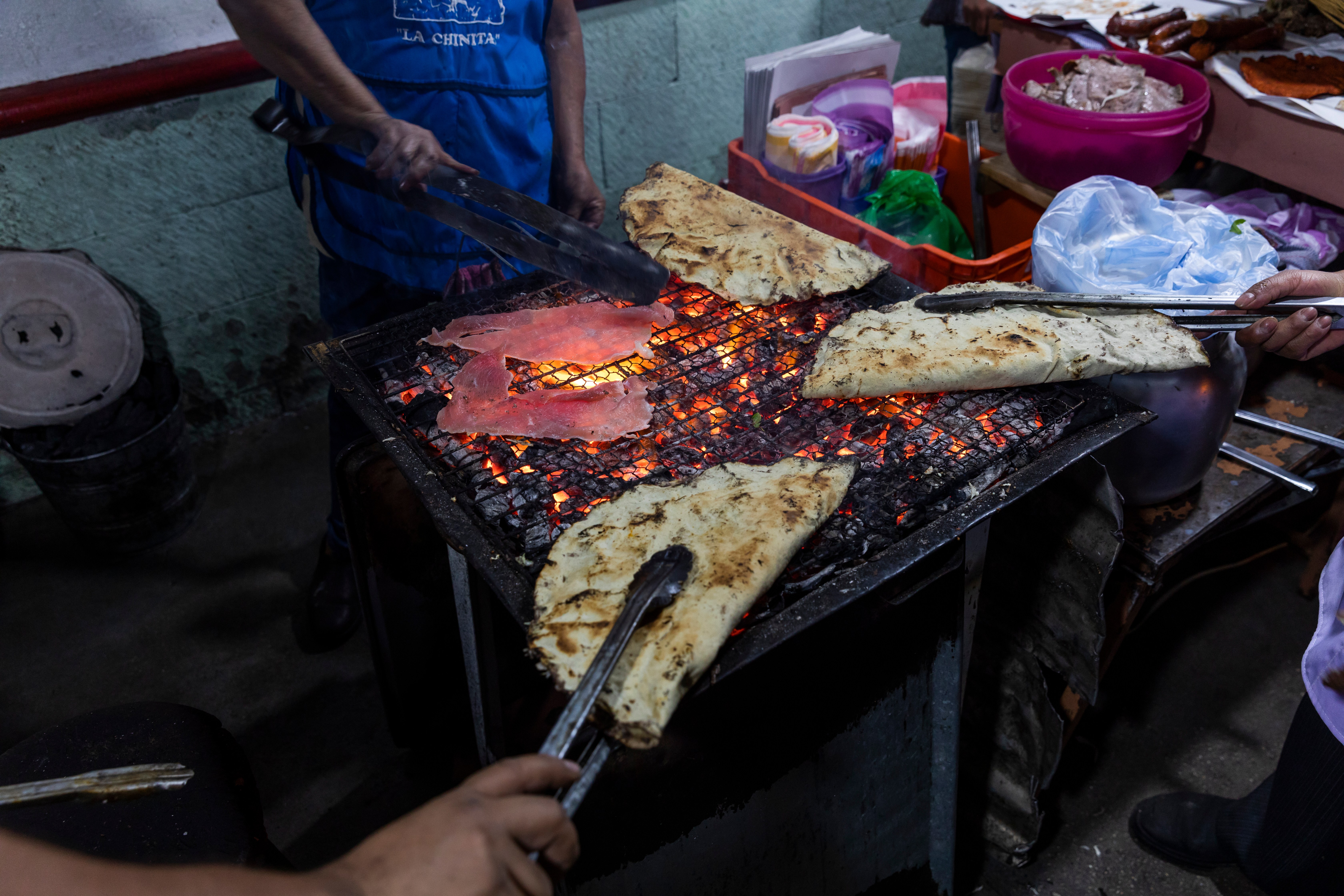
The street food section of an Oaxacan menu features masa cooked into various regional shapes. The centerpiece is almost always the tlayuda. Often called Oaxaca's giant crisp tortilla dish, a tlayuda uses a large, thin corn disk toasted over charcoal until crisp and firm. It comes slathered with asiento, dark refried black beans scented with avocado leaves, shredded quesillo, sliced cabbage, and avocado.
Smaller antojitos make smaller plates or starters. A memela is a thick masa oval pinched along the edges to form a rim. It gets toasted on the comal, brushed with asiento, and topped with black bean puree and crumbled queso fresco. A tetela is masa folded into a neat triangle around a pocket of seasoned black beans and griddled dry until the exterior blisters.
Beyond Poblano: Unpacking the famous moles
Oaxaca is celebrated for its seven core moles, but most menus highlight two or three standard options alongside daily specials. Knowing the primary ingredients helps you pick the right flavor profile for dinner.
Mole Negro is dark and complex, combining toasted chilies, raisins, pumpkin seeds, warm spices, and dark Mexican chocolate. Mole Coloradito sits on the fruitier side with a warm reddish color driven by roasted tomatoes, sweet plantains, and mild dried chilies. If you prefer bright, herbal flavors, look for Mole Verde, which skips dried chilies in favor of fresh tomatillos, jalapeños, epazote, and cilantro. Meanwhile, Mole Amarillo delivers a tangy, citrusy kick spiced with allspice, often served over stewed chicken or beef brisket.
Tasajo, cecina, and chapulines: Choosing your proteins
Proteins on an Oaxacan menu are prepared differently from the shredded, slow-braised meats common in Tex-Mex restaurants. Ordering meat usually means choosing between salted, dried, or spiced cuts cooked hot off the wood fire grill.
Tasajo is cured beef flank thinly sliced, salted, and hung briefly to air-dry. It cooks quickly over embers, yielding a chewy, savory beef flavor. Cecina (often labeled cecina enchilada) is thinly sliced pork shoulder marinated in an adobo paste of guajillo chilies, garlic, and vinegar, giving it a bright red color. Chorizo Oaxaqueño comes bound in round link knots, heavily spiced with cumin and chilies. For an authentic local topping, chapulines (toasted grasshoppers cooked with garlic, lime, and chilies) add a salty, tangy crunch to fresh guacamole or tlayudas.
Reading regional Oaxacan menus with confidence
Because Oaxacan menus use regional names for ingredients and specific dish formats, guessing what will arrive on your plate can be tricky. A dish like chiles rellenos de picadillo involves poblano peppers stuffed with sweet-savory minced pork and raisins, looking very different from standard cheese-stuffed peppers.
When sitting down at a traditional Oaxacan spot, opening MenuDish lets you scan the menu to view matched photos of regional items like memelas and tlayudas, while also surfacing details on hidden ingredients like asiento lard or nut allergens in complex moles.
Don't cook it — find it.
See every dish on any menu before you order. Scan, see the photo, check allergens & nutrition.