Key takeaways
- Bibimbap is a Korean mixed rice dish served with various sautéed vegetables (namul), meat (often beef), a fried egg, and gochujang (chili paste).
- The key to eating Bibimbap is to thoroughly mix all ingredients together with the gochujang before eating.
- Dolsot Bibimbap is served in a hot stone bowl, creating a crispy rice crust at the bottom.
- Bibimbap offers a balanced meal with a mix of textures, flavors (savory, spicy, nutty), and nutrients.
- Customization is common; you can adjust spice levels and ingredients based on preference.
The Bibimbap Basics: What's in the Bowl?
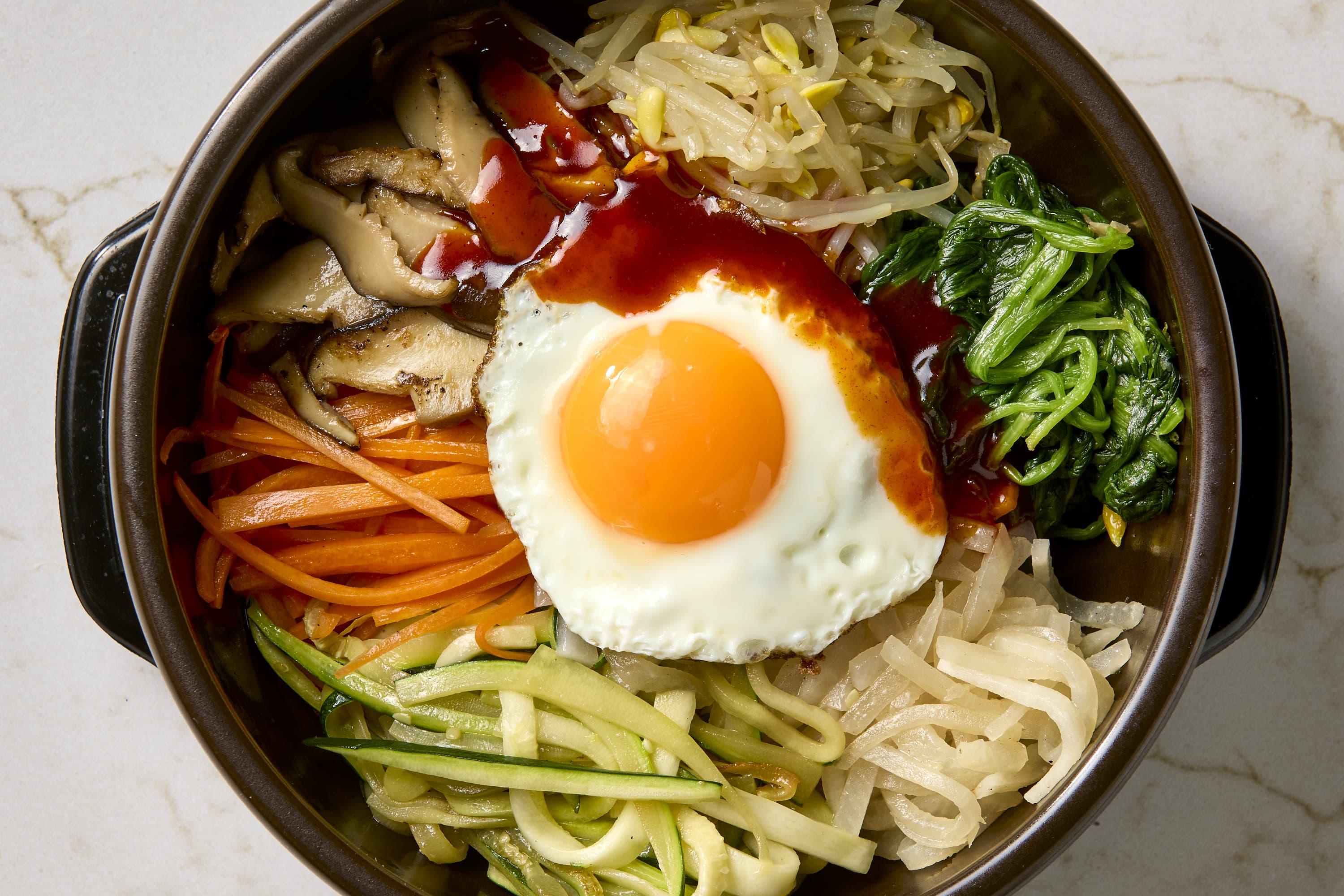
At its heart, Bibimbap (비빔밥), literally meaning 'mixed rice,' is a comforting bowl of warm white rice topped with an array of vibrant, seasoned vegetables (called namul), often thinly sliced marinated beef or tofu, a fried or raw egg, and a dollop of spicy gochujang (Korean chili paste). It’s a dish that celebrates balance—a little bit of everything, all harmoniously combined.
Think of it as a deconstructed salad and main course, all waiting for your personal touch. The beauty of Bibimbap lies in its visual appeal before you even mix it: each ingredient is carefully arranged, creating a rainbow of colors and textures.
What to Expect on Your Plate (and in Your Mouth)
When your Bibimbap arrives, you'll typically see a bed of rice at the bottom. Layered on top, often in neat sections, will be an assortment of ingredients. Common vegetable toppings include:
- Spinach: Blanched and seasoned with garlic and sesame oil.
- Bean Sprouts: Crunchy and refreshing.
- Zucchini: Sautéed until tender.
- Carrots: Julienne-cut and lightly cooked.
- Fernbrake (Gosari): A unique earthy, chewy vegetable.
- Mushrooms: Often shiitake or oyster, sautéed.
For protein, you'll usually find thinly sliced, marinated beef (bulgogi-style), though pork, chicken, or tofu are also common. A glistening fried egg, often with a runny yolk, crowns the dish. And, crucially, a generous spoonful of bright red gochujang, the spicy, fermented chili paste that gives Bibimbap its signature kick.
The taste? It’s a symphony. Earthy vegetables, savory meat, the creamy yolk, the subtle sweetness of sesame oil, and the spicy, umami depth of gochujang all come together. Every bite offers a different combination of textures—crisp, chewy, soft, tender.
Dolsot Bibimbap: The Sizzling Stone Bowl Experience
If you see 'Dolsot Bibimbap' on the menu, prepare for an extra layer of deliciousness. Dolsot (돌솥) means 'stone pot,' and this version is served in a superheated stone bowl. The heat from the bowl continues to cook the rice, creating a glorious, crispy crust at the bottom—the best part for many aficionados. It also keeps your meal piping hot until the very last spoonful.
Be careful when it arrives; that bowl is seriously hot! This is where you get those delightful crunchy bits of rice, often called nurungji, which add another fantastic texture to the dish.
How to Eat Bibimbap: The Art of the Mix
Here’s the golden rule: mix everything thoroughly before you start eating. Don't be shy. Grab your spoon and dig in, incorporating the gochujang, the runny egg yolk, the vegetables, and the meat into every grain of rice. The goal is to distribute all those flavors and textures evenly.
You might want to add more gochujang if you like it spicier, or a splash of sesame oil for extra nuttiness. Once mixed, scoop spoonfuls of the colorful concoction, ensuring you get a bit of everything in each bite. There’s no wrong way to mix, as long as it all comes together.
Bibimbap Variations and Customization
Beyond the classic, you'll find regional and seasonal variations. Some versions might feature seafood, different types of fermented vegetables, or even raw beef (yukhoe bibimbap). Many restaurants also offer vegetarian or vegan options, often substituting tofu for meat and ensuring no animal products in the vegetable preparation.
If you're unsure about ingredients or spice levels, this is where an app like MenuDish comes in handy. You can scan the menu, see real dish photos, and check the listed ingredients and potential allergens before you order, ensuring your Bibimbap is exactly what you hoped for.
Why Bibimbap is a Must-Try
Bibimbap is more than just a meal; it's an experience. It's savory, spicy, fresh, and deeply satisfying. It's a dish that embodies the Korean philosophy of harmonious eating, where a variety of ingredients come together to create a balanced and delicious whole. Whether you're a seasoned Korean food lover or trying it for the first time, Bibimbap is an excellent entry point into the cuisine. Just remember to mix it all up and enjoy every colorful, flavorful bite!
Don't cook it — find it.
See every dish on any menu before you order. Scan, see the photo, check allergens & nutrition.