Key takeaways
- Cochinita pibil originates from the Yucatán peninsula and is traditionally slow-roasted underground in banana leaves.
- The vibrant red color and earthy taste come from achiote (annatto paste), while sour orange juice tenderizes the pork.
- Unlike crispy Michoacán carnitas, cochinita pibil is tender, stewed, and notably tart.
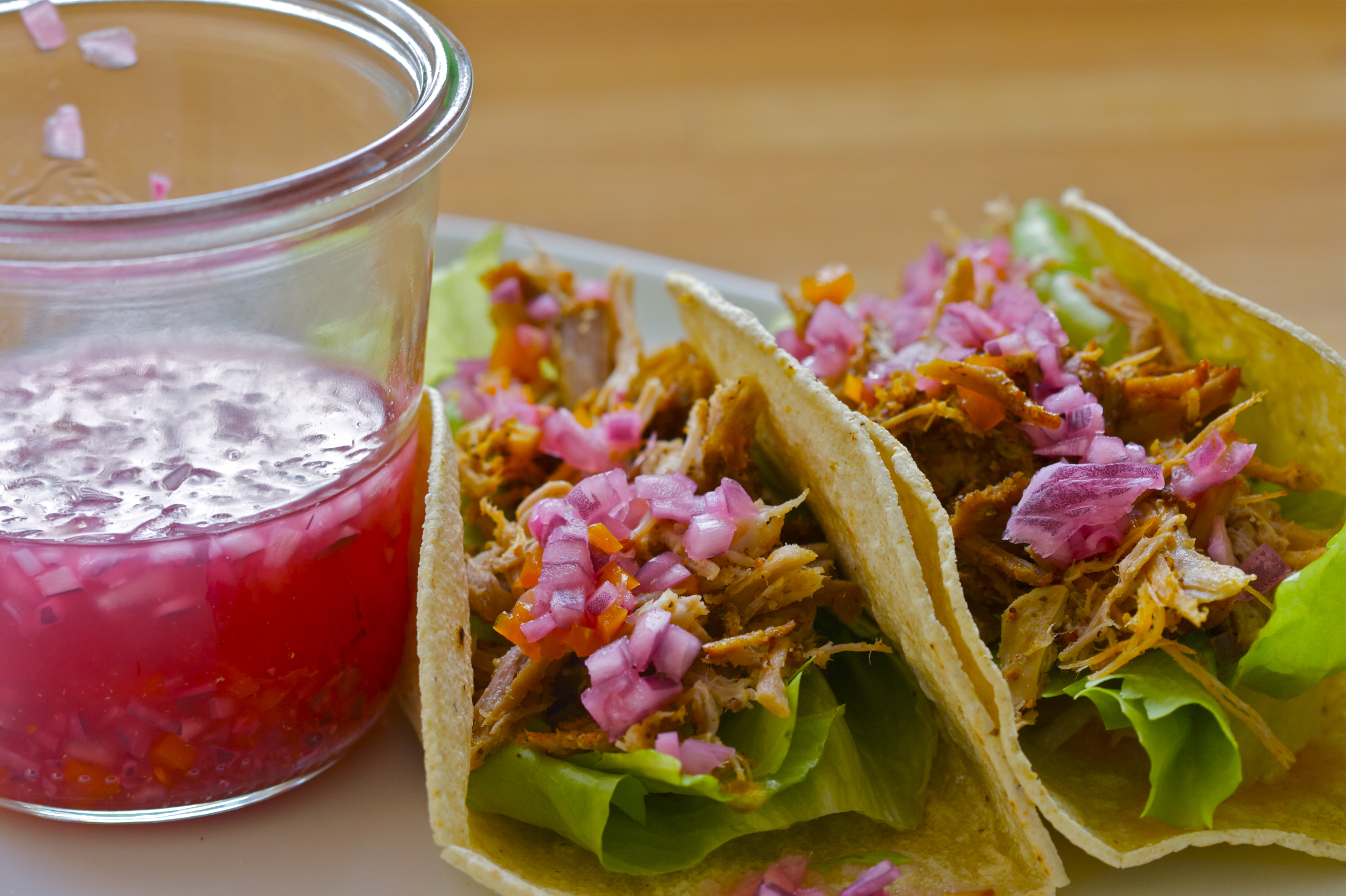
- It is typically served on soft corn tortillas, panuchos, or torta rolls alongside lime-pickled red onions.
What Cochinita Pibil Actually Means
Walk into a quiet fonda in Mérida around mid-morning and the first thing you notice isn't heat—it is smoke, earth, and an aggressive citrus tang hanging in the humid air. Cochinita pibil comes from the Yucatán peninsula, where Mayan culinary traditions met Spanish livestock centuries ago.
The word cochinita refers to a baby suckling pig, while pibil stems from the Mayan word p'ib, meaning an underground earth oven. Traditionally, a whole young pig was rubbed with a deep red spice paste, wrapped tight in wild banana leaves, and lowered into a stone-lined pit over burning wood. Hours later, the pork emerged so tender that bones slid out cleanly without a knife.
Achiote, Bitter Orange, and Banana Leaves
Three specific ingredients give cochinita pibil its unmistakable reddish-orange glaze and bright flavor profile. Without them, it is simply braised pork.
First is annatto (known locally as achiote). Derived from the seeds of the Bixa orellana tree, achiote provides a vivid ruby color alongside an earthy, slightly peppery flavor. Second is naranja agria, or bitter sour orange. Yucatecan cooks prefer this harsh citrus over regular lime because its sharp acidity breaks down dense pork fibers without turning the meat mushy. Finally, banana leaves act as a natural pressure cooker, trapping moisture and imparting a tea-like herbaceous aroma during the slow roast.
How Cochinita Pibil Differs From Carnitas
First-time diners often mistake cochinita pibil for carnitas, but the cooking techniques and flavor targets are entirely different. Carnitas relies on Michoacán-style pork slow-simmered in its own lard until rendered and crispy on the edges. The seasoning stays simple—garlic, salt, and sometimes citrus peel or Mexican Coca-Cola.
Cochinita pibil, by contrast, never fries in lard. It steams and roasts slowly in an acidic marinade, resulting in shredded pork bathed in a silk-thin, aromatic broth. Carnitas is savory, fatty, and salty with crispy bits; cochinita is tart, deeply spiced, citrusy, and uniformly soft.
Tacos, Panuchos, and Tortas: How to Order It
Yucatecan spots rarely serve cochinita pibil as a plain dinner plate. Instead, you will see it paired with specific hand-held formats that balance the acidity of the pork.
The classic vehicle is a soft warm corn tortilla lined with pulled meat and crowned with sliced pickled red onions (cebollas moradas) soaked in lime and habanero pepper. You will also spot panuchos—refried corn tortillas stuffed with a layer of mashed black beans—and tortas, where thick slices of crusty pan francés soak up the ruby juices. Every order comes with a tiny dish of salsa de habanero; take it light, because genuine Yucatecan habanero salsa carries a clean, blazing heat.
Reading a Yucatecan Menu Without Surprises
Yucatecan menus feature distinct regional terminology that can stump even fluent Spanish speakers. Aside from cochinita, you might see poc chuc (citrus-marinated grilled pork) or recado negro (turkey or pork cooked in a jet-black roasted spice paste).
If you run across a menu in Mexico or an authentic regional spot and cannot tell whether a plate is soup-based or taco-ready, a quick scan with MenuDish shows matched photos of the dish alongside ingredients, so you know exactly what style of pork you are ordering before the plate hits your table.
Don't cook it — find it.
See every dish on any menu before you order. Scan, see the photo, check allergens & nutrition.