Key takeaways
- Larb is an iconic warm meat salad originating in Laos and Isan (Northeastern Thailand).
- The signature nutty crunch comes from khao khua, sticky rice toasted in a dry skillet and coarsely ground.
- Northern Thai larb differs completely from Isan larb, relying on warm dried spices rather than lime juice.
- It is traditionally eaten using sticky rice as an edible utensil along with raw cucumber, cabbage, and herbs.
Minced meat, fresh herbs, and zero lettuce
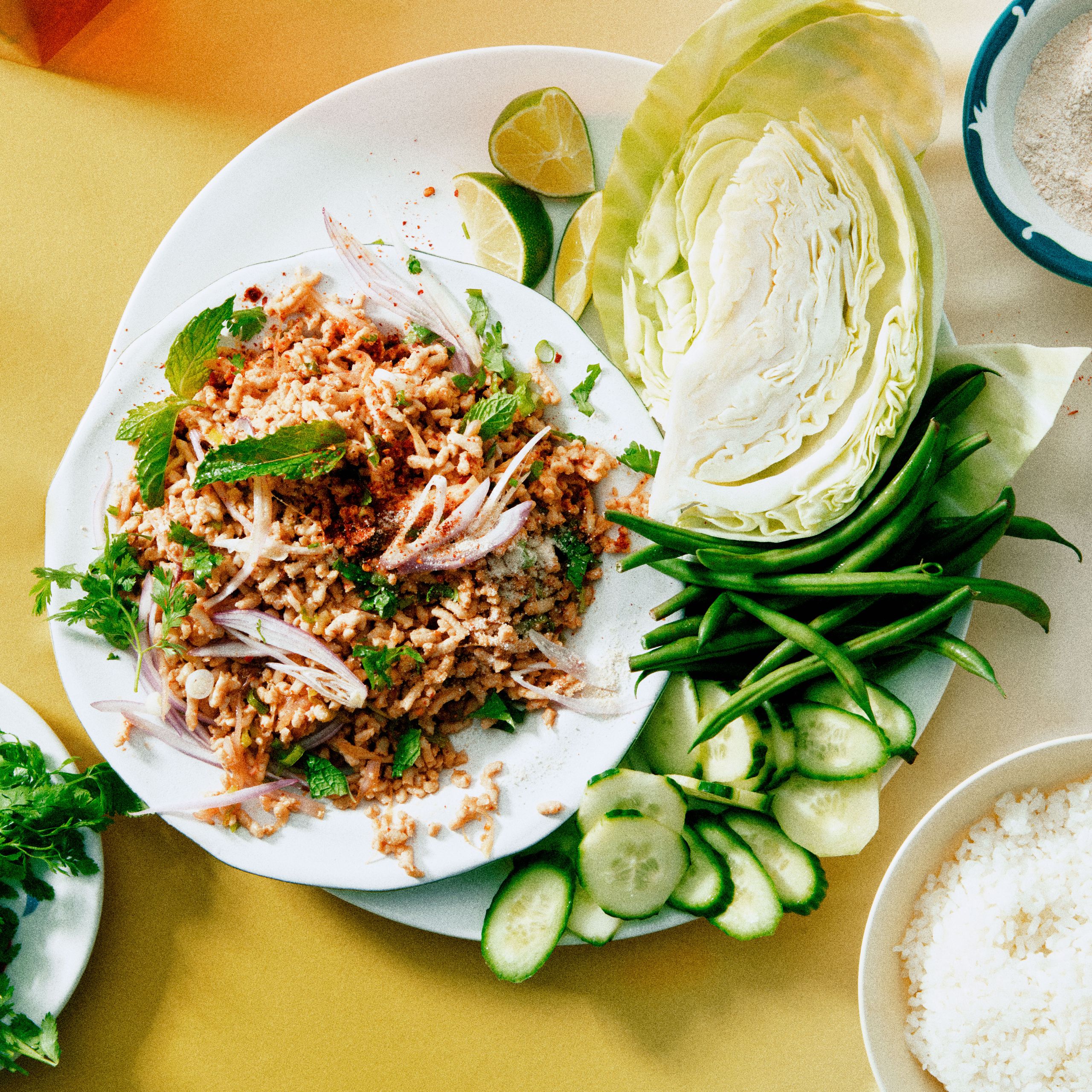
Despite being called a salad, larb contains no leaf lettuce. Instead, finely minced or coarsely chopped protein serves as the base. Chicken, pork, beef, duck, or fish are rapidly cooked in a small splash of broth before being tossed while still warm with fresh herbs and seasonings.
The dish relies on sharp contrasts. Fresh mint, cilantro, and saw-tooth coriander bring cool, leafy brightness to counter the heat of toasted chili flakes. Red shallots provide a sharp bite, while lime juice and fish sauce punch through with electric acidity and deep savory saltiness.
The secret crunch: toasted rice powder
If you ask anyone what gives larb its distinct personality, they will point to khao khua. Uncooked sticky rice grains are dry-roasted in a wok or heavy skillet alongside lemongrass or lime leaves until deep golden brown. Once toasted, the grains are pounded in a mortar and pestle into a coarse, gritty powder.
When stirred into the warm meat, toasted rice powder absorbs the liquid from the lime juice and fish sauce. It adds a smoky, nutty aroma while giving every bite a pleasant, gritty texture that separates true larb from a basic meat stir-fry.
Lao larb vs. Isan larb vs. Northern Lanna styles
In Laos, where larb is considered an unofficial national dish, it often incorporates raw or cooked meat, fish sauce, fermented fish paste (padaek), and fresh herbs. Isan larb, from Thailand's northeast region, shares this citrusy, herb-forward profile and relies heavily on lime juice and dried chili flakes.
Head further north to Chiang Mai and the rest of Northern Thailand, and larb changes completely. Larb Lanna skips lime juice and toasted rice altogether. Instead, it uses a complex blend of aromatic dry spices like long pepper, star anise, cinnamon, cloves, and dried chili. It is dark, earthy, deeply savory, and often cooked with pork blood or offal.
Sticky rice, raw veggies, and counterbalancing the heat
Larb is rarely eaten with a fork on its own. Authentic dining calls for a basket of warm khao niaw (sticky rice). You pinch off a small chunk of rice with your fingers, roll it into a soft ball, and use it to scoop up the warm, seasoned meat and herbs.
Restaurants usually serve larb alongside a basket of raw green cabbage wedges, Thai long beans, slices of cucumber, and Thai basil sprigs. Taking a bite of raw cabbage between spicy mouthfuls cleanses the palate and tones down the chili fire.
What to look for on the menu
Most Thai menus list larb by its main protein: Larb Gai (chicken), Larb Moo (pork), or Larb Ped (duck). Duck larb is especially prized because duck fat amplifies the roasted rice flavor.
If you are staring at an unfamiliar menu or a handwritten specials board, snapping a scan with MenuDish helps you check matched food photos and ingredient lists so you know whether you are ordering a tangy Isan-style dish or a rich Northern spice mix before the food hits your table.
Don't cook it — find it.
See every dish on any menu before you order. Scan, see the photo, check allergens & nutrition.
Allergens: Fish sauce (anchovy), Soy (if substituted). The MenuDish app flags these automatically for every dish it scans.