Key takeaways
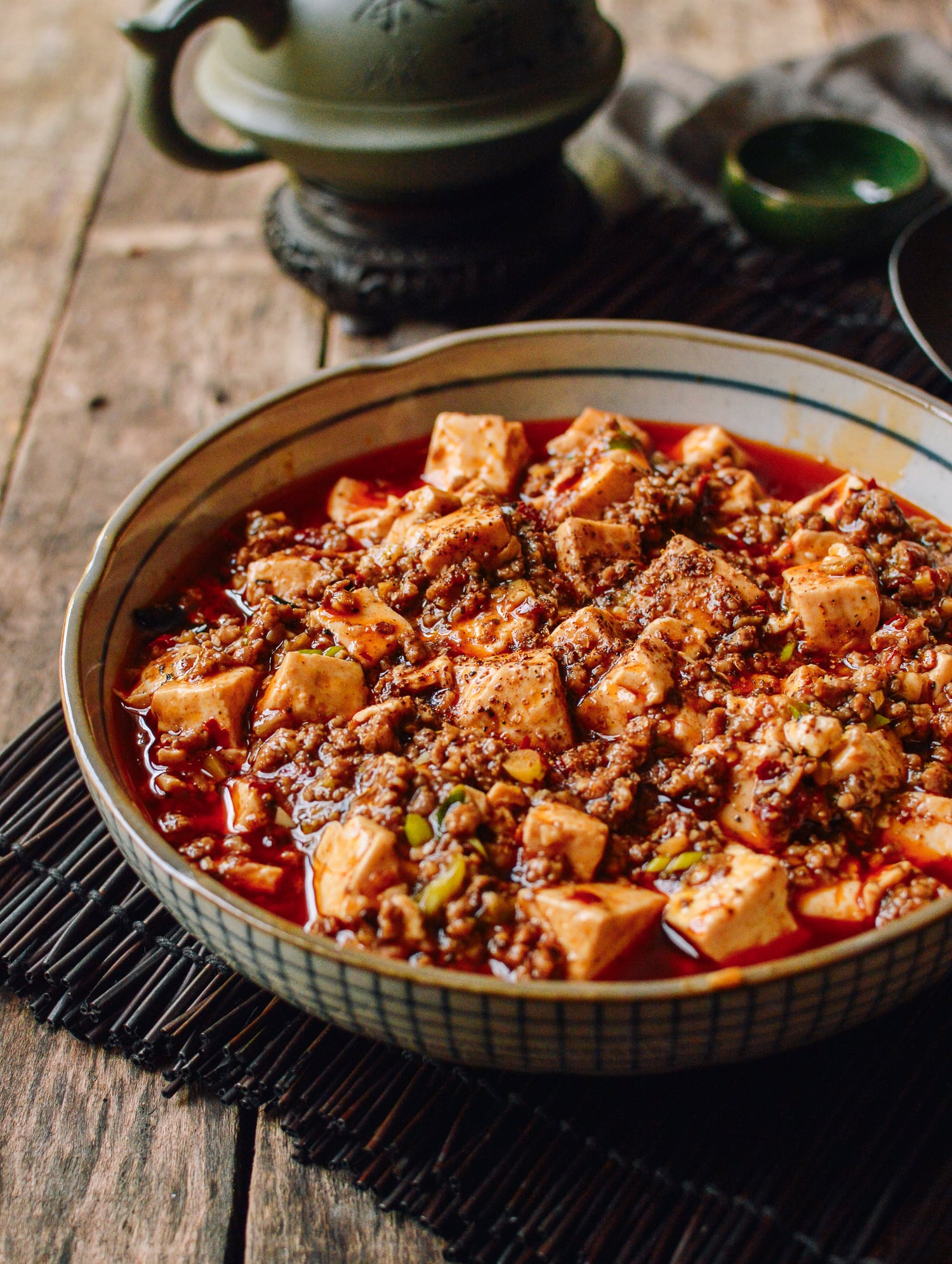
- Mapo tofu pairs silken tofu cubes with minced beef or pork in a chili oil stew.
- The signature numbing lip vibration comes from Sichuan peppercorns.
- Authentic versions depend on Pixian doubanjiang, a dark fermented broad bean chili paste.
- Always eat Mapo tofu with a porcelain spoon over plain white rice.
A Chengdu street stall and a nickname that stuck
Mapo tofu translates to something surprisingly unglamorous: "pockmarked grandmother's tofu." Legend traces the dish back to late 19th-century Chengdu, where a woman named Mrs. Chen ran a modest eatery near the city's northern gate.
Laborers and oil porters stopped by her shop carrying their own oil and minced beef, asking her to cook something cheap, fast, and satisfying. She simmered soft tofu cubes in hot chili oil with minced meat and crushed Sichuan peppercorns. The dish became so popular that locals called it Chen Mapo Tofu. Over a century later, the Chengdu original still stands, but the recipe has spread to almost every Chinese restaurant on earth.
Sichuan peppercorns, fermented beans, and serious heat
What separates real Mapo tofu from a generic spicy tofu stir-fry comes down to two ingredients: Pixian doubanjiang and facing-heaven chilis.
Pixian doubanjiang is a salty, dark red paste made from broad beans fermented with salt, wheat flour, and chili peppers. Aged in clay jars for months, it gives the sauce an intense, savory depth that soy sauce alone cannot match.
Then comes the electric sensation: Sichuan peppercorns. They aren't peppers at all, but the citrusy seed husks of the prickly ash tree. They contain a compound called hydroxy-alpha-sanshool, which chemically tricks your nerves into feeling a rapid, buzzing vibration at about 50 Hertz. Combined with hot chili oil, this creates the classic Sichuan flavor profile known as málà—"numbing and spicy."
Silken tofu that refuses to fall apart
If you order Mapo tofu at an adapted Western takeout spot, you often get dense, rubbery cubes of firm tofu sitting in a sweet, translucent starch sauce. Authentic Chengdu-style Mapo tofu uses medium-soft or silken tofu that feels like savory custard.
Keeping soft tofu intact in a wok requires a specific kitchen step: blanching the tofu cubes in gently boiling salted water before adding them to the chili base. The salt draws out surface moisture and tightens the soy proteins, allowing the silken tofu to soak up spicy broth without breaking down.
The sauce is thickened lightly with potato starch and finished with a shimmering red layer of chili oil that clings to every cube without turning heavy or gummy.
Pork vs. beef and how to spot a good version on a menu
Traditional Sichuan recipes call for finely minced beef rather than pork. Beef provides a deep meatiness that stands up to the salty fermented beans. However, ground pork is commonly used in home kitchens and in Japanese-style Mapo tofu (Mabo Dofu), which tends to be sweeter, milder, and less oily.
When looking at a menu, search for descriptors like málà or "Sichuan style." If you use MenuDish to scan a menu, looking at matched photos will instantly tell you whether a restaurant serves a traditional oil-slicked, peppercorn-dusted dish or an adapted sweet version. A dark dusting of fresh ground Sichuan peppercorn powder on top just before serving is the mark of a kitchen taking its dish seriously.
Spoons over chopsticks and the rice rule
Trying to eat authentic Mapo tofu with wooden chopsticks is a exercise in futility. Soft silken tofu breaks apart instantly under pressure. Reach for a flat porcelain spoon instead.
Spoon a thick mixture of soft tofu, ground meat, and deep red chili gravy directly over a bowl of steamed white rice. Plain jasmine rice absorbs the red oil and tames the sharp tingle of the peppercorns. Order an extra bowl of rice right at the start—you'll need it to clean your bowl.
Don't cook it — find it.
See every dish on any menu before you order. Scan, see the photo, check allergens & nutrition.
Allergens: Soy, Gluten, Sesame. The MenuDish app flags these automatically for every dish it scans.