Key takeaways
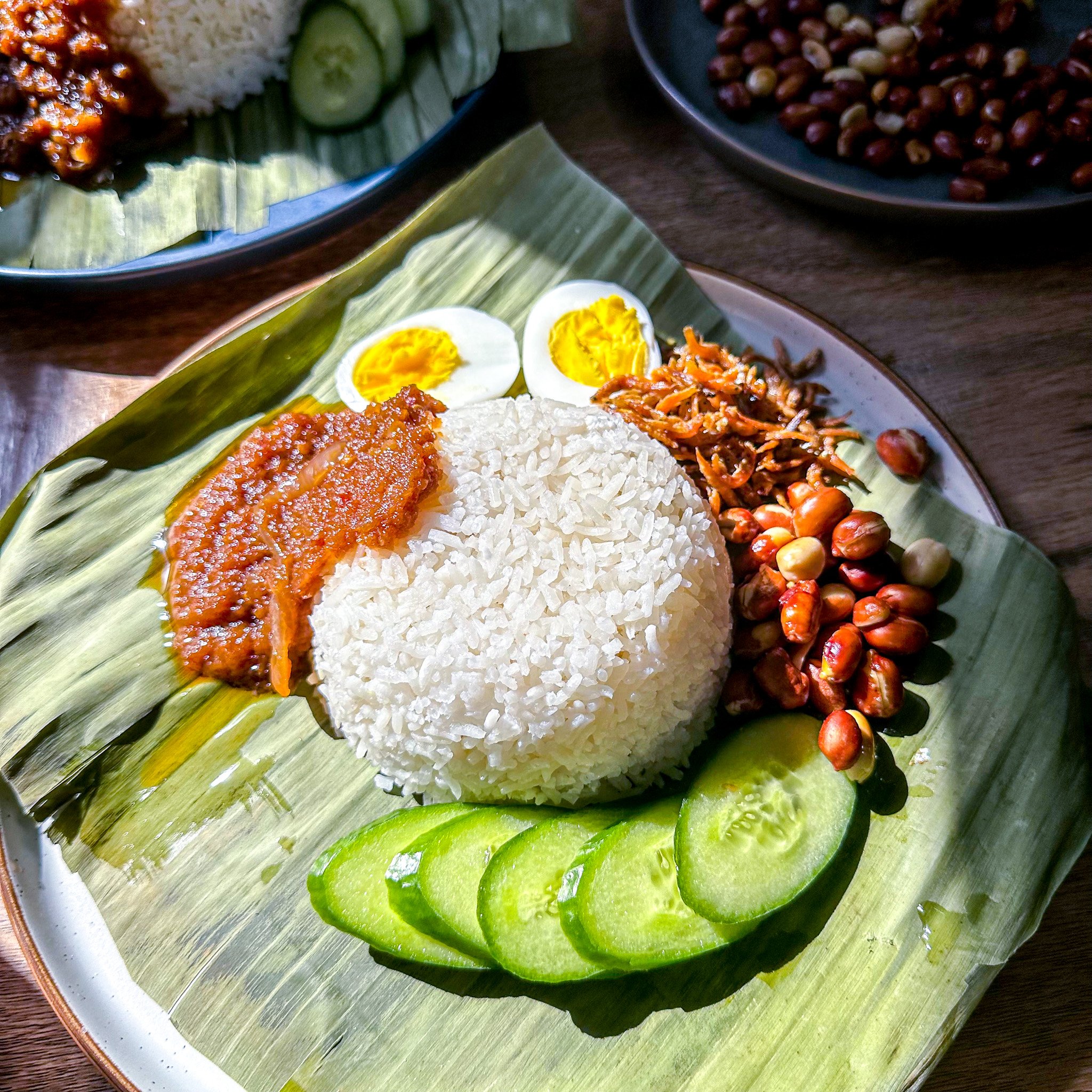
- The core of nasi lemak is rice cooked with coconut milk and knotted pandan leaves, not just plain boiled rice.
- Every traditional serving requires five sides: fiery sambal sauce, toasted peanuts, fried dried anchovies, cucumber slices, and a hard-boiled egg.
- The dish is eaten at any time of day, though it originated as a energy-dense breakfast for farmers and fishermen.
- Popular protein add-ons include spiced fried chicken (Ayam Goreng Berempah) and beef rendang.
What makes the rice different from regular coconut rice?
The name nasi lemak translates literally to rich rice or fatty rice in Malay. That richness does not come from heavy creams or animal fats, but from coconut milk infused into long-grain rice during steaming.
Cooks tie fresh pandan (screwpine) leaves into tight knots and drop them directly into the pot with ginger slices and a pinch of salt. As the rice absorbs the liquid, the pandan releases an herbaceous, vanilla-like aroma that cuts through the coconut's weight. If the rice tastes flat or greasy, the cook skipped the pandan or lightened the coconut milk too much.
The five non-negotiable side dishes
A true plate of nasi lemak depends on contrast. Soft rice needs crunch, and sweet coconut needs salt and heat. Standard servings include five specific items packed around the rice mound:
1. Sambal: The chili paste that anchors the plate. It is slow-cooked with shrimp paste (belacan), shallots, tamarind, and sugar until the oil separates from the chili solids.
2. Ikan Bilis: Tiny dried anchovies fried in oil until shattered-glass crispy. They supply a punch of salinity.
3. Roasted Peanuts: Raw peanuts toasted with their skins intact to add an earthy crunch alongside the anchovies.
4. Fresh Cucumber: Thinly sliced raw cucumber to cool your tongue between bites of chili.
5. Boiled Egg: Half or a whole hard-boiled egg, though some modern stalls offer a fried egg with a runny yolk.
Why the sambal defines the dish
Ask three Malaysians where to find the best nasi lemak, and you will spark an argument about sambal. The rice remains fairly consistent across hawker stalls, but every family and street vendor guards their sambal recipe closely.
Some vendors lean toward a darker, caramelized sambal cooked for hours until sweet and sticky. Others make a bright red, vinegar-sharp sauce dominated by fresh dried chilies. The balance between sweet, sour, and fiery chili oil determines whether a stall has a queue around the block at 6:30 AM.
Upgrading your order: Proteins and variations
While nasi lemak biasa (plain) comes with just the core five toppings, most diners add a heavy protein to turn it into a full meal. Here are the most common additions listed on stall menus:
Ayam Goreng Berempah: Bone-in chicken marinated with lemongrass, turmeric, galangal, and coriander seeds, then deep-fried with crispy strands of herbs scattered over the top.
Beef Rendang: Beef chuck slow-simmered in coconut milk and toasted coconut paste until dark, tender, and dry.
Sambal Sotong: Tender squid cooked directly in a sweet and spicy chili gravy.
Paru Goreng: Sliced beef lungs fried with spices until crisp around the edges.
Reading the menu board when you order
Hawker center signs can feel intimidating when choices are written rapidly on whiteboards or spoken in fast Malay shorthand. If you are staring at a glass display case packed with trays of spiced meats, knowing what you are looking at saves time.
When you cannot tell whether a dark stew is beef rendang or mutton curry, taking a quick look at real photos helps. Tools like MenuDish scan unfamiliar restaurant menus and match text to photos of actual food, so you know exactly which fried chicken cut or sambal style is sitting behind the counter before you step up to order.
Don't cook it — find it.
See every dish on any menu before you order. Scan, see the photo, check allergens & nutrition.
Allergens: Fish, Peanuts, Crustaceans, Eggs. The MenuDish app flags these automatically for every dish it scans.