Key takeaways
- Salmorejo originates from Córdoba, Spain, relying on just five ingredients: tomatoes, stale bread, garlic, olive oil, and salt.
- Unlike gazpacho, salmorejo contains no green peppers, cucumbers, or vinegar, creating a silky, dip-like texture.
- The pale orange color comes from emulsifying extra virgin olive oil directly into soaked bread and tomato puree.
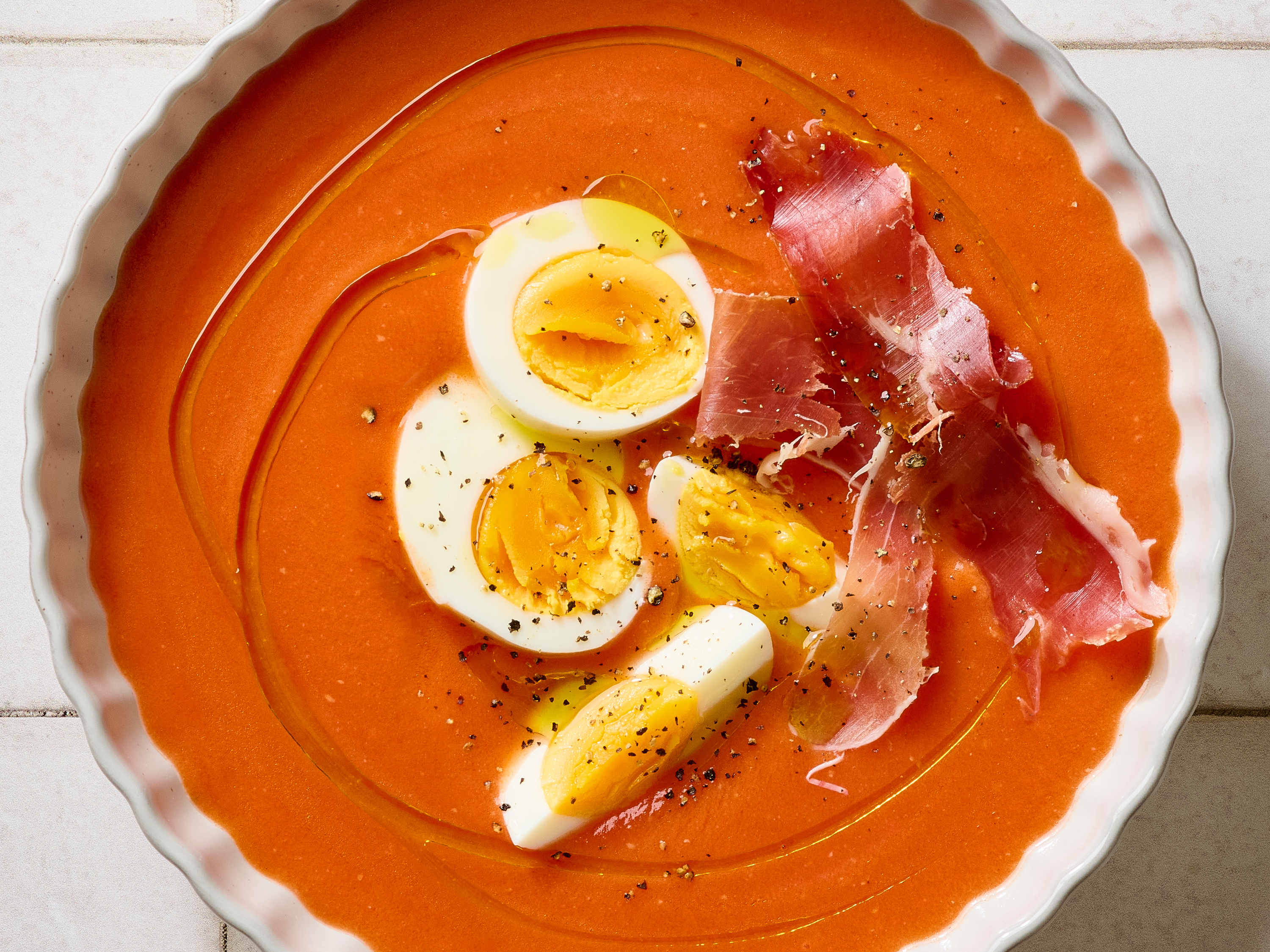
- Standard toppings include diced jamón ibérico and hard-boiled egg added right before serving.
How salmorejo differs from gazpacho
When travelers see a cold, orange-red soup listed on a southern Spanish menu, they often assume it's gazpacho. That misconception disappears with the first spoonful. Where gazpacho is thin enough to drink from a glass—sharp with sherry vinegar, cucumber, and green bell pepper—salmorejo is rich, velvety, and eaten strictly with a spoon.
The secret to salmorejo's body is starch. Stale white bread absorbs pureed tomato juice before getting blended with generous glugs of Spanish extra virgin olive oil. There are no raw peppers or watery cucumbers to dilute it. The dish relies entirely on ripe summer tomatoes, starch, salt, and the sharp bite of raw garlic.
The five ingredients behind Córdoba's classic bowl
Traditional cooks in Córdoba will tell you that authentic salmorejo cordobés uses zero cream, milk, or mayonnaise to get its gloss. The rich texture happens naturally when high-speed blending binds plant water, starch, and oil.
Because the ingredient list is short, quality matters:
Plum tomatoes: Fully ripe red tomatoes supply natural sweetness and acid. Vine-ripened plum tomatoes work best.
Stale white bread: In Córdoba, cooks use pan de telera, a dense local bread with a fine crumb. It soaks up tomato juice, building body without adding lumpiness.
Extra virgin olive oil: A peppery Spanish oil, like Picual, turns the tomato paste into a pale orange, velvety emulsion as it blends.
Garlic: Usually half a clove to one small clove. Too much raw garlic easily overpowers the sweet tomatoes.
Salt: A solid pinch brings out tomato acidity and balances the heavy oil.
Toppings that complete the dish
A bowl of unadorned salmorejo looks unfinished. The cool tomato base needs salty, savory garnishes added immediately before serving.
The standard Andalucian topping is a handful of finely diced jamón ibérico (or cured Serrano ham) alongside chopped hard-boiled egg. The cured pork provides a salty, chewy contrast to the velvety soup, while egg yolk adds extra body. Some modern bars serve it with fried eggplant strips or a light drizzle of green oil, but in Córdoba, ham and egg remain non-negotiable.
When resting your feet at a crowded Spanish tapas bar where menus show unfamiliar starter names, scanning the menu with an app like MenuDish lets you match listed items with real dish photos, helping you spot the difference between a light glass of gazpacho and a heavy bowl of salmorejo cordobés before you order.
How to make authentic Cordovan salmorejo at home
Prep takes fifteen minutes, but chilling the soup in the fridge for two hours is mandatory so the emulsion thickens and the garlic edge softens.
Ingredients you'll need
4 portions · 2 hours 15 minutes
- 1 kg (2.2 lbs) ripe plum tomatoes, cored and roughly chopped
- 200g (7 oz) crustless white bread, day-old or stale
- 150ml (5 fl oz) Spanish extra virgin olive oil
- 1 small garlic clove, peeled and germ removed
- 1 tsp coarse sea salt
- 2 hard-boiled eggs, peeled and finely diced
- 50g (1.8 oz) jamón ibérico or Serrano ham, finely diced
How to make it (step by step)
Blend chopped tomatoes on high speed until completely liquid.
Tear stale bread into chunks, submerge them in the tomato puree, and let sit for 10 minutes to soften.
Add garlic and salt to the blender. Blend until smooth.
Keep blender running on medium-high and slowly pour in extra virgin olive oil. The mixture will lighten into a pale orange, glossy cream.
Taste, add extra salt if required, then cover and chill in the refrigerator for at least 2 hours.
Ladle into small cold bowls and scatter diced ham and hard-boiled egg across the top.
Don't cook it — find it.
See every dish on any menu before you order. Scan, see the photo, check allergens & nutrition.
Nutrition (per portion)
| Calories | 420 kcal |
| Protein | 12 g |
| Carbohydrates | 28 g |
| Fat | 30 g |
Allergens: Gluten, Egg. The MenuDish app flags these automatically for every dish it scans.