Key takeaways
- The broth inside is created by folding chilled, gelatin-rich broth jelly into the pork filling, which melts into soup as it steams.
- A high-quality dumpling features paper-thin skin with tight, uniform pleats strong enough to hold heavy soup without tearing.
- The correct eating technique involves lifting the dumpling into a spoon, pricking the skin to release steam, sipping the broth, and adding black vinegar with fresh ginger.
- Fillings range from pure seasoned pork to luxury variations packed with crab roe or black truffle.
How broth gets inside a sealed dough wrapper
First-time eaters often assume cooks use a syringe to inject broth into each dumpling before steaming. The actual technique is far cleverer and relies on basic chemistry.
Chefs simmer pork skin, knuckles, and aromatics for hours until the liquid fills with natural collagen. Once cooled, this rich stock sets into a firm, clear jelly known as aspic. The kitchen team dices this jelly and folds it directly into minced pork belly. When the raw dumpling hits the intense heat of the bamboo steamer, the meat cooks while the gelled broth melts back into a hot, savory soup trapped inside the wrapper.
What makes a great soup dumpling
A bad soup dumpling is thick, gummy, and leaks its liquid onto the steamer paper before it reaches your table. A masterfully made xiaolongbao (often abbreviated as XLB) balances structural strength with delicate texture.
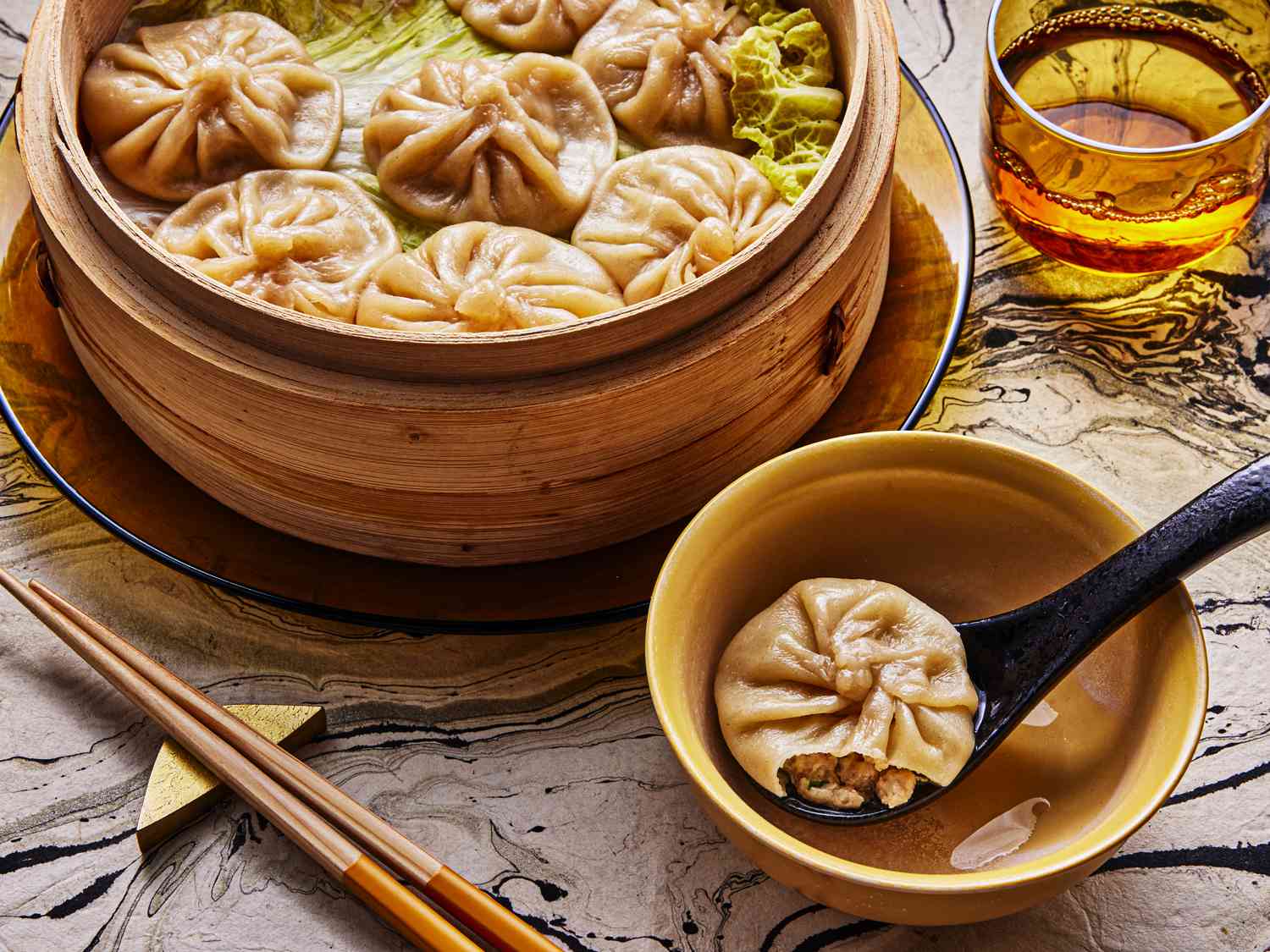
Look at the dough skin first. It should be thin enough that you can almost see the shadow of the meat and dark broth inside, yet elastic enough not to break when pinched with chopsticks. Standard Shanghai shops aim for 18 distinct pleats gathered into a tight crown at the top. The filling should feel tender rather than packed like a dense meatball, releasing clean, savory broth without an unpleasantly greasy residue.
How to eat them without burning your mouth
Eating soup dumplings requires a little patience and the right spoon strategy. Rushing straight in leads to burned palates and ruined shirts.
Gently grip the dumpling near its firm top knot using your chopsticks, lift it out of the steamer basket, and set it directly onto a wide ceramic soup spoon. Pinch a small tear in the side of the dough wrapper or bite off a tiny piece of the top crown. Let the trapped steam blow off for five seconds, then tip the spoon to drink the soup first.
Once you have enjoyed the liquid, dip a few needle-thin slices of raw ginger into Chinkiang black vinegar, drop them over the dumpling, and finish the meat pouch in one clean bite.
Spotting the differences on a menu
Traditional Shanghainese places stick to minced pork (xian rou), but variations flourish across specialty restaurants. Combining pork with sweet, rich crab roe (xie huang) creates a vivid orange-tinted broth with a deeper seafood flavor. Modern specialty shops offer black truffle, spicy Sichuan chili oil, or minced chicken fillings.
Be careful not to confuse xiaolongbao with shengjian bao. While both contain pork and broth, shengjian bao are made with thicker yeast-leavened dough, filled with soup, and fried in giant flat pans until the bottoms turn dark brown and crunchy.
If you find yourself staring at an unfamiliar dim sum or Jiangnan menu with dozen dough options, scanning it with MenuDish lets you see matched dish photos alongside translations and allergen details, taking the guess work out of what will land on your table.
From Nanxiang suburb to global icon
The dish traces back to the late 19th century in Nanxiang, a town just outside Shanghai. A local food stall owner named Huang Mingxian wanted to stand out from competing vendors selling basic steam buns. He refined his dough, added gelatinized broth to seasoned pork, and steamed them in small bamboo baskets called xiaolong.
He initially called them Nanxiang da rou mantou (big meat buns of Nanxiang) as an ironic joke on their tiny size. Customers quickly renamed them after the bamboo baskets they were cooked in. Today, from neighborhood Shanghai diners to Michelin-starred Taiwanese chains, the dish remains one of China's most celebrated culinary exports.
Don't cook it — find it.
See every dish on any menu before you order. Scan, see the photo, check allergens & nutrition.
Allergens: Gluten, Pork, Crustaceans (in crab varieties), Soy, Sesame. The MenuDish app flags these automatically for every dish it scans.