Key takeaways
- Moules-frites arrive in heavy one-kilo black pots; marinière with white wine and celery is the regional benchmark.
- Carbonnade flamande gets its sweet-tart depth from dark Abbey ale and a mustard-coated slice of dark bread dissolved directly into the sauce.
- Belgian establishments match specific glassware to every historic ale—drinking a abbey beer out of the wrong goblet is considered a blunder.
- Frites are a main event twice-cooked in animal fat, meant to be dipped in mayonnaise rather than ketchup.
Brasseries vs. estaminets: setting expectations
Belgian dining splits into distinct environments. Sprawling city brasseries feature high ceilings, leather booths, and brass fixtures where waiters speed past carrying trays laden with raw seafood and tall beers. Flanders holds estaminets—dimly lit, wooden-beamed taverns focused heavily on local ales and rustic home cooking.
Both venue styles share a devotion to slow-cooked meats, rich emulsions, and seasonal produce like chicory and North Sea grey shrimp. Dining here is unhurried. You order drinks first, take time over starters, and expect generous portions that make room for fries alongside almost every main dish.
The pot on the table: deciphering moules-frites
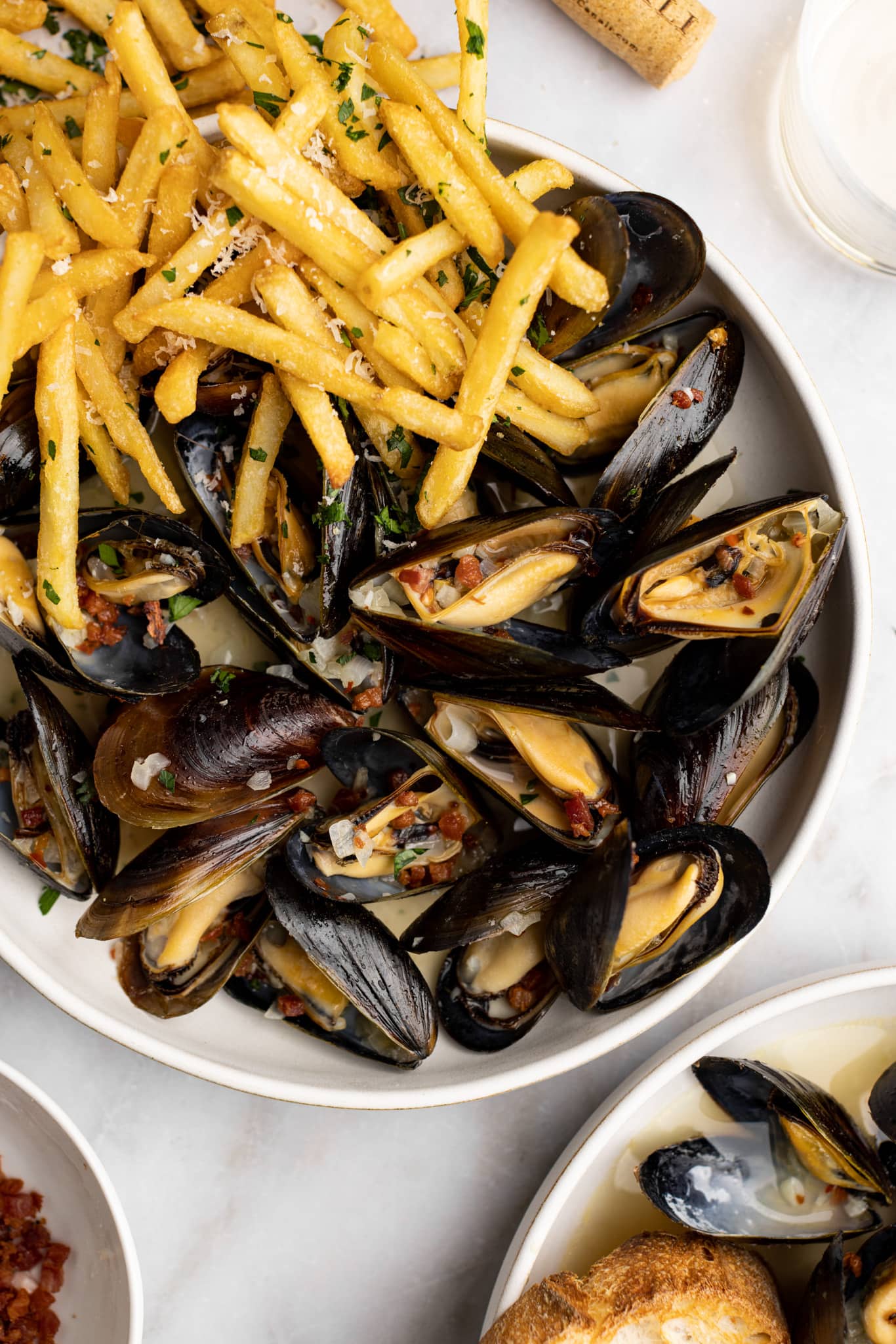
When you order moules-frites, your waiter brings a heavy black enamel pot containing roughly one kilogram of fresh mussels. The lid doubles as a bin for discarded shells. The classic baseline preparation is moules marinière, where mussels steam in butter, dry white wine, diced celery, leeks, and shallots.
Variations change the character of the broth dramatically. Moules à la crème introduces heavy cream and fresh parsley, while moules au vin blanc keeps things bright and crisp. In Flemish towns, you will frequently spot moules à la bière, which swaps white wine for a hazy wheat beer or blonde ale. To eat like a local, use your fingers to pull out the meat from the first mussel, then use that empty shell like tongs to pinch out every remaining mussel from the pot.
Carbonnade flamande: the art of braising with beer
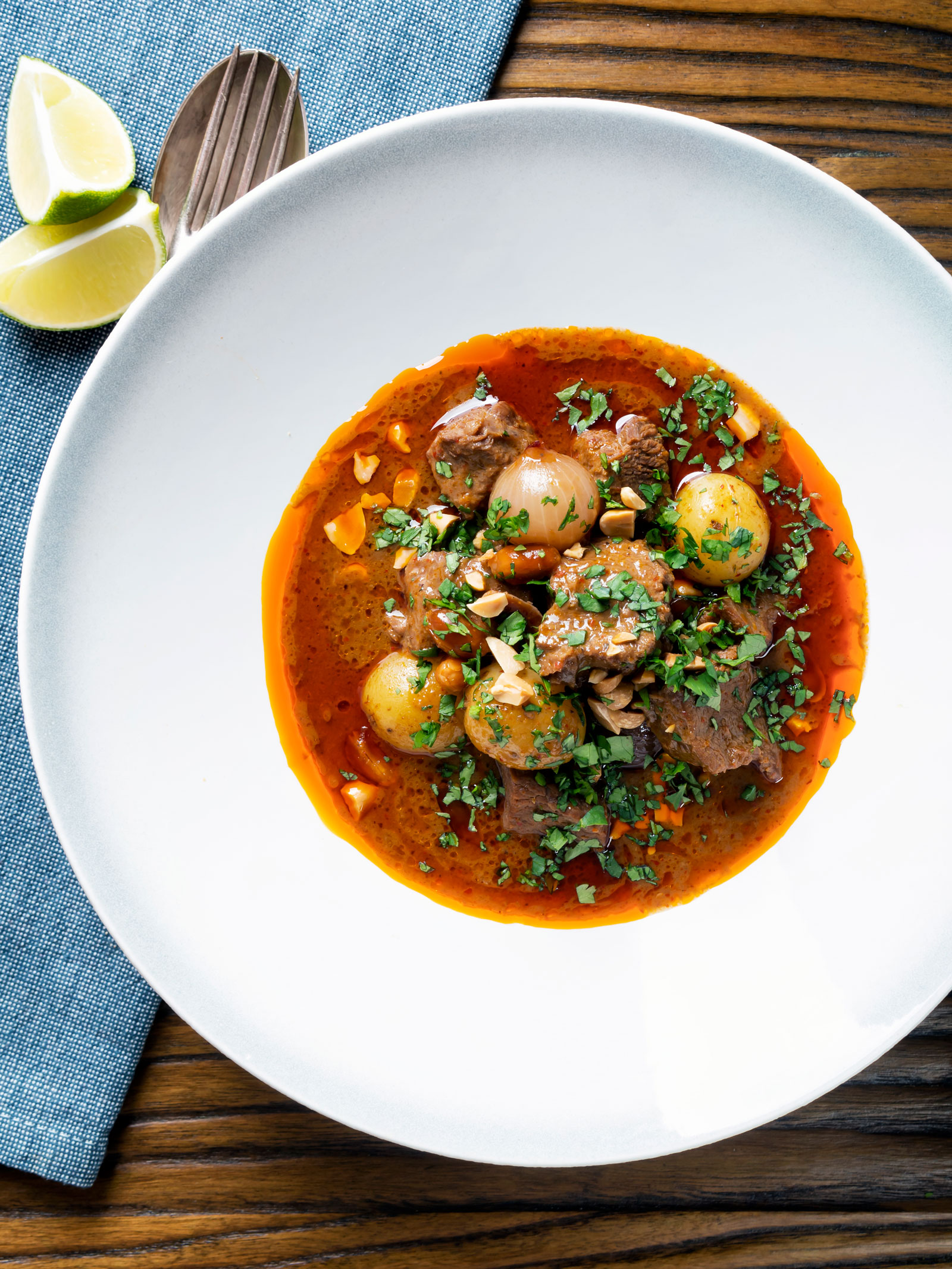
Do not mistake carbonnade flamande (listed in Dutch as stoofvlees or rundsstoverij) for standard beef stew. This Flanders staple simmers chuck steak for hours until the beef collapses at the touch of a fork. Instead of red wine, the broth relies on dark Belgian brown ale like Chimay Blue or Westmalle Dubbel.
The secret behind its signature balance of deep sweetness and tart acidity is gingerbread or sourdough bread smeared with sharp brown mustard, laid top-down into the pot during braising. As the stew simmers, the mustard-coated bread dissolves completely into the sauce, creating a thick, dark mahogany gravy that begs for double-fried chips.
Waterzooi, garnaalkroketten, and coastal staples
Before main courses land, most tables share an order of garnaalkroketten. These golden, breaded croquettes hold a velvety béchamel filling packed with tiny, sweet North Sea grey shrimp, served with fried parsley and lemon wedges.
For a lighter main course originating in Ghent, look for waterzooi. Once made with freshwater fish caught in local rivers, modern versions feature soft poached chicken breasts or sea bass swimming in a delicate egg-yolk-and-cream broth with thin julienned leeks, carrots, celery, and potatoes. It feels like a cross between a soup and a creamy casserole, ideal for damp coastal afternoons.
The unspoken glassware etiquette of Belgian beer
In Belgium, ordering beer involves strict service traditions. Every historic brewery designs a dedicated glass engineered to concentrate specific aromas and foam heads. Trappist ales like Orval or Rochefort arrive in heavy chalices; Kwak comes in an hourglass glass secured inside a wooden stand.
If a restaurant runs short on the correct branded glassware for a specific pour, your server will typically apologize and ask permission before bringing your beer in a plain glass. Pair crisp blonde beers with mussels, dark quadrupels with beef carbonnade, and tart gueuze lambics with rich pork cutlets or cheese plates.
Scanning dual-language menus without confusion
Belgian menus switch fluidly between French and Dutch depending on region. Items like Chicons au gratin (Dutch: Gebraadde witloof)—bitter Belgian endives wrapped in thick cooked ham and baked under heavy Gruyère béchamel—are regional comfort icons that sound completely different in each language.
When faced with dense handwritten chalkboards written in French or Dutch, using the MenuDish app lets you scan the menu text on the spot. Rather than guessing what arrives, you can view matched photos of real dishes alongside clear ingredient lists and allergen tags for dairy, gluten, or shellfish.
Don't cook it — find it.
See every dish on any menu before you order. Scan, see the photo, check allergens & nutrition.