Key takeaways
- Rodízio dining uses a red/green signal token to control the continuous flow of grilled meat cuts to your table.
- Picanha is the prized top sirloin cap with a thick fat layer that keeps the beef moist and salty.
- Cupim comes from the hump of Zebu cattle and is slow-roasted in foil until tender and fatty.
- Farofa toasted cassava flour and acidic vinagrete salsa are meant to be eaten alongside rich meat slices.
- Pace your meal early by turning your token to red while you sample sides and wait for prime steak cuts.
How the Rodízio System Actually Works
Most traditional churrascarias operate on a fixed-price model called rodízio, which means rotation in Portuguese. Rather than ordering a single main course from a paper menu, you pay a flat cover charge that includes continuous table service of grilled skewers along with access to a central buffet of warm sides, cheeses, and salads.
On your table, you will spot a small double-sided wooden chip or card. One side is green, which signals to the carvers (known as passadores) that you want meat served immediately. The reverse side is red, which signals a pause. Flipping your token to red gives you room to breathe when your plate gets crowded or when you want to sample sides without three carvers hovering nearby.
Decoding the Beef Cuts: Picanha, Cupim, and Fraldinha
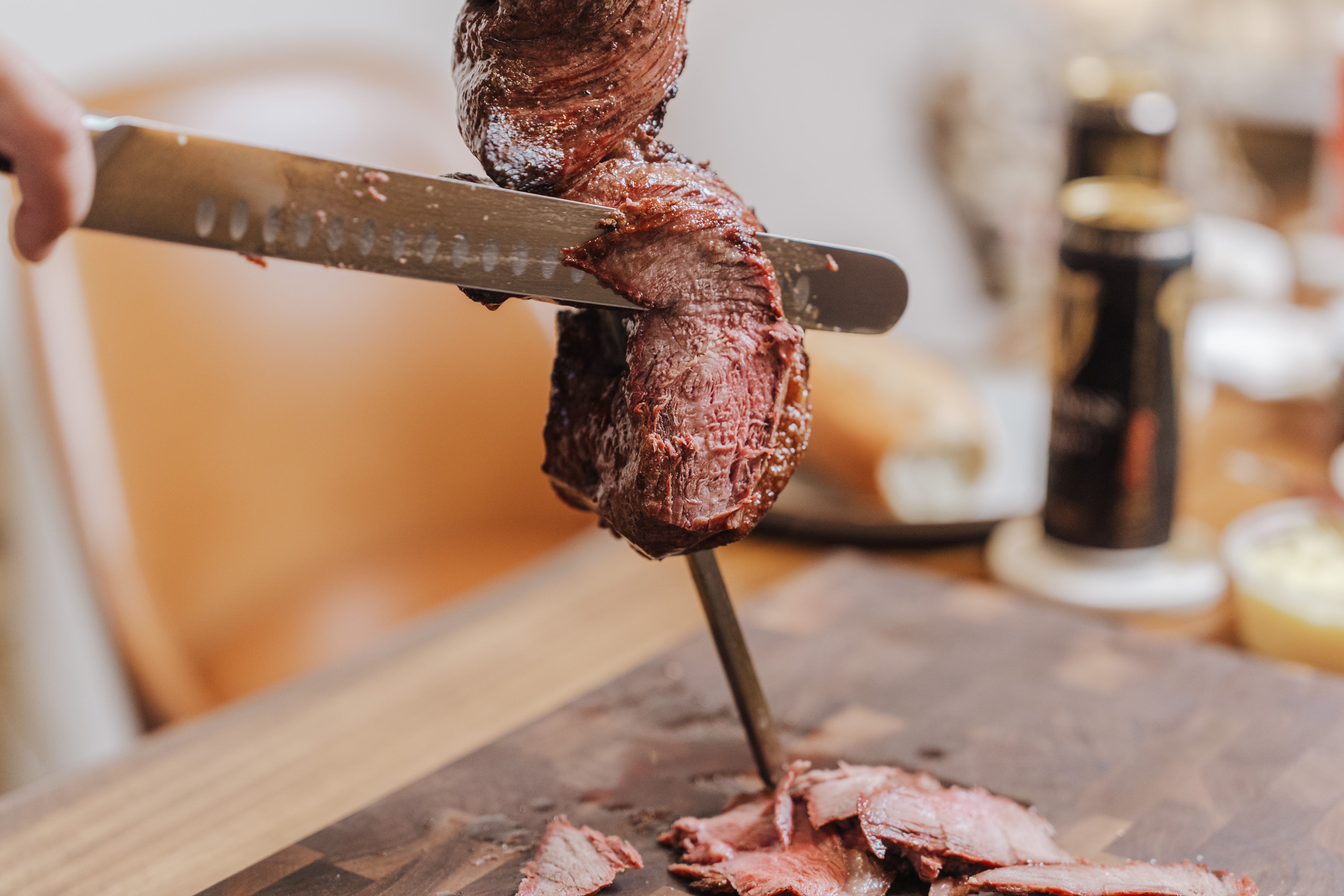
Beef is the center of attention at any churrascaria, but Portuguese butchery cuts do not map neatly onto American ribeyes or sirloins. The undisputed star of the house is picanha (top sirloin cap). Skewered into c-shaped crescents with a thick layer of outer fat, picanha is grilled over open embers with coarse salt and sliced razor-thin straight onto your plate. The fat cap renders down during grilling, keeping the lean beef moist and savory.
Another signature cut rarely seen outside South America is cupim. This meat comes from the hump of Zebu cattle breeds common in Brazil. Because the hump muscle is heavily marbled with intramuscular fat, pitmasters wrap cupim in butcher paper or aluminum foil to slow-roast it over low embers for hours until it yields tender, buttery shreds. If you prefer bold beef taste with a coarser grain, keep an eye out for fraldinha (flank steak) or alcatra (top sirloin center cut).
Beyond Beef: Pork, Chicken Heart, and Lamb Skewers
While beef steals the spotlight, carvers also offer skewers of pork, poultry, and lamb throughout the service. A common starter is linguiça, a coarse-ground pork sausage seasoned with garlic, paprika, and herbs that browns quickly over charcoal.
Keep an eye out for coração de frango (marinated chicken hearts). Skewered closely together and seared until deeply browned on the outside, they have a firm, springy texture and an intensely savory, iron-rich flavor. For lamb fans, carvers frequently present cordeiro—usually grilled chops or leg rubbed with garlic, olive oil, and fresh mint.
The Side Dish Strategy: Farofa, Vinagrete, and Cheese Bread
Treating the buffet as an afterthought is a missed opportunity. Brazilian side dishes are crafted specifically to pair with heavy grilled meats. The single most important condiment on the table is farofa, cassava flour toasted in butter with garlic and crispy bacon bits. Spoon farofa directly over your sliced meat—it soaks up juices and adds a crunchy, nutty texture to every bite.
Balance those rich cuts with vinagrete, a tart diced salsa made of tomatoes, onions, bell peppers, vinegar, and olive oil. You will also get warm baskets of pão de queijo (cheesy tapioca bread rolls) and fried plantains. When reviewing a chalkboard list of warm side dishes or regional items at the buffet, scanning the menu with MenuDish shows you matched photos of the actual food so you know exactly what local specialties like feijão tropeiro look like before spooning them onto your plate.
How to Pace Your Meal Like a Local
The biggest pitfall for beginners at a churrascaria is filling up on chicken wings, bread, and rice within the first fifteen minutes. Passadores often lead with faster-cooking items like sausages and chicken drumsticks, while prized cuts like picanha and beef ribs spend longer over the charcoal pit.
Start light with a small plate of heart of palm and vinagrete. Keep your table token set to red until you are ready, then turn it green when you spot carvers carrying beef skewers down the aisle. If a specific cut brought to your table looks too done or undercooked for your preference, politely wave it off; another carver with a fresh skewer will be by shortly.
Don't cook it — find it.
See every dish on any menu before you order. Scan, see the photo, check allergens & nutrition.