Key takeaways
- Carinderias run on 'turo-turo' (point-point), where you point directly at metal steam pans to order your dishes.
- Filipino stews revolve around acid and salt: vinegar-based Adobo lasts longer, while tamarind-heavy Sinigang offers a clean sour kick.
- Silog meals are single-plate staples combining garlic rice (sinangag), a fried egg (itlog), and a savory protein like cured pork or beef.
- Broth is usually free; ask for 'sabaw' to get a ladle of rich clear soup poured over your rice bowl.
The art of turo-turo: ordering without a printed menu
A carinderia is an informal food stall or small canteen serving home-style cooked meals. The dining system relies on a style called turo-turo, which translates literally from Tagalog as 'point-point.' Instead of reading a list of course descriptions, you walk right up to the glass display counter, look at what was cooked fresh that morning, and point at what you want.
Cooks fill small oval plates or plastic bowls with your chosen dish, served alongside a generous scoop of hot white rice. If you are unsure what a dark braise or fiery red curry contains, pointing accompanied by a friendly question usually gets you a short summary of the main protein and sauce style.
Red sauces, brown sauces, and rich curries
Looking into a dozen metal trays can feel disorienting when every brown braise looks similar at first glance. Recognizing the base sauce saves you from ordering two dishes with identical profile balance.
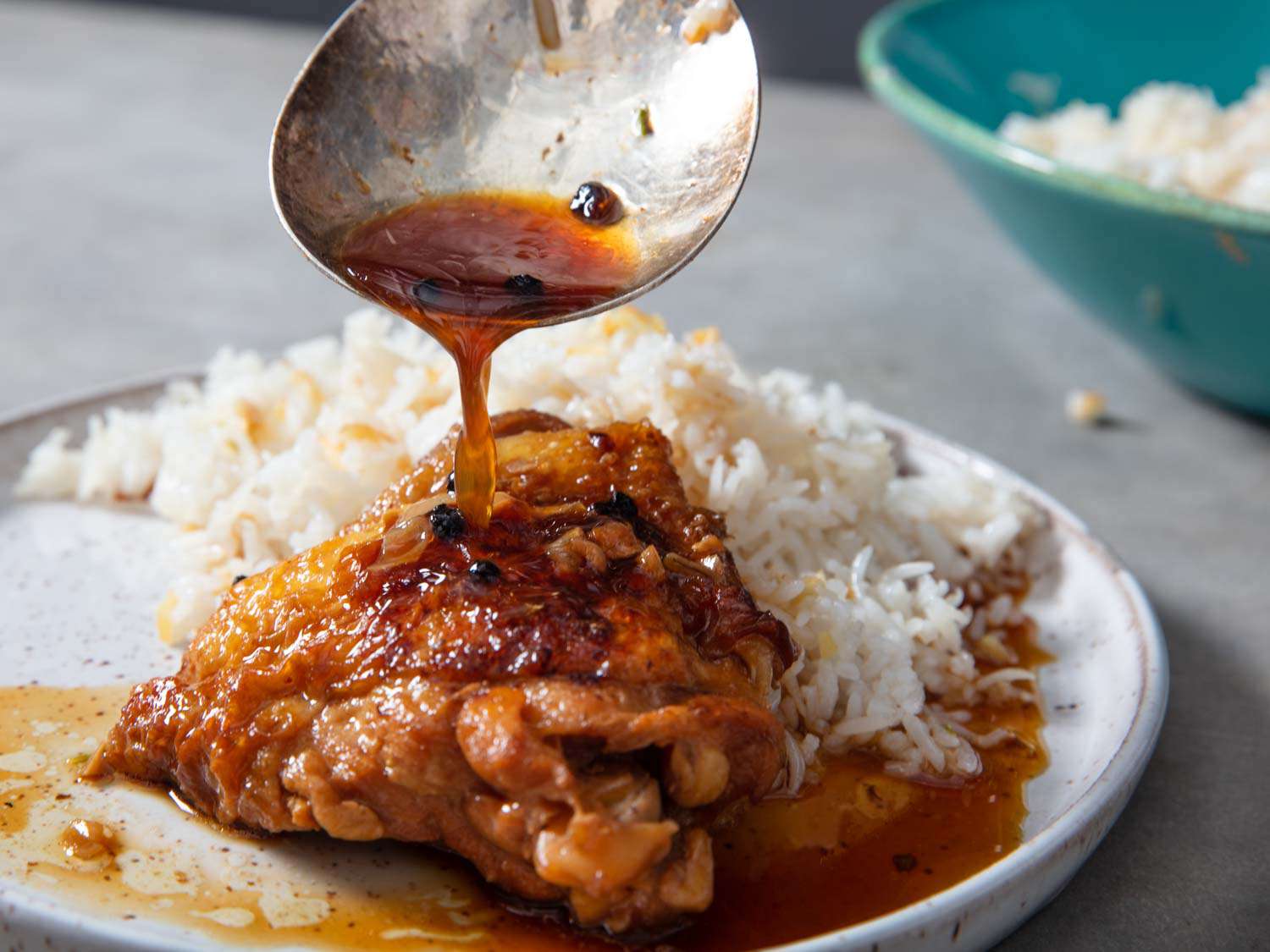
Adobo is the unquestioned classic, recognizable by its dark, glossy sauce built on soy sauce, cane vinegar, crushed garlic, bay leaves, and black peppercorns. Pork shoulder or chicken legs simmer until the liquid reduces into a sharp, savory glaze. Nearby, you will spot Kaldereta, a beef or goat stew rendered thick and rich with tomato sauce, liver spread, bell peppers, and chili.
If you spot a dish thick with ground peanuts and toasted rice powder colored yellow-orange with annatto, that is Kare-Kare. It usually features tender oxtail or pork hock alongside eggplant and long beans. It arrives intentionally mild because you are meant to season each bite with a dab of pungent, fermented shrimp paste called bagoong served on the side.
Tamarind tang and bitter greens
Filipino food relies heavily on sourness to cut through rich meats. Sinigang is a clear, highly aromatic soup defined by its sour broth, traditionally driven by green tamarind, green mango, or calamansi. It comes loaded with pork ribs, shrimp, or milkfish (bangus), accompanied by water spinach, radish slices, and taro roots that soften into the broth.
On the opposite end of the spectrum sits Ampalaya (bitter melon), often stir-fried with scrambled eggs and tomatoes or minced pork. The sharp, mineral bitterness is an acquired taste, but locals swear by it to balance heavier fried pork belly like Lechon Kawali.
Cracking the silog code
If you visit a carinderia during early morning hours or late afternoon, you will likely see a portion of the counter dedicated to silog combinations. The word is a portmanteau joining sinangag (garlic fried rice) and itlog (fried egg). Whatever word sits in front tells you the protein included on the plate.
Tapsilog comes with tapa (cured, pan-fried dried beef strip). Tocosilog features sweet cured pork belly called tocino, which caramelizes into a sticky, reddish glaze on the flat top. Longsilog includes garlic-heavy or sweet pork sausages known as longganisa. These single-plate meals offer a fast, satisfying balance of garlic crispness, runny yolk, and savory meat without needing multiple side dishes.
Broth extras, rice ratios, and menu scanning
When you sit down at a carinderia, rice is the foundation. A standard portion is called an order or isang cup. If you order a dry dish like fried fish or pork chops, always ask for sabaw (soup broth). The cook will ladle a small bowl of hot Sinigang or Nilaga broth for free, giving you liquid to moisten your rice.
When written boards do exist in modern shops, regional names like Bicol Express (pork cooked in coconut milk and green chilies) or Dinuguan (savory pork blood stew) can leave diners guessing. If you are standing in front of a chalkboard without photos, scanning the menu with MenuDish helps you match printed dish names to clear photos and list common allergens like shrimp paste or peanuts before you commit to your order.
Don't cook it — find it.
See every dish on any menu before you order. Scan, see the photo, check allergens & nutrition.
Allergens: fish sauce, crustaceans, peanuts, soy. The MenuDish app flags these automatically for every dish it scans.