Key takeaways
- Never eat the thick dough knot on a khinkali dumpling; hold it like a handle and leave it on your plate.
- Cold walnut paste (nigvzit) turns spinach, beets, and eggplant into rich starters.
- Traditional clay-pot dishes stay boiling hot long after reaching the table, so go slow on your first bite.
- Georgian amber wines ferment with grape skins in subterranean clay pots, giving them firm tannic structure rather than sweet fruity notes.
Cold starters: The magic of walnut paste
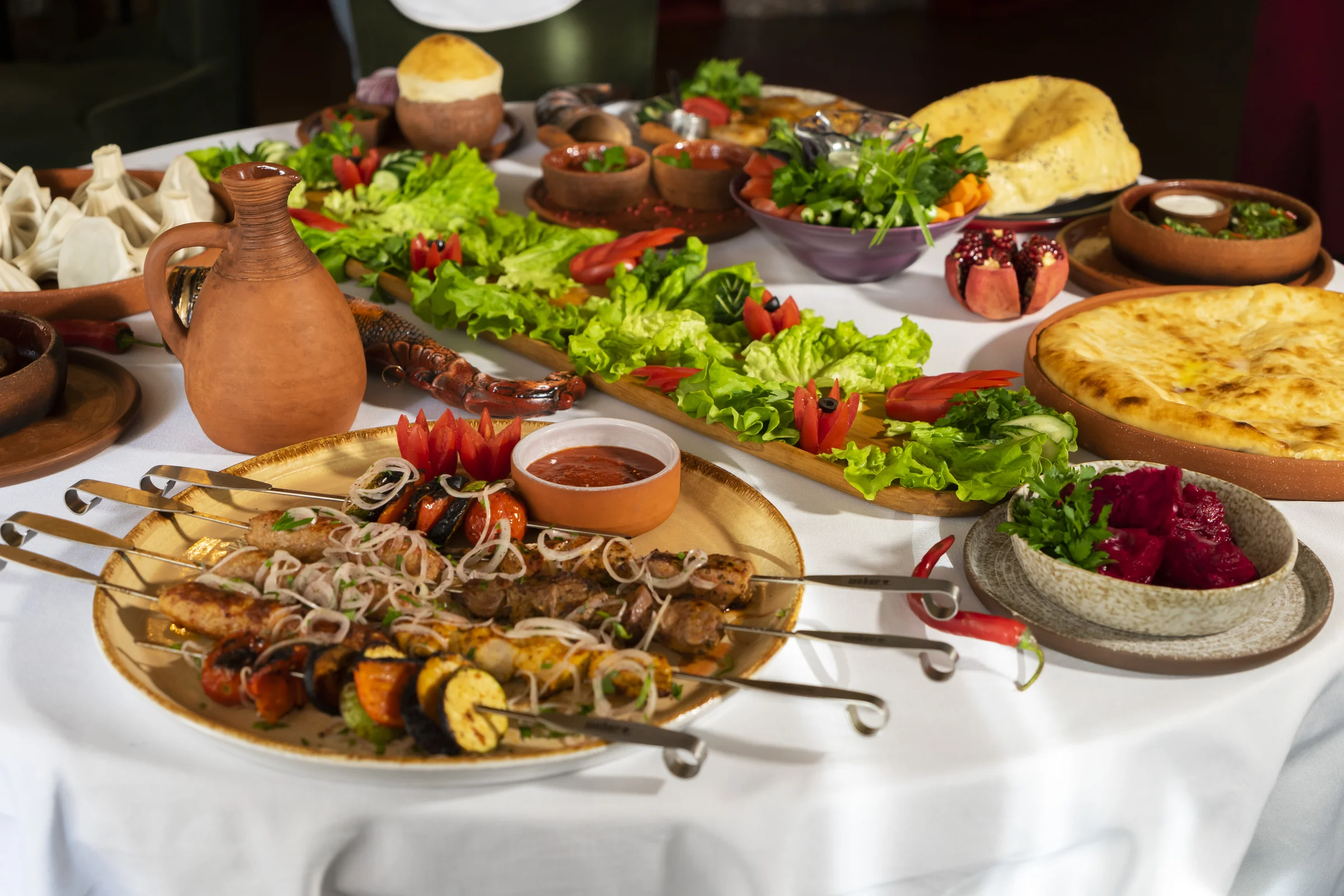
Georgian meals rarely start with a single plate. Tables fill up quickly as small ceramic dishes arrive in waves. The centerpiece of the cold menu is pkhali—a thick pate made from finely minced spinach, roasted beets, or green beans bound together with nigvzit. This paste of ground walnuts, garlic, blue fenugreek, dried marigold, and coriander seeds gives Georgian cold starters their distinct savory depth.
Alongside pkhali, look for badrijani nigvzit: pan-fried eggplant ribbons folded around that same spiced walnut paste and scattered with fresh pomegranate seeds. If you spot gebzhalia on the menu, snap it up. Hailing from the Western region of Samegrelo, it features rolled soft cheese swimming in a chilled, mint-laced whey sauce that sharpens your appetite before rich main courses arrive.
Khinkali etiquette: Grab the handle, save your shirt
Khinkali look like massive pleated soup dumplings. Inside the wheat wrapper sits ground beef and pork seasoned with cumin, black pepper, chili, and fresh cilantro, which releases a rich broth as the dumpling boils. Tackling these with a fork and knife is considered an error because the savory juice spills out onto your plate.
Instead, pick up the dumpling by its top dough knob, known as the kudi (hat). Turn it upside down, nibble a small hole near the edge, and drink the broth while it is hot. Once you drink the liquid, eat the dumpling body. The handle stays thick and uncooked inside, so diners leave a pile of handles on their plates when finished. Mushroom, cheese, and potato fillings are common non-meat variations found on most menus.
Sizzling skillets and clay-pot comfort
Main courses in Georgia arrive red-hot. Ojakhuri arrives on a sizzling cast-iron pan called a ketsi, packed with charred pork shoulder, crisp potato cubes, onions, and whole garlic cloves. The aroma reaches your nose before the plate hits the wood.
For bean dishes, lobio is essential. Served bubbling inside an unglazed clay jug, red kidney beans simmer with onions, garlic, coriander, and savory summer herbs until thick. Pair it with mchadi—a dense, pan-fried cornbread designed for scooping. If garlic appeals to you, seek out shkmeruli, crispy fried chicken smothered in a bubbling sauce of pan drippings, minced garlic, and milk.
Plum ketchup, herbal heat, and menu script
A Georgian dining table is incomplete without a jar of sour plum condiment. Tkemali, made from wild green or red plums cooked down with garlic and wild mint, functions as Georgia's tart answer to tomato ketchup. Spoon it over grilled meats, potatoes, or pan-fried trout. For spicy heat, request adjika—a intense paste of chili peppers, garlic, and mountain herbs that brings concentrated punch to meat and bread.
Deciphering a menu printed purely in Georgian script can slow down ordering. When staring at unfamiliar letterforms, pulling up MenuDish helps you scan the printed text to see matched dish photos, making it clear whether an entry is a broth dumpling, a bean pot, or a cold spinach paste.
Drink choices: Qvevri amber wine and bright green soda
Georgia's winemaking tradition spans eight thousand years. Traditional bottles age in giant clay vessels called qvevri buried beneath earthen cellar floors. White wine grapes stay in contact with skins and seeds for months, producing a deep amber color. Expect dry, structured tannins with hints of dried apricot and black tea rather than sweet citrus flavors. Saperavi, the main red grape, offers dark berry notes and earthy leather aromas.
For alcohol-free options, try bottled tarragon soda (tarhun). Its intense neon-green shade looks synthetic, but the flavor is herbal, crisp, and refreshing alongside garlic-laden food.
Don't cook it — find it.
See every dish on any menu before you order. Scan, see the photo, check allergens & nutrition.