Key takeaways
- Tagine refers to both the iconic clay vessel and the slow-cooked stew inside, usually built around a single meat and fruit or vegetable pairing.
- Pastilla is a crisp, layered warqa pastry pie filled with shredded poultry, spices, and crushed almonds, sprinkled with powdered sugar and cinnamon.
- Couscous is traditionally eaten on Fridays and served in wide clay dishes rather than individual small bowls.
- Moroccan meal starters almost always feature a collection of cooked salad dishes like Zaalouk and Taktouka, served warm or at room temperature with bread.
The two menus you will actually encounter
When dining out in Morocco or visiting an authentic spot back home, menus split into two distinct formats. Casual street eateries and lunch spots display a blackboard listing three or four daily preparations cooked in batch early in the morning. Sit-down spots and tourist dining rooms hand you printed menus broken down into Entrées Froides et Chaudes (cold and hot starters), Plats Traditionnels (mains), and Desserts.
Because French remains the language of hospitality across much of Morocco, dish names often use French spellings alongside local Arabic terms. If a dish name looks completely opaque, scanning the line with MenuDish pulls up matched photos of the actual plate so you can instantly tell braised shanks from a baked pastry.
Pastilla: the sweet-savory pie that trips up first-timers
Listed under starters or main dishes, Pastilla (sometimes spelled Bstilla or Bastilla) is one of the most technical dishes in North African cooking. Paper-thin sheets of dough called warqa wrap around a savory filling made from shredded chicken or pigeon simmered with saffron, ginger, nutmeg, and fresh herbs, bound with beaten eggs.
The outer shell is baked until golden and shattering, then heavily dusted with powdered sugar and ground cinnamon. A layer of toasted, finely ground almonds and orange flower water hides just beneath the top crust. The contrast between salty, aromatic meat and sweet spice trips up diners expecting a savory chicken pie, but it stands as the crown jewel of Moroccan feast food.
Cracking the tagine code on paper
A common misstep is assuming all tagines taste similar because they share the conical earthenware dish. On a menu, tagines are defined entirely by their protein and primary aromatic pairing:
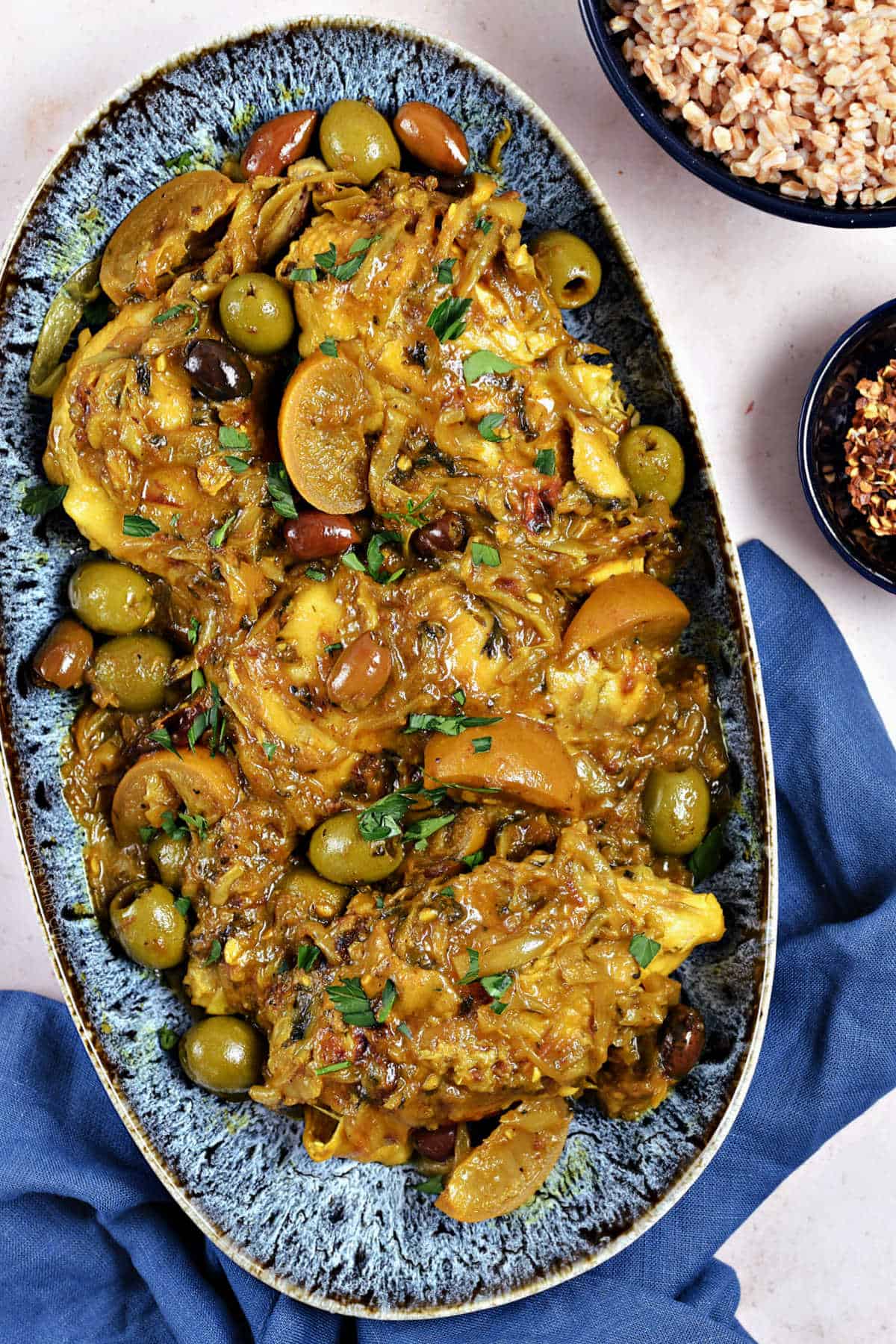
Poulet aux Citrons Confits et Olives: Bone-in chicken legs braised with salt-cured lemons, cracked green olives, garlic, and fresh coriander. The sauce is reduced until thick and distinctly sour.
L'ham bel Barkouk: Tender beef or lamb shank slow-cooked until falling apart, served with sweet stewed prunes, toasted sesame seeds, and deep fried whole almonds. The gravy carries notes of cinnamon and honey.
Tajine de Poisson (Chermoula): Firm white fish cooked over sliced potatoes, red bell peppers, and tomatoes, coated in a sharp green herb marinade of cilantro, cumin, paprika, garlic, and lemon juice.
Kefta aux Œufs: Small spiced beef or lamb meatballs simmered in a rich tomato sauce with cumin and paprika, topped with eggs cracked directly into the bubbling clay pot just before serving.
The couscous rules no one prints on the laminated page
Outside of North Africa, couscous is treated as a quick side grain. In Morocco, real couscous takes hours of hand-rolling, oiled steaming over a bubbling stockpot, and light flaking with clarified butter. Because of the labor involved, traditional home kitchens prepare couscous almost exclusively on Friday afternoons after prayer.
If you order Couscous aux Sept Légumes (Seven Vegetable Couscous), expect a towering heap of hand-steamed semolina topped with large chunks of zucchini, pumpkin, cabbage, turnips, carrots, chickpeas, and tomatoes, soaked in light brothy stew. Meat couscous includes slow-cooked lamb or beef buried under the grains. Skip the fork if you want to follow local tradition—diners scoop small balls using three fingers of their right hand or use a broad wooden spoon.
Harira, Zaalouk, and the starter spread
Instead of cold raw lettuce, Moroccan starters center on cooked vegetable preparations served in small porcelain bowls, designed to be scooped up with torn pieces of crusty flatbread (khobz).
Order the Salades Marocaines option on the menu to get a tray of four to six cooked sides. You will usually receive Zaalouk (charred eggplant cooked down with tomatoes, garlic, cumin, and olive oil) and Taktouka (roasted sweet peppers simmered with ripe tomatoes and paprika). If you see Harira on the soup list, order it—this fragrant tomato-based soup cooked with chickpeas, brown lentils, thin vermicelli noodles, and fresh coriander is the traditional dish used to break the daily fast during Ramadan.
How to order tea without offending the house
Dessert in Morocco rarely means heavy cakes. Menus usually offer fresh peeled orange slices sprinkled with ground cinnamon and dark orange blossom water. You might also find Corne de Gazelle (crescent-shaped pastries stuffed with almond paste and scented with cardamom) or Chebakia (fried honey-coated sesame dough braids).
No meal ends without Atay, the signature mint tea. Brewed from Chinese gunpowder green tea leaves, large handfuls of fresh spearmint leaves, and generous blocks of white sugar, it is poured from high above the glass to create a light foam cap (called the crown). Accepting tea when offered at the end of a meal is standard hospitality etiquette across the country.
Don't cook it — find it.
See every dish on any menu before you order. Scan, see the photo, check allergens & nutrition.