Key takeaways
- Soups (zupy) are non-negotiable starters in Polish dining, anchored by fermented rye, beetroot, or slow-simmered poultry broth.
- Polish mains operate modularly: you choose a protein like schabowy, then pick a starch and a surówka (fresh cabbage or root salad set).
- Bary Mleczne (Milk Bars) are government-subsidized cafeterias serving dirt-cheap, traditional comfort food with fast counter service.
- Pierogi are categorized by savory fillings (potato and cheese, cabbage and mushroom, minced meat) or sweet fruit options served with sweet cream.
Milk Bars vs. Traditional Restaurants
Dining out in Poland usually falls into two distinct categories: the classic sit-down restaurant (restauracja) and the historic milk bar (Bar Mleczny). Milk bars originated in the late nineteenth century to supply workers with nutritious, dairy-based meals, and they survived the communist era as state-subsidized canteens. Today, they remain the best spot for honest, low-cost home cooking.
At a Bar Mleczny, do not expect white tablecloths or attentive table servers. You stand in line, order directly at a glass barrier, take your plate to a Formica table, and scrape your dishes into the clearing hatch when finished. Standard restaurants follow traditional European table service, but milk bars move fast—having your order ready before reaching the front of the line keeps everyone happy.
Why Soups Always Come First
A Polish lunch without soup (zupa) is essentially incomplete. Polish cooks excel at sour, fermented, and deeply savory broths that set up the palate for heavy meat courses.
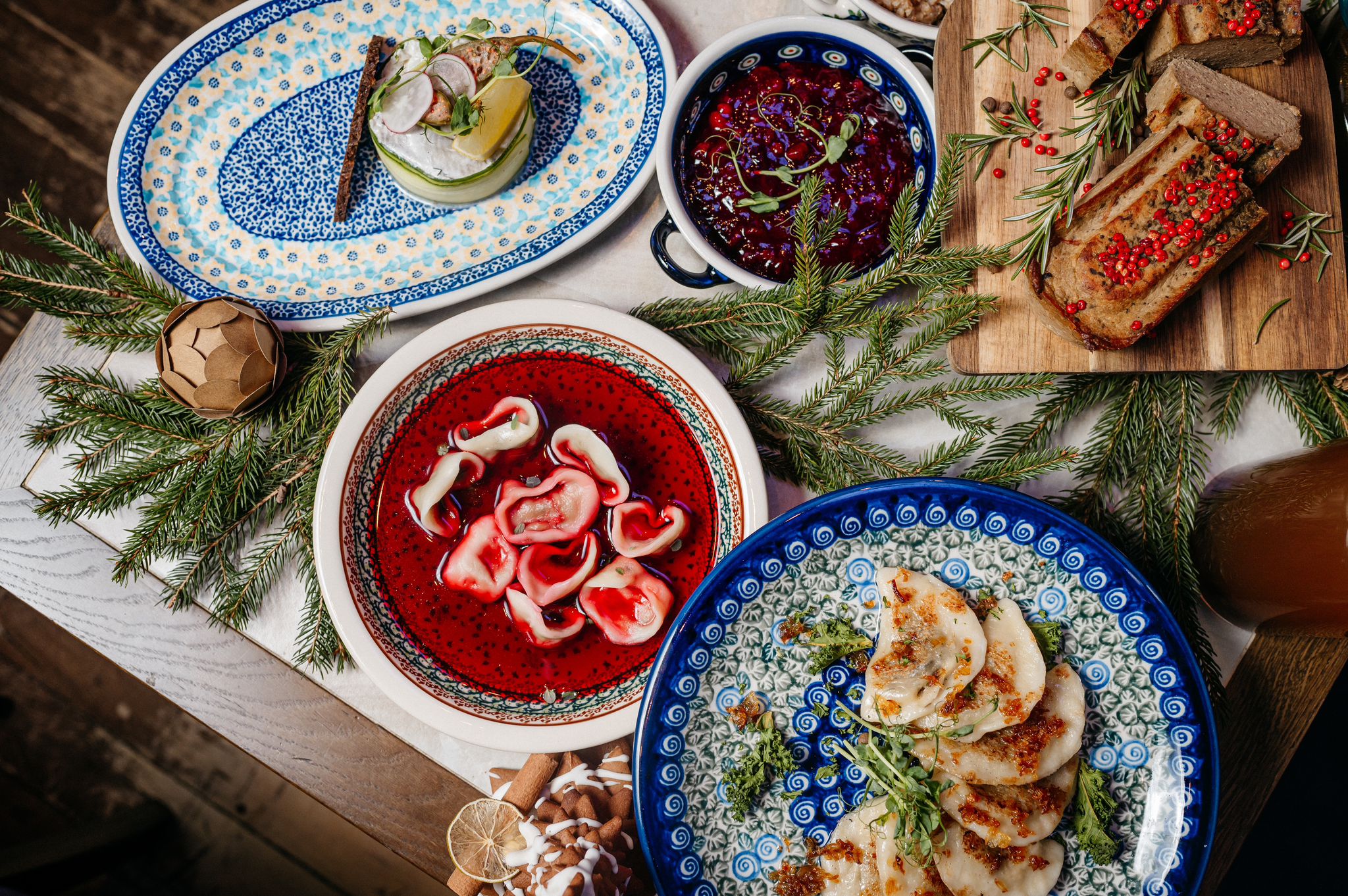
look for Żurek, a sharp broth made from fermented rye flour starter cooked with garlic, marjoram, smoked bacon, and boiled eggs. It often arrives in a hollowed-out loaf of rye bread. Barszcz czerwony is a clear, ruby-red beetroot soup, frequently served with small mushroom-filled dumplings called uszka (little ears). On Sundays, every household and tavern cooks Rosół, a golden, crystal-clear chicken broth served with fine egg noodles and sliced carrots. If you see Flaki, be aware that it is a spiced beef tripe soup with root vegetables—hearty and savory, but distinct in texture.
Building Your Main Plate: Proteins, Starches, and Surówki
Main courses (dania główne) on Polish menus are often listed à la carte, meaning the meat cut is priced separately from the potatoes and cabbage. Kotlet Schabowy is the king of the board: a thick pork cutlet pounded thin, breaded in lard, and fried to a deep gold. Its poultry equivalent is Kotlet z Kurczaka.
When the menu lists a main item, you usually select your starch: ziemniaki z wodą (boiled potatoes with dill), frytki (fries), or regional dumplings like kopytka (potato gnocchi-style ribbons) or kluski śląskie (chewy Silesian potato dumplings with a small dent in the middle).
When handwritten Polish menu boards look like a jumble of consonants, a quick check with MenuDish brings up matched real dish photos alongside ingredient lists so you know if you are selecting braised cabbage or mashed potatoes. To balance the heavy fried meat, order a zestaw surówek—a trio of shredded fresh salads usually featuring white cabbage (młoda kapusta), pickled beetroots (buraczki), and grated carrots with apple.
How to Order Pierogi Like a Local
Pierogi get their own section on almost every menu. A standard order usually includes six to ten boiled or pan-fried dumplings topped with melted butter or crispy pork cracklings (skwarki).
The classic choice is Pierogi Ruskie (sometimes listed as Pierogi Galicyjskie), stuffed with a creamy mixture of potato, dry curd cheese (twaróg), and caramelized onions. Pierogi z mięsem feature spiced pork or beef stuffing, while Pierogi z kapustą i grzybami are loaded with braised sauerkraut and wild forest mushrooms.
In late spring and summer, look out for sweet varieties like Pierogi z jagodami (stuffed with wild bilberries) or Pierogi z truskawkami (fresh strawberries), dusted with sugar and drizzled with cold sour cream.
Etiquette, Drinks, and Clearing Your Table
When dining at a milk bar, pay attention to board signs that list items as sprzedane (sold out)—popular soups frequently run out by mid-afternoon. Bring local cash or a contactless card, as transactions at the counter happen quickly. When you hear your meal number called out, pick up your tray immediately.
To wash down a heavy plate, skip bottled soft drinks and order a glass of Kompot. This traditional beverage is made by simmering seasonal stone fruits, apples, or berries with sugar and spice, served chilled with soft fruit bits sitting at the bottom of the glass. Always return your used trays and cutlery to the designated return rack (zwrot naczyń) before leaving.
Don't cook it — find it.
See every dish on any menu before you order. Scan, see the photo, check allergens & nutrition.