Key takeaways
- Málà is a two-part sensation: 'má' (numbing from Sichuan peppercorns) and 'là' (spicy heat from red chilies).
- Cold dishes (Liángchài) aren't appetizers; they arrive first to prime your palate with vinegar, garlic, and cold chili oil.
- 'Water-boiled' (Shuǐzhǔ) dishes are not bland soups—they are cuts of meat swimming in boiling hot chili oil and peppercorns.
- Ordering a balanced table requires combining numb-spicy main dishes with cool, savory, or sweet dishes to reset between bites.
Decoding Málà: The Numbing and Spicy Reality
When people think of Sichuan cooking, they usually think of fire. But heat is only half the story. The core signature of Chengdu and Chongqing kitchens is málà, written as 麻辣. The second character, là, refers to the sharp, biting heat of red chili peppers. The first character, má, describes the tingling, vibrating sensation produced by hydroxy-alpha-sanshool, the natural compound found in red and green Sichuan peppercorns.
Sichuan peppercorns aren't actual peppers; they are dried berry husks from the prickly ash tree. When eaten, they cause a light buzzing feeling on the tip of your tongue, similar to taking a sip of carbonated water after holding ice in your mouth. This numbing effect softens the sharp burn of chili oil and heightens citrus and garlic notes in the sauce.
Why Cold Dishes (Liángchài) Belong on Every Table
In western dining, starters are optional. In a Sichuan restaurant, skipping the cold dish section (Liángchài, 凉菜) is a mistake. These plates are prepared ahead in glass display cabinets near the kitchen and land on your table within minutes of ordering.
Cold dishes serve a specific job: they awaken your taste buds with black Chinkiang vinegar, smashed garlic, sesame paste, and spiced chili oil. Try Suānlá Fěn (sour and spicy glass noodles topped with crispy soybeans) or Pái Huágāng (smashed cucumbers tossed with garlic and sesame oil). The cucumbers are intentionally smacked with the flat side of a cleaver rather than sliced, creating jagged edges that grab onto every drop of savory dressing.
Making Sense of Alarming Dish Names
Direct word-for-word translation turns great dishes into horror movie titles. Seeing 'Saliva Chicken' or 'Husband and Wife Lung Slice' on a print menu sends plenty of first-timers reaching for the exits.
Kǒushǔijī (口水鸡), often translated as 'Saliva Chicken' or 'Mouthwater Chicken,' gets its name because the thought of its cold poached chicken steeping in garlic, soy, peanut crunch, and chili oil literally makes your mouth water. Fùqī Fèipiàn (夫妻肺片), or 'Husband and Wife Lung Slice,' contains no lung at all. Created by a married couple in 1930s Chengdu, it features paper-thin slices of braised beef shank and beef tripe tossed in toasted chili oil, roasted peanuts, and cilantro.
If you hit a menu full of text without imagery, opening MenuDish to scan the paper menu matches the names against food databases so you can see what these cold plates actually look like before ordering.
The 'Water-Boiled' Dish Trap (and Why You Want It)
Newcomers looking for a mild option often spot Shuǐzhǔ Ròupiàn (水煮肉片) on the menu, translated plainly as 'Water-Boiled Meat.' That sounds health-conscious and completely plain. It is neither.
'Water-boiled' is a technique where tender slices of beef, pork, or white fish are flash-poached in broth before being dumped into a wide bowl lined with bean sprouts and Napa cabbage. The entire bowl is then drenched in ladlefuls of sizzling chili oil packed with dried red chilies and cracked Sichuan peppercorns. The hot oil sears the aromatics right at your table. It is one of the rich, spicy peaks of the entire meal.
Dry Pot (Gānguō) vs. Hot Dishes: Building Your Order
Sichuan menus separate dishes by heating technique and sauce style. Spotting these key terms makes skimming the menu much faster:
Gānguō (干锅 / Dry Pot): Served in a small wok over an open flame at your table, dry pot dishes skip the heavy sauces. Ingredients like chicken wings, lotus root slices, cauliflower, and potato coins are wok-fried with garlic, whole star anise, dried chilies, and Sichuan peppercorns until browned and fragrant.
Gānbāo or Gānbēn (干煸 / Dry-Fried): Ingredients are fried in little oil over medium heat until moisture evaporates and surfaces blister. Gānbēn Dòujiǎo (dry-fried green beans with minced pork, preserved mustard greens, and dried chilies) is a staple for a reason.
Yúxiāng (鱼香 / Fish-Fragrant): Don't let the name confuse you—there is zero seafood here. The term refers to a seasoning blend traditionally used for fish dishes: pickled red chilies, garlic, ginger, scallions, sugar, and black vinegar. Yúxiāng Qiézi (fish-fragrant eggplant) yields a tender, sweet, savory, and lightly spicy balance.
How to Build a Perfectly Balanced Sichuan Feast
The secret to an incredible Sichuan meal is contrast. If every dish is drenched in boiling red chili oil, your palate gets scorched three bites in and everything starts tasting the same.
Aim for a spread that hits multiple temperatures, textures, and flavor profiles:
1. One Cold Plate: Smashed garlic cucumbers or mouthwatering chicken to kick off the meal.
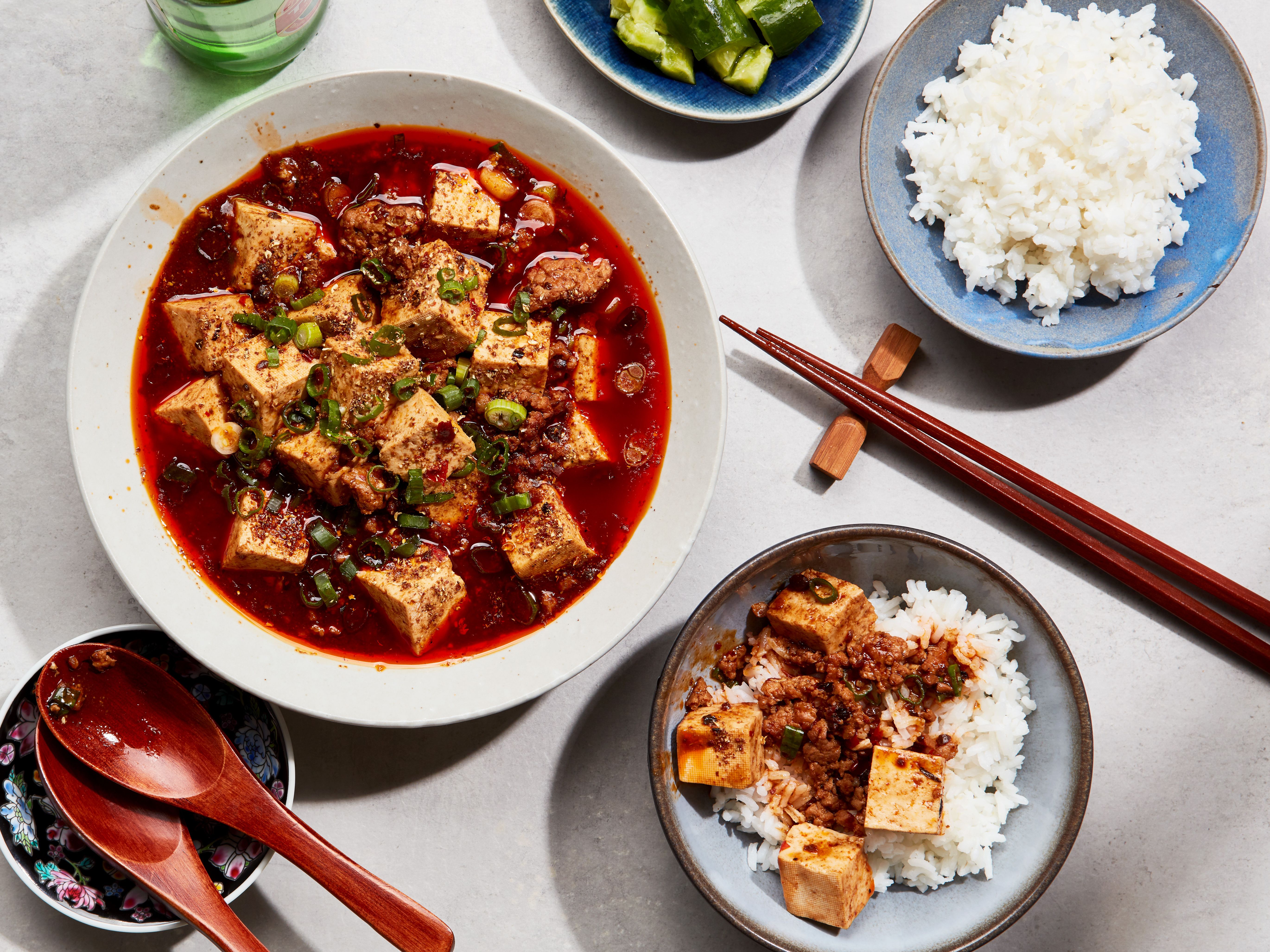
2. One Fiery Anchor: Water-boiled fish (Shuǐzhǔ Yú) or Mapo Tofu (Mábó Dòufu) cooked with minced pork and fermented broad bean paste (dòubǎnjiàng).
3. One Dry Hot Dish: Dry-fried green beans or dry pot cauliflower for crunch and smoky wok char.
4. One Soothing Reset: Tomato and egg soup (Fānqié Dàndāng) or stir-fried pea shoots with minced garlic to clear the palate between fiery bites.
Don't cook it — find it.
See every dish on any menu before you order. Scan, see the photo, check allergens & nutrition.