Key takeaways
- Dagens Lunch (served 11:00 AM–2:00 PM) is Sweden's prime dining bargain, including a hot main, bread, salad, and filter coffee.
- Husmanskost represents traditional, hearty home cooking built around butter, potatoes, dill, cured fish, and slow-cooked meats.
- Toast Skagen is the definitive appetizer: sweet cold-water prawns folded into dill mayonnaise on butter-crisped white bread.
- Swedish mains rely heavily on balance—rich cream gravies are always offset by tart lingonberries or quick-pickled cucumbers.
The sacred ritual of Dagens Lunch
If you eat out during midday in Sweden, ignore the standard dinner menu. Look for the board marked Dagens Lunch (Daily Special). Offered Monday through Friday between 11:00 AM and 2:00 PM, this is how locals eat well without blowing their budget.
For a fixed price—usually between 120 and 160 SEK ($11 to $15)—you get a warm main dish alongside access to the lunch buffet counter. That side counter isn't an afterthought; it includes fresh crispbread (knäckebröd), churned butter, a cabbage or beet salad, and unlimited drip coffee (bryggkaffe) after your meal. If you sit down at noon and order off the evening à la carte menu, you will pay double for less food.
Husmanskost: Sweden's comfort food standard
When browsing a Swedish menu, you'll frequently see the word husmanskost (literally 'house owner's food'). This is traditional working-class comfort food refined over generations. It relies on farm staples: root vegetables, butter, cream, dill, pork, beef, and preserved berries.
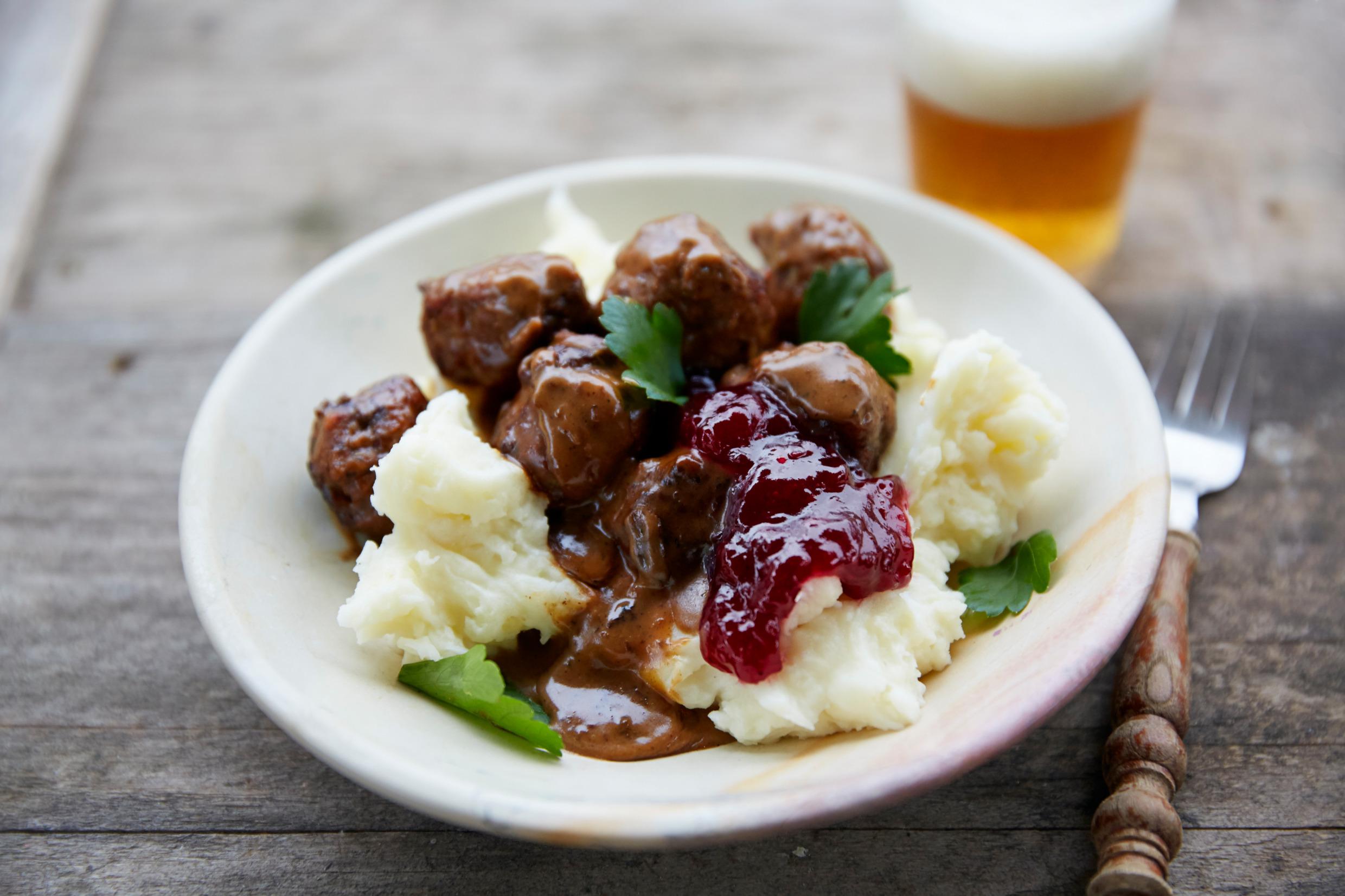
The standard benchmark is Köttbullar med pressgurka och rårörda lingon. Real Swedish meatballs are small, tender rolls of blended minced beef and pork scented with allspice and nutmeg. They are served over silky mashed potatoes (potatismos), smothered in a dark pan-cream sauce (gräddsås), and accompanied by two critical condiments: tart, hand-stirred lingonberries and paper-thin cucumber ribbons pickled in vinegar, sugar, and mustard seed (pressgurka). The acidity cuts straight through the heavy butter and cream.
Beyond meatballs: Wallenbergare, Pyttipanna, and Rårakor
Scan past the meatballs and you'll find the true stars of the tavern menu:
Wallenbergare: Named after a prominent banking family, this patty is made from finely ground calf's meat mixed with egg yolks and heavy cream. It's lightly dusted with breadcrumbs, pan-fried in clarifyed butter until barely pale golden, and served with sweet green peas and mashed potatoes. It should be tender enough to eat with just a spoon.
Pyttipanna: The ultimate skillet fry-up. Diced boiled potatoes, caramelized onions, and leftover cuts of smoked ham, roast beef, or pork belly are fried together until crispy. It arrives topped with a fried egg and pickled beetroot cubes (rödbetor).
Rårakor: Crispy, lace-edged potato pancakes shredded fine and fried hard in butter. They come topped with crispy salt pork (fläsk) or, on higher-end menus, a dollop of sour cream (gräddfil) and red sea roe.
Starters and seafood: Toast Skagen to herring
Swedes excel at cold-water seafood. On the starter menu (förrätter), one dish reigns supreme: Toast Skagen. Created by legendary chef Tore Wretman in 1958, it features hand-peeled shrimp bound with mayonnaise, fresh dill, dijon mustard, and lemon juice, heaped onto a thick triangle of white bread fried crisp in butter. It's almost always crowned with a golden spoonful of löjrom (vendace roe from Kalix).
If you see Silltallrik, expect a wooden board or ceramic platter filled with pickled herring cuts—ranging from mustard sauce (senapssill) to black pepper and allspice brine—served with sharp Västerbottensost cheese, boiled new potatoes, and sour cream. When chalkboards list seasonal catches with regional names, scanning the board with MenuDish helps you match those handwritten Swedish names to real photos, so you know whether you're ordering pan-fried Baltic herring or cured arctic char before committing.
Swedish menu cheat sheet
Keep these keywords in mind when deciphering the board:
- Stekt strömming: Pan-fried Baltic herring, usually served with melted butter and mustard.
- Janssons frestelse: 'Jansson's Temptation'—a baked casserole of julienned potatoes, onions, heavy cream, and small cured sprats (often translated incorrectly as anchovies).
- Kroppkakor: Dense potato dumplings stuffed with spiced salt pork and onions, served swimming in warm butter.
- Rimmad lax: Cured salmon served cold, often alongside warm creamed dill potatoes (stuvad potatis).
- Krog / Smedja / Wärdshus: Words indicating a tavern or inn focused on traditional cooking.
Don't cook it — find it.
See every dish on any menu before you order. Scan, see the photo, check allergens & nutrition.