Key takeaways
- Bàcari are traditional Venetian wine bars focused on small bites called cicchetti eaten standing up.
- Most food is displayed behind a cold glass counter, while hot kitchen specials are written on a daily chalkboard.
- An ombra is a small, inexpensive glass of local house wine—ask for 'un'ombra de nero' for red or 'de bianco' for white.
- Pay at the counter when you order and step aside so other patrons can reach the glass case.
What actually makes a bàcaro different from a restaurant?
A bàcaro (plural: bàcari) is Venice's answer to the taproom or tapas bar. These tiny establishments date back centuries, originally built as dark, rustic stops where merchants and laborers could grab a fast glass of wine and a small bite on their way home. You will not find white tablecloths, multi-page leather menus, or eager hosts waiting at the door here.
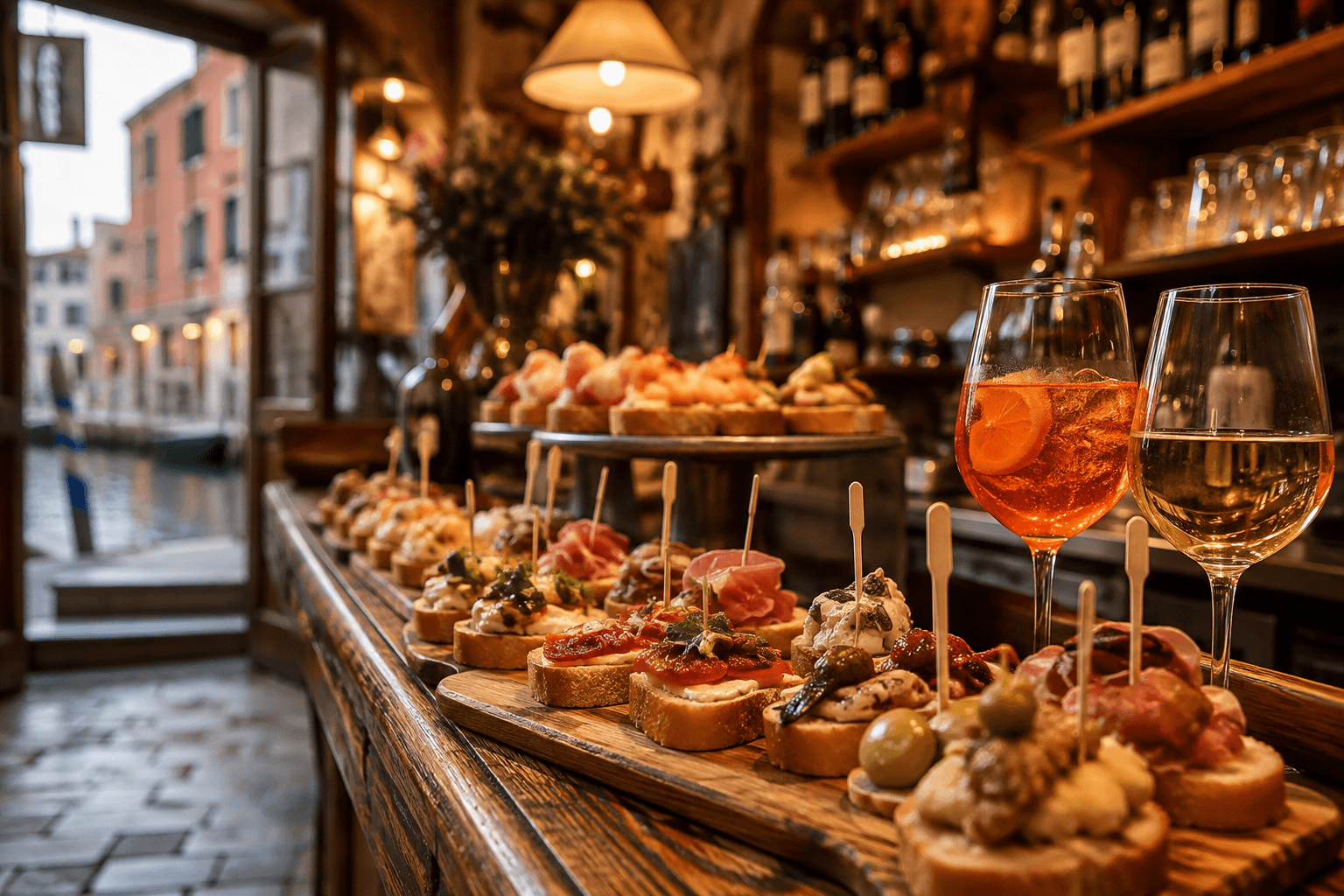
Instead, the focal point of every bàcaro is the long glass display counter, known locally as the vetrina. Behind it, the bartender arranges fresh daily bites called cicchetti (pronounced chee-KEH-tee). Eating at a bàcaro is an active experience: you order at the counter, pick your food on the spot, and lean against a wooden wall or step outside to eat beside the canal.
Cold glass counters vs. hot chalkboard specials
When you walk into a crowded bàcaro, the ordering system splits into two distinct categories: what is sitting in front of you behind the glass, and what is written on the wall chalkboard.
The glass counter holds cold or room-temperature bites. These are mostly small slices of crusty baguette topped with whipped spreads, marinated fish, cured meats, or sharp cheeses. You will also see deep-fried snacks like meat croquettes or stuffed olives resting on platters. You simply point to what looks good or call out the names to the bartender.
The wall board lists warm, made-to-order dishes directly from the tiny back kitchen. These are slightly larger portions served on small paper plates or in shallow bowls, featuring warm polenta, braised meats, or hot seafood stews. If you want something hot, order it directly from the board when you buy your drinks.
Decoding key Venetian dialect on the menu board
Venetian culinary names rarely match the standard Italian taught in language textbooks. Here are the most essential terms you will see on chalkboards and counter signs across Venice:
Baccalà Mantecato: Salt cod soaked, poached in milk, and whipped with olive oil until light and creamy. It is usually served smeared onto grilled white polenta squares or crusty bread. It tastes rich, mild, and savory rather than overly fishy.
Sarde in Saor: Fresh sardines fried and marinated in sweet-and-sour caramelized onions, vinegar, raisins, and pine nuts. This dish was invented by Venetian sailors to preserve fish on long sea voyages, and the tangy contrast of vinegar and sweet onions makes it an absolute mandatory order.
Polpette: Small fried meatballs made from seasoned beef, pork, or tuna mixed with breadcrumbs and herbs. They are crispy on the outside and tender inside, making them one of the easiest finger foods to grab at the bar.
Folpetti: Tiny lagoon baby octopuses boiled until tender, dressed simply with olive oil, lemon juice, and parsley, and served whole at room temperature.
Mozzarella in Carrozza: Literally 'mozzarella in a carriage.' It is a slice of mozzarella sandwiched between crusty bread, dipped in batter (often with an anchovy or a slice of prosciutto tucked inside), and deep-fried until molten.
How to order wine like a local: asking for an ombra
If you ask for a generic 'glass of wine' in a traditional bàcaro, you might get handed an expensive pour from a high-end bottle sitting on the top shelf. To drink like a local without spending a fortune, ask for an ombra (plural: ombre).
The word ombra literally translates to 'shade' in Venetian dialect. The term comes from the historical wine merchants who set up stalls in St. Mark's Square, continually moving their carts to keep their wine barrels cool under the shadow of the tall bell tower. Today, an ombra refers to a small, 100ml glass of simple house wine—usually costing between €1.50 and €2.50.
To order, simply say "Un'ombra de nero" for local red wine (often Refosco or Merlot) or "Un'ombra de bianco" for local white (typically Pinot Grigio or Garganega). If you prefer something lighter before dinner, order a Select Spritz—the true Venetian spritz made with Select, Prosecco, and a splash of soda water, garnished with a single green olive.
Bar etiquette, paying up, and avoiding rookie mistakes
Bàcari operate at a fast pace during the evening giro di ombre (pub crawl hours between 6:00 PM and 8:30 PM). Knowing how to navigate the crowd keeps the staff happy and ensures you get your food quickly.
First, scan the counter while you wait in line so you are ready when the bartender looks your way. Pointing is fine, but naming the dish shows respect. Order all your food and drinks at once. In smaller neighborhood bàcari, you pay immediately upon receiving your food. In slightly larger spots, the bartender might keep a running tally on a paper slip laid on the counter.
Once you get your food and glass, step away from the order counter immediately. Space along the glass showcase is prime real estate. Move toward the wall ledges, grab a barrel outside along the canal, or find a patch of cobblestone nearby. When you finish, bring your empty glasses and paper plates back to the designated tray rack near the door.
If you ever find yourself staring at an unfamiliar counter item and feeling unsure, pulling up MenuDish allows you to match handwritten chalkboard text or unfamiliar dialect items with real dish photos, clear ingredient listings, and allergen information before you order.
Don't cook it — find it.
See every dish on any menu before you order. Scan, see the photo, check allergens & nutrition.